
Home » Posts Page » Blog » Industry-Specific Solutions » Aligning Bulk Packaging Strategy With Production Throughput
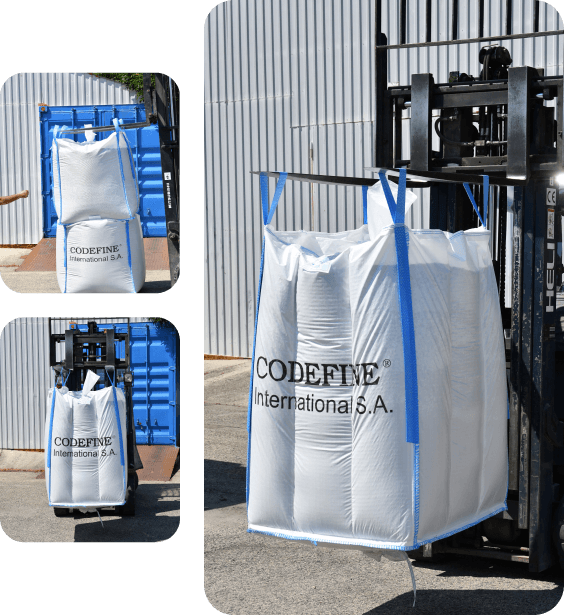
Aligning bulk packaging strategy with production throughput is therefore not just a logistics concern; it is a core operational requirement for scalable, efficient manufacturing across industries such as agriculture, animal products, chemicals, construction, food processing, mining, pharmaceuticals, and post-harvest operations.
This article explores how manufacturers can design and optimize bulk packaging strategies that actively support production throughput instead of limiting it.
Production throughput defines how much material a facility can produce within a given time frame. When bulk packaging capacity fails to match that pace, production lines are forced to slow down or stop altogether. This misalignment leads to idle equipment, labor inefficiencies, and increased cost per unit.
In industries like mining and chemicals, where materials are produced continuously and in large volumes, insufficient packaging capacity can immediately disrupt plant output. In food, agriculture, and pharmaceuticals, packaging delays may also create contamination risks, compliance concerns, and product integrity issues.
A well-aligned bulk packaging strategy ensures that packaging operations can absorb production output without interruption. Whether manufacturers rely on FIBCs, woven PP bags, polypropylene bags, container liners, or jute bags, packaging must be engineered to operate at production speed, not treated as an afterthought at the end of the line.
Production throughput directly determines the technical and operational requirements of bulk packaging. Facilities operating at higher output volumes require packaging solutions that can withstand continuous use, rapid filling, and repetitive mechanical handling without failure.
In high-throughput manufacturing environments such as chemical processing, mining extraction, animal feed production, and construction materials manufacturing, packaging must support fast and consistent filling rates while maintaining high weight tolerances. FIBCs must retain dimensional stability and seam integrity under continuous loads. Container liners used for bulk export shipments must tolerate high-volume loading without tearing or shifting. Woven PP bags and polypropylene bags must endure repeated filling cycles, and jute bags used in agriculture and post-harvest operations must provide durability while allowing appropriate airflow for sensitive commodities.
Production variability also plays a critical role. Seasonal harvest peaks in agriculture, demand shifts in construction, or batch production in pharmaceuticals can create fluctuations in throughput. Bulk packaging strategies must allow flexibility in bag sizes, liner materials, discharge configurations, and static protection levels. Packaging that cannot adapt to changing throughput conditions often becomes a limiting factor as production scales.
Even highly optimized production lines can suffer throughput losses due to packaging-related inefficiencies.
Filling and discharge systems are frequent bottlenecks. Poorly designed FIBC spouts, inconsistent bag dimensions, or restrictive discharge configurations can slow down operations and reduce overall line capacity. In mining and chemicals, where materials may be abrasive or fine powders, small inefficiencies quickly compound into measurable production losses.
Material compatibility is another common issue. Hygroscopic powders in chemical and pharmaceutical applications require moisture-resistant liners. Organic products in agriculture and food industries demand breathable or food-grade packaging. Heavy aggregates in construction require reinforced seams and appropriate safety factors. When packaging materials are not properly aligned with product characteristics, failures occur, leading to downtime, cleanup costs, and safety risks.
To support high production rates, bulk packaging must be engineered with throughput as a primary design parameter.
Selecting the correct packaging type is the foundation of alignment. FIBCs are ideal for high-volume bulk solids in agriculture, chemicals, mining, and construction. Container liners are highly effective for maximizing container capacity in export-oriented supply chains. Woven PP and polypropylene bags offer flexibility for medium-capacity handling, while jute bags remain suitable for breathable agricultural commodities.
Design considerations must focus on operational performance. Packaging should maintain consistent geometry for automated handling systems, reinforced seams for repetitive lifting cycles, optimized spout configurations for rapid filling and discharge, and weight ratings aligned with continuous production loads. Packaging that integrates seamlessly with automated filling stations, conveyors, palletizers, and bulk handling systems directly enhances throughput and reduces manual intervention.
Manufacturers should evaluate bulk packaging performance using measurable KPIs directly tied to production throughput. These metrics help determine whether packaging systems are supporting or restricting operational capacity.
KPI vs. Impact on Production Throughput
KPI | Impact on Line Efficiency | Impact on Output Capacity | Packaging Influence (FIBC Context) |
Filling Cycle Time | Slower cycles reduce line speed | Fewer units per shift | Spout design, bag geometry, flow performance |
Line Downtime | Stops production flow | Direct loss of production hours | Bag failure, discharge blockages |
Changeover Time | Delays between production runs | Reduces available run time | Inconsistent bag specs or multiple SKUs |
Reject / Rework Rate | Interrupts operations | Lowers usable output | Weak seams, contamination risks |
Material Flow Rate | Affects fill consistency | Limits maximum throughput | Fabric permeability, discharge design |
Equipment Utilization | Lower utilization = inefficiency | Caps total production potential | Poor compatibility with filling systems |
Tracking these KPIs enables manufacturers in sectors such as animal feed processing, food production, mining, and pharmaceuticals to identify packaging-related constraints and implement data-driven improvements.
As production volumes increase, packaging strategies must scale accordingly. What performs adequately at moderate throughput may fail under continuous high-load conditions.
Scalable strategies emphasize standardized packaging specifications, durable materials suited to industry-specific loads, and reliable supply continuity. In export-driven sectors like agriculture, chemicals, and construction materials, container liner availability and FIBC supply stability directly impact throughput reliability.
Planning for growth also requires validating packaging designs for higher cycle counts and ensuring compatibility with future automation investments. Packaging must evolve alongside production capacity, not lag behind it.
Codefine works with manufacturers across agriculture, animal products, chemicals, construction, food, mining, pharmaceuticals, and post-harvest industries to engineer bulk packaging solutions aligned with real production demands.
Through performance-driven FIBCs, woven PP bags, polypropylene bags, container liners, and jute bags, Codefine delivers packaging systems designed for speed, safety, and scalability. By eliminating packaging-related bottlenecks and ensuring compatibility with automated production systems, Codefine helps manufacturers achieve higher throughput, lower downtime, and long-term operational efficiency.
When bulk packaging is strategically aligned with production throughput, it becomes a driver of operational performance, not a limiting factor.
See how our products can improve your operations and drive your success.
Get in touch to find out how Codefine can support your business with tailored solutions and expert guidance.