
Home » Posts Page » Blog » Products and Materials » Breathable FIBCs Explained: When and Why to Use Ventilated Bulk Bags
Lorem ipsum dolor sit amet, consectetur adipiscing elit. Ut elit tellus, luctus nec ullamcorper mattis, pulvinar dapibus leo.
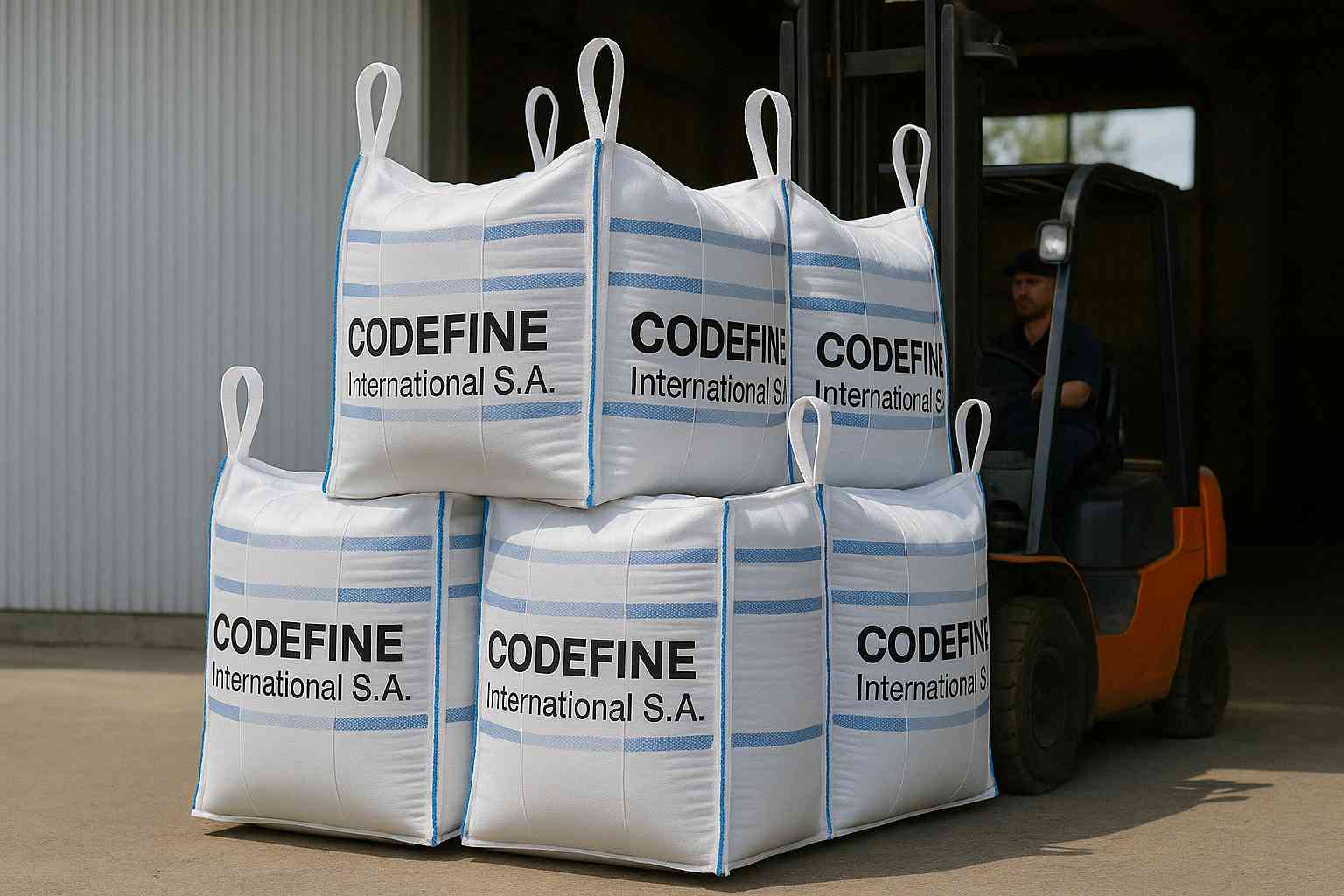
Breathable FIBCS are a particular type of bulk bag. Otherwise known as ventilated FIBCs, these bags are typically made from woven fabric and can include ventilation strips to allow for optimal airflow. This helps prevent moisture from building up on the inside of bags, protecting contents from damage.
Because of their breathable properties, these bags are particularly useful for storing foodstuffs, ensuring contents stay fresh during storage and transportation. Alongside the food processing and agricultural sectors, they’re also readily used by the mining, construction, and pharmaceutical manufacturing industries.
Still not sure what sets ventilated bulk bags apart from regular FIBCs? Below, we’ll take a closer look at how ventilated bulk bags actually work.
Because they’re made from woven polypropylene, ventilated bulk bulks are already inherently breathable. However, what makes them different from standard FIBCs is the inclusion of additional air vents. The sole reason for these vents is to encourage optimal air circulation, preventing moisture buildup from damaging stored materials.
You also have a choice between coated and uncoated breathable bulk bags. If you’re looking to store and transport larger goods, such as firewood or fresh fruit and vegetables, uncoated bags are a good option. Generally, wider material strands and gaps between bag panels allow for sufficient airflow, keeping products dry and avoiding spoilage.
However, if you’re dealing with smaller material, such as grains, it make sense to choose coated FIBCs. The inclusion of a coating or liner will help stave off moisture, protecting against damage. If you want enhanced ventilation to prevent dampness, it’s worth investigating different varieties of FIBC, such as baffle bags.
| Uncoated ventilated | Coated or lined ventilated | |
|---|---|---|
| Airflow | Highest, through fabric and vent panels | Airflow through vent panels only |
| Fines retention | Poor, suits larger products | Good, retains fine particles |
| Moisture ingress from outside | Higher | Restricted by coating or liner |
| Typical contents | Firewood, potatoes, onions, citrus | Grains, pellets, granules, powders |
| Trade-off | Not suitable for fine material | Reduced total breathability |
Thanks to a combination of breathable woven fabric and additional air vents, ventilated FIBCs are highly effective at staving off moisture. Increased airflow helps negate the issue of condensation, while any moisture that does accumulate within a bag quickly evaporates. Ventilated panels also help drain and dry certain materials, preventing spoilage, degradation, and mold growth.
Breathable FIBCs are incredibly effective at preventing moisture build-up. The inclusion of air vents ensures constant airflow is achieved, helping stave off humidity and prevent mold from gaining a foothold. This is essential when using FIBCs to store and transport perishable items and prevent spoilage. It can also help maintain high levels of product quality. Even if moisture damage doesn’t ruin stored products, it can lead to things like discoloration and other minor forms of degradation. Ventilated FIBCs help prevent this, protecting your bottom line.
If you’re looking to store and transport perishable goods like fruit and vegetables, breathable FIBCs are the obvious choice. These bulk bags can dramatically extend the shelf life of stored produce, making them ideal if lengthy transport times can’t be avoided.
In bulk storage settings and transport scenarios, condensation is a major concern. While environmental conditions can rarely be changed, you can help mitigate them by using containers like breathable FIBCs.
While breathable FIBCs are primarily used to store and transport foodstuffs and perishable items, these aren’t the only products that can benefit from ventilated bulk bags. Granulated material and powders also benefit from improved airflow, making ventilated FIBCs a go-to choice for the pharmaceutical and construction sectors.
There are many instances when it makes sense to use ventilated bulk bags over traditional FIBCs. If you’re operating within the agricultural or food processing sectors, bulk bags are an obvious choice. Ideal for storing and transporting fresh produce, continuous airflow will ensure items remain in optimal condition while preventing condensation and spoilage.
If you’re in the pharmaceutical or chemical manufacturing sectors, ventilated bulk bags once again make an ideal addition to your operation. Whether you’re dealing with sensitive powders or finished products, breathable bags ensure moisture will never cause any issue to stored items, rendering them safe for use.
Breathable FIBCs are also a good choice for the construction sector. Particularly effective at storing raw materials, ventilated containers help protect granulated and powdered materials against moisture, preventing setting and waste.
| Product | Ventilated bag needed | Recommended build | Primary risk managed |
|---|---|---|---|
| Potatoes, onions, root vegetables | Yes | Uncoated, full vent panels | Condensation, rot, sprouting |
| Firewood and timber offcuts | Yes | Uncoated, wide vent strips | Trapped moisture, mould |
| Citrus and hard fruit | Yes | Uncoated | Ethylene and humidity build-up |
| Grain, wheat, corn | Situational | Coated or lined, vented | Moisture migration with fines retention |
| Wood pellets | Situational | Coated, vented | Swelling and degradation |
| Fine powders, pharma intermediates | Rarely | Lined, sealed, vented only if specified | Contamination, caking |
| Cement and dry mortar | No | Sealed and lined | Setting on contact with moisture |
| Combustible powders | No, spec by static type | Type C or D, sealed | Ignition from static discharge |
All FIBCs should be inspected for signs of damage to ensure they perform optimally, but safety standards and compliance are even more important when it comes to ventilated FIBCs. To ensure your breathable FIBCs are as effective as possible, commit to regular checks. Even the best bulk bags will begin to degrade over time, so carry out detailed inspections to look for signs of wear and tear.
Breathable bulk bags might be effective at fighting off condensation, but moisture damage can eventually become a concern. Damage from UV light is another common source of degradation, especially if you’re storing containers outside. Ventilated panels need to be carefully studied for signs of wear and tear, with compromised bags quickly retired from use and replaced. Standard best practices should be observed when carrying out checks, such as inspecting for damage to lifting lips and other integral components.
Ventilated bulk bags are used across many industries for the enhanced safety factors they provide. They’re an effective solution for food storage, allowing for hygienic transportation of perishables while preventing spoilage. This makes it easier to store and deliver food to the end customer that’s fit for human consumption. They also allow for the safe storage of chemicals, while preventing them from moisture contamination and environmental factors when in transit.
Ventilation and static control are two separate properties, and it is important not to confuse them. Ventilated panels manage airflow and moisture. They do nothing to control the build-up of static electricity. A standard breathable FIBC is a Type A bag, which offers no static protection and should not be used in atmospheres containing flammable vapours, gases or combustible dust.
Where combustible dust or a flammable atmosphere is present, the bag specification is determined by its static type rather than its ventilation. Type B bags have a low breakdown voltage that prevents propagating brush discharges but do not dissipate static. Type C bags are conductive and must be grounded during filling and discharge. Type D bags are antistatic and dissipate charge safely without grounding. If your application involves both moisture-sensitive contents and a hazardous atmosphere, the correct route is a Type C or Type D bag specified with ventilation, not a standard breathable bag.
If you’re looking for a safe and reliable packaging solution for storing and transporting delicate products, ventilated bulk bags are a go-to choice. Highly effective at keeping condensation at bay, they’re the perfect packaging option for everything from perishables to chemical powders. Offering all the practicality of standard FIBCs, ventilated panels provide added functionality, making them a welcome addition to your operation.
At Codefine, you’ll find an extensive range of bulk bags available, including quality ventilated designs that will help keep moisture damage to an absolute minimum. Looking for something else? Why not explore our full range of packaging solutions online today? Alternatively, get in touch to discuss your requirements in more detail.
1. Is there a measurable standard for FIBC breathability, and how can buyers compare ventilation levels between products?
There is no universal single-number breathability rating applied across all FIBC manufacturers, but airflow performance is influenced by weave density, vent strip width, and the number of ventilated panels. Buyers should request specific design details from suppliers and, where critical, test airflow performance under representative storage conditions.
2. Do ventilated FIBCs require additional regulatory compliance for pharmaceutical applications?
Yes. In pharmaceutical and regulated manufacturing environments, packaging must meet strict cleanliness and traceability requirements beyond basic product performance. Breathable FIBCs used in these sectors should comply with applicable standards such as GMP guidelines, and suppliers should be able to provide relevant certification and batch documentation.
3. Can ventilated FIBCs help reduce the need for climate-controlled storage in certain applications?
In some cases, yes. By actively managing moisture and preventing condensation, breathable FIBCs can extend the acceptable storage window for moisture-sensitive goods in ambient conditions. However, they are not a substitute for temperature control when products have strict temperature requirements, only a complement to good storage practice.
4. How does the presence of ventilation strips affect the structural integrity of the bag?
Ventilation strips are open sections of the bag wall, which means they do not contribute to tensile strength in the way that woven panels do. In well-designed breathable FIBCs, the strip placement and panel construction are engineered to maintain the bag’s rated SWL, but buyers should confirm structural specifications with the supplier for heavy or abrasive materials.
5. Are breathable FIBCs recyclable at the end of their service life?
Yes. Like standard FIBCs, ventilated bags are made primarily from polypropylene and can be recycled through appropriate channels. The ventilation strips, if made from the same material, are generally recyclable alongside the rest of the bag, though any non-PP components such as labels or liner elements should be removed first.
See how our products can improve your operations and drive your success.

Get in touch to find out how Codefine can support your business with tailored solutions and expert guidance.