
Home » Posts Page » Blog » Products and Materials » Bulk Packaging Damage in Transit: Root Causes and Prevention
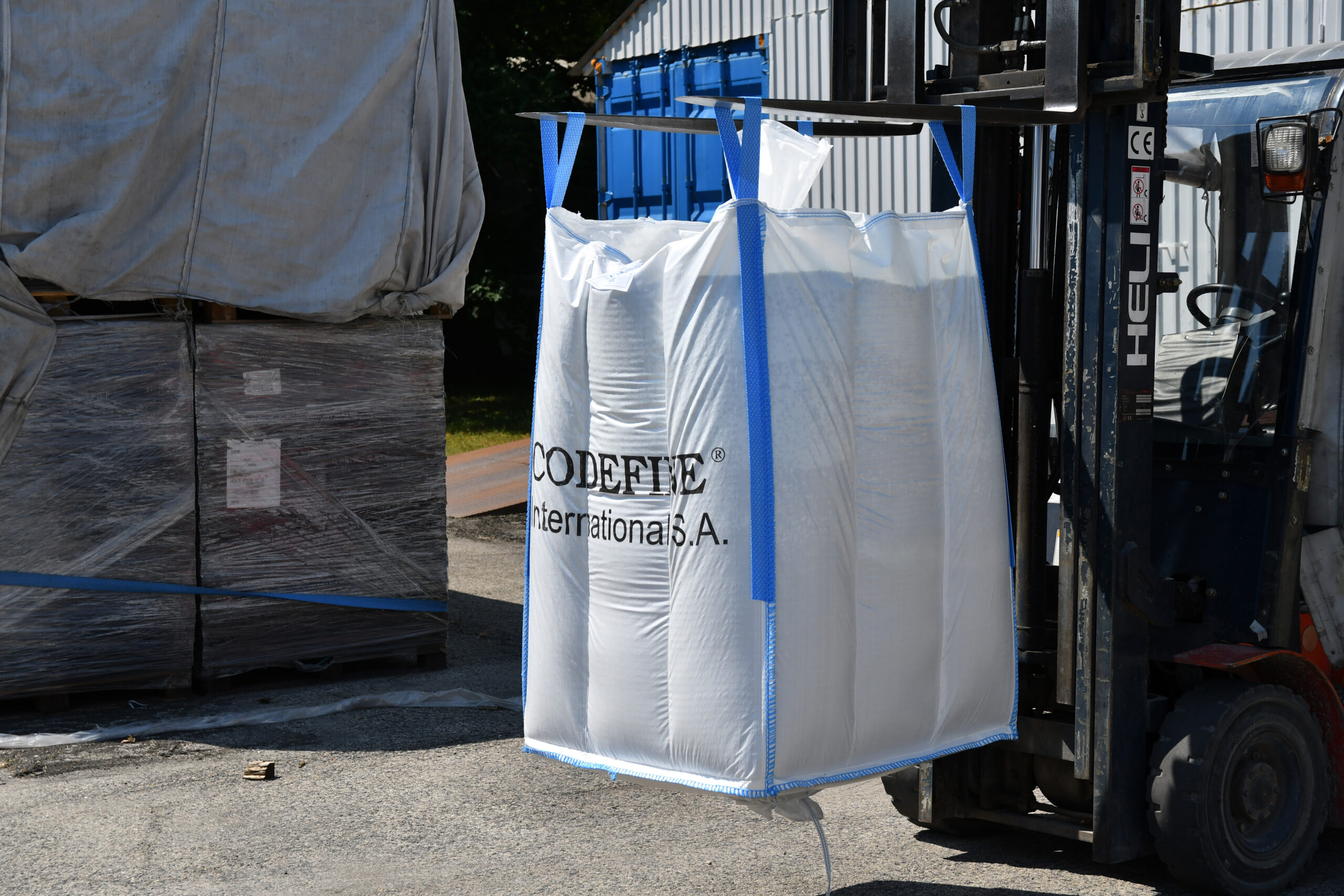
Bulk packaging operates at a scale that creates forces ordinary parcel shipping never encounters. A filled FIBC weighing 1,500 kg exerts a significant compressive load on the bags below it. A pallet of bulk bags shifting in a container during rough seas generates lateral forces that standard securing systems aren’t always designed to handle. Unlike rigid containers, flexible bulk bags can change shape as contents shift internally, altering the center of gravity mid-transit and creating new stress points with every movement.
Most bulk shipments also pass through multiple handling touchpoints: filling, palletizing, loading, transshipment, unloading, and final placement. Each one is a potential damage event. Understanding what causes FIBC bag failures , including the hidden stress that precedes visible damage , is the starting point for building packaging that survives the full journey.
Force | Primary damage type | Most common in |
Vibration | Fabric abrasion, seal fatigue, progressive structural wear | All transport modes, especially road and sea |
Impact and shock | Loop tears, seam rupture, punctures | Loading/unloading, rail shunting |
Load shifting | Abrasion, loop stress, structural deformation | Road transport, sea freight in rough weather |
Compression and stacking stress | Seam failure, bag deformation, base panel stress | Warehousing, multi-tier stacking in containers |
Moisture and environmental exposure | Fabric weakening, product degradation, and liner failure | Sea freight, outdoor loading/unloading |
Vibration is the most pervasive force, and the most underestimated. Every transport mode generates it. The damage is cumulative: fabric abrades where bags contact each other or surfaces, seams and closures fatigue under repeated stress cycles, and strapping progressively loosens. A bag that looks intact at loading and arrives visually undamaged may have significantly weakened seams that will fail at the next fill cycle.
Impact and shock is sudden and event-specific, forklift contact, drops during loading, container doors closing against cargo. Impact damage concentrates at vulnerable points: lift loops, seams, and base corners. Not all impact damage is immediately visible, which is why pre- and post-transit inspection matters even when no obvious incident occurred.
Load shifting causes abrasion and loop stress when bags move against each other or container surfaces. Baffle bags significantly reduce this risk by maintaining a consistent rectangular profile when filled, improving stacking stability, and reducing bag-to-bag contact during transit. Unbaffled bags bulge outward, creating irregular contact points and an unstable load footprint.
Compression from stacking bags beyond their rated capacity, or in configurations that concentrate load unevenly, stresses seams and base panels progressively. ISO 21898:2024 introduced a requirement for all certified FIBCs to be labeled with their maximum stacking capacity. Knowing how to stack bulk bags safely and verifying that the bag specification supports the intended stack height eliminates one of the most straightforward failure modes.
Moisture and environmental exposure weaken polypropylene fabric and compromise liner integrity, and moisture-weakened packaging is more susceptible to vibration and impact damage. Sea freight creates particular risk through “container rain”: temperature cycling inside containers causes condensation that deposits moisture directly on bag surfaces. The full picture of moisture protection is covered in our article on why moisture damage happens even in moisture-resistant FIBCs. For transit, the key point is that the moisture specification must account for the actual journey, not just ambient storage conditions.
Most transit damage traces to a mismatch between what packaging was specified for and what the journey actually involved. These decisions have the greatest impact.
Specify for the full journey, not just fill weight. Most buyers specify FIBCs for product compatibility and safe working load. Fewer specify the transit duration, transport mode, stacking height in the container, or the number of handling touchpoints. The most demanding leg should drive the specification, not the average.
Match the safety factor to the actual handling cycles. Single-trip bags are designed for one fill-and-empty cycle. Shipments passing through multiple facilities or involving transshipment require multi-trip construction. Using single-trip specification in multi-handling scenarios is one of the most common causes of loop and seam failure during transit.
Specify liner fit for transit conditions. A liner correctly specified for the product but not the transit environment will underperform. Sea freight requires a sealed liner system designed for temperature cycling, not just ambient humidity control. Polyethylene liner selection should account for the full supply chain journey, including form-fit versus tubular, depending on movement and vibration exposure.
Use container liners for ocean freight. For bulk materials shipped in containers, container liners protect cargo from condensation, moisture, and contamination at the container level, a complementary layer of protection for hygroscopic materials or long ocean transits.
Even correctly specified packaging sustains damage when handling practices introduce avoidable stress.
Palletization. Properly palletized loads, matched pallet size, column stacking, stretch wrap at three to five passes, including the base, and strapping, sustain significantly less damage. Overhang beyond the pallet edge reduces stacking strength and creates unsupported stress on bag corners.
Void fill in containers. Empty space in a container is space for the load to shift into. Airbags and dunnage fill voids and brace loads against lateral forces. Even weight distribution across the container floor, with heavy items low and spread, reduces load movement during rough weather and road transport.
Securing road transport. Tie-downs, blocking, and bracing prevent bags from shifting during cornering and braking. Every movement against a hard surface during road transit is a potential abrasion or loop stress event.
Forklift discipline. Smooth tines, using all lift loops simultaneously, lifting at the correct angle, and never dragging bags across surfaces, eliminate most impact-related damage. The FIBC safe handling guide covers the protocols that protect bags through every stage, from filling to discharge.
Pre-shipment inspection. Checking seams, loops, and liner integrity before loading catches compromised packaging before it enters transit. Reviewing the bulk bag unloading guide practices at the receiving end also helps identify damage patterns that point back to specific transit causes.
Transport mode | Primary hazard | Key consideration |
Road | Vibration, lateral shifting, transfer impacts | Baffle construction, full securing, multi-trip rating |
Sea freight | Container rain, prolonged vibration, rough-weather shifting | Sealed liner, container liner, robust stacking spec |
Rail | Shunting impacts, vibration | Reinforced seams, adequate stacking rating |
Multi-modal | Cumulative damage, multiple handling touchpoints | Specify for the most demanding leg |
The multi-modal case deserves particular attention. A shipment moving by road to port, then by sea, then by road to its destination accumulates damage across all three modes and every transfer point. The specification should be designed for the total journey, not just the longest or most visible leg.
At Codefine, we help procurement and operations teams specify bulk bags for the full supply chain journey, not just the point of fill. Our range includes baffle bags for improved stability, lined and coated options for moisture-sensitive cargo, multi-trip constructions for high-handling applications, and container liner solutions for ocean freight.
If you’re experiencing recurring transit damage, specifying packaging for a new export route, or verifying that your current specification matches your actual supply chain conditions, contact Codefine to speak with a packaging specialist or request a quote.
See how our products can improve your operations and drive your success.
Get in touch to find out how Codefine can support your business with tailored solutions and expert guidance.