
Home » Posts Page » Blog » Products and Materials » How UV and Weather Exposure Degrade FIBCs in Outdoor Storage
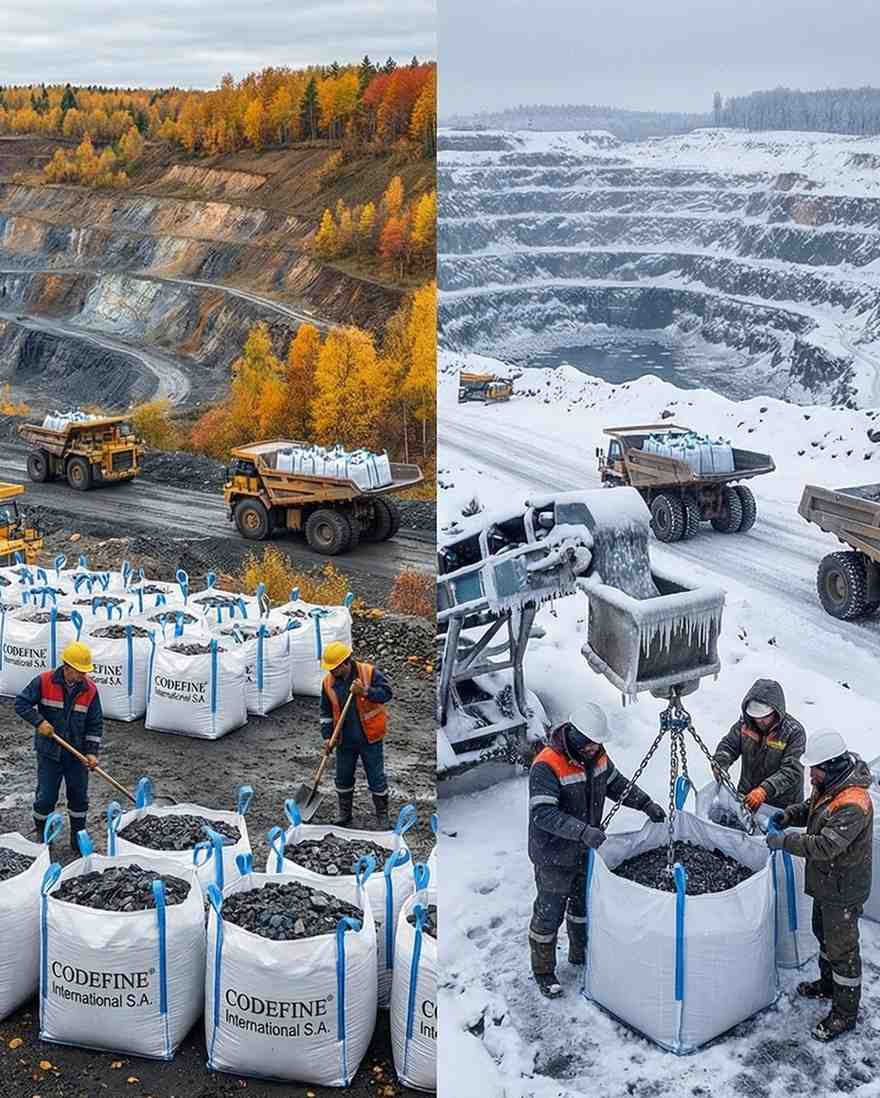
Polypropylene, the material behind most FIBC bulk bags and woven PP bags, has no natural resistance to sunlight. Exposed bags steadily lose strength, so a bag holding 1,000 kg in March can fail under far less weight by August. UV rarely works alone; heat, rain, and temperature changes accelerate the damage.
When you store bags outside, knowing how weather speeds up damage keeps your gear working instead of tearing open when you’re trying to unload.
UV light attacks polypropylene at the molecular level. Photons break the polymer chains that give the fabric its strength. You won’t see it happening. You’ll see the result: fading color, a chalky residue, and a stiff fabric rather than a flexible one.
Top bags take all the damage while lower ones stay fine, so a stack that looks okay from the outside can actually have a wrecked top layer. Stitched seams show stress first because the product’s weight is already pulling hard on those points.
Sun exposure drains strength over time, so a bag baking in direct heat degrades much faster than one sitting under overcast skies. That’s why generic shelf-life numbers on a spec sheet only tell part of the story. Your actual sun exposure, latitude, and storage duration matter more than a manufacturer’s declared date.
UV contributes most to FIBC degradation, but it’s not the only factor to consider. Heat softens the fabric and speeds up that chemical reaction. Rain and moisture create a whole new set of problems the moment water sneaks in where it doesn’t belong.
Heat softens polypropylene, and it doesn’t need UV’s help to cause damage. A bag baking in the sun all day and cooling off at night expands and contracts on that same daily rhythm, and that constant flexing wears the fibers down on its own.
Dark-colored fabric absorbs more heat than light fabric, which means the color of your bags actually affects how fast this cycle does damage. Heat dries out the fabric’s flex, leaving bags feeling noticeably stiff long before you ever see UV cracks.
Water works differently than UV, but it’s still a problem. Rain pooling on stacked bags adds weight that strains seams already weakened by the sun. Humidity trapped against the fabric can grow mold, especially where bags are packed tight with no airflow between them.
Condensation is the sneakier one. A bag can develop moisture inside just from heating up and cooling down, especially if what’s packed inside pulls moisture from the air. Pair that with fabric already brittle from the sun, and you’ve got a bag failing in two directions at once.
A bag doesn’t need to tear for you to know it’s compromised. Catch these signs early, and you can pull affected bags before they fail mid-lift:
Sign of damage | Primary cause | Risk if ignored |
Fading, chalking | UV exposure | Strength loss, unpredictable failure load |
Stiff, brittle fabric | UV + heat cycling | Cracking under handling stress |
Weakened lift loops | UV + repeated load cycling | Loop failure during crane or forklift lift |
Mold, damp spots | Humidity, condensation | Product contamination, added weight |
Skipping a pre-lift check leaves hidden damage unseen. Inspect every outdoor-stored bag before moving it, especially the ones that look fine.
UV stabilizers get blended into the polypropylene resin before it’s woven into fabric, and they absorb UV energy before it can break down the polymer chains. Stabilized fabric still degrades eventually. Nothing left in the sun forever holds up. But it buys you a lot more usable time outdoors than unstabilized fabric ever will.
This matters most for anyone whose bags don’t move on a tight schedule. If your bags load and ship within days, UV stabilization is a nice-to-have. If bags sit in a yard for weeks between filling and pickup, or if empty bags wait outdoors for a future fill date, stabilization stops being optional. The difference between a bag lasting months outside versus a full year comes down to the additives mixed into the materials.
Stabilization level should be specified based on your actual exposure conditions. A facility in a high-UV climate with bags stored uncovered needs different conditions than enclosed facilities. Codefine’s FIBC bulk bags and woven PP bags can be specified with UV-stabilized fabric matched to your climate and expected storage duration, rather than a one-size formulation.
The biggest thing you actually control is whether bags sit under cover, not the fabric spec. A roof, a tarp, even a half-enclosed structure cuts direct UV exposure, extending the bag’s shelf life.
No cover? Keep bags off bare ground so moisture doesn’t creep up into the stack. Rotate stock so the same bags aren’t stuck on top baking in the sun the whole time. And leave some space between stacks so air can move; otherwise, trapped humidity leads to mold and caking.
For operations across agriculture and mining, the storage timeline should factor into the bag spec from the start. Codefine’s guide on properly storing and handling FIBC bags covers stacking heights, ground clearance, and rotation practices, and pairs well with baffle bag construction for operations that need bags to hold their shape through extended outdoor stacking.
Figure out how long your bags sit outside, not the best-case number on a spec sheet. A bag shipping out within a week needs less protection than one waiting a full season in a construction yard or mining stockpile. Match your UV stabilization to a real timeline, factor in climate and fabric color, and check on bags periodically instead of assuming they’ll be fine.
Codefine builds FIBC bulk bags and woven PP bags with UV-stabilized resin formulated for extended outdoor exposure, so operations in agriculture, mining, and construction can keep bags in yard storage. Get in touch to spec bags matched to your climate, storage duration, and handling conditions, or browse Codefine’s product range to see the full lineup.
How long can an FIBC bag stay in outdoor storage before UV becomes a problem?
It depends on climate, fabric color, and stabilization level, so there’s no single safe number. Unstabilized fabric can show measurable strength loss within weeks of direct sun exposure in high-UV regions. UV-stabilized fabric extends that window substantially. If bags will sit outside longer than a few weeks, specify stabilized fabric and inspect regularly rather than relying on a fixed timeline.
Does UV damage affect empty bags the same way as filled ones?
Yes, and sometimes worse. Empty bags can flap and fold in wind, which adds mechanical stress to fabric already weakened by UV exposure. Folded bags develop stress concentrations along crease lines, too. Filled bags at least stay in a fixed shape. If empty bags wait outdoors before use, treat their storage conditions with the same care as filled inventory.
Can I tell if a bag is UV-damaged just by looking at it?
Fading and chalking are visible early signs, but brittleness and strength loss can be present before they’re obvious to the eye. A quick fabric test like folding a corner and checking for cracking, or rubbing the surface for chalky residue, will catch damage a visual scan alone might miss. When in doubt, treat visibly faded top-tier bags as compromised until tested.
Is UV-stabilized fabric worth the added cost for short-term storage?
If bags move within days of filling, standard fabric is usually enough, and stabilization adds cost without much benefit. Once storage stretches into weeks or spans a season, stabilized fabric prevents failures during handling and avoids scrapped or rejected loads. The right choice comes down to your actual exposure window, not a blanket rule.
Does covered storage eliminate the need for UV-stabilized fabric?
Covered storage reduces exposure. Translucent roof panels, open dock doors, and partial enclosures still let portions of UV light through. Stabilized fabric and covered storage work best together rather than as substitutes for one another, especially for bags that spend any part of their life outside a fully enclosed building.
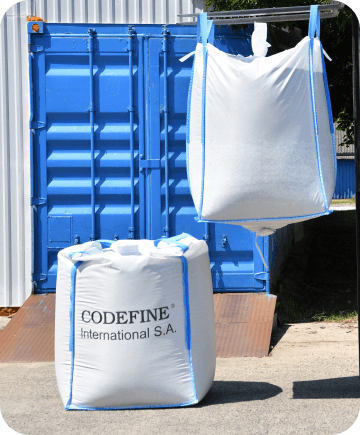
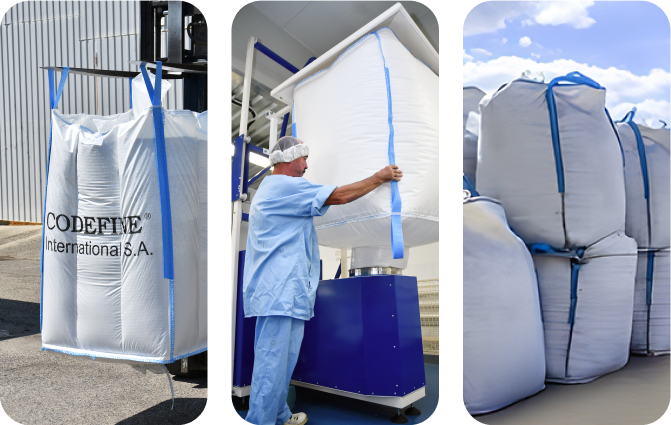
See how our products can improve your operations and drive your success.
Get in touch to find out how Codefine can support your business with tailored solutions and expert guidance.