
Home » Posts Page » Blog » Products and Materials » How to Improve Warehouse Efficiency Using Automated FIBC Filling Systems
Warehouses today are under pressure to move higher volumes with fewer resources. Labor shortages, safety concerns, and the need for faster turnaround times have made automation a strategic priority rather than a long-term goal.
Automation helps warehouses replace repetitive manual tasks with controlled, repeatable processes. In bulk material handling, this shift is especially important, as manual filling is labor-intensive, time-consuming, and prone to inconsistency. Automated systems allow warehouses to standardize operations, improve flow, and create more predictable outcomes across shifts and production cycles.
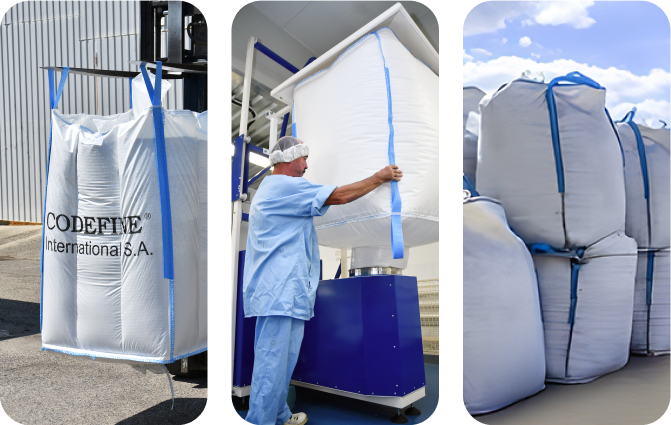
Automated FIBC filling systems are equipment setups designed to fill bulk bags accurately and efficiently with minimal manual intervention. These systems typically integrate bag positioning, weight control, material flow regulation, and discharge mechanisms into a single automated process.
Unlike manual or semi-automated filling, fully automated systems reduce reliance on operators for lifting, holding, and monitoring bags. Sensors, control units, and programmable logic systems manage fill accuracy and consistency, allowing operators to focus on oversight rather than physical handling.
Automated FIBC filling systems are commonly used in industries such as agriculture, chemicals, construction materials, food processing, and industrial manufacturing, where bulk materials must be handled quickly and safely.
The most immediate benefit of automation is increased throughput. Automated systems fill FIBC bulk bags faster and more consistently than manual processes, allowing warehouses to process higher volumes without extending operating hours.
Efficiency Factor | Manual FIBC Filling | Automated FIBC Filling Systems |
Filling speed | Slower and operator-dependent | Fast, consistent cycle times |
Labor requirements | High manual labor involvement | Significantly reduced labor needs |
Fill weight accuracy | Variable, prone to over/underfilling | High accuracy through automated weight control |
Throughput consistency | Inconsistent across shifts | Predictable and repeatable output |
Risk of bottlenecks | High due to fatigue and setup time | Low due to continuous operation |
Material loss and spillage | More frequent spillage and dust | Minimal spillage with controlled flow |
Workplace safety | Higher risk from lifting and exposure | Improved safety with reduced manual handling |
Scalability | Limited by workforce availability | Easily scalable with increased demand |
Automation also improves labor efficiency. Fewer workers are required to manage filling operations, which reduces physical strain and reallocates labor to higher-value tasks such as quality control and logistics coordination. This is especially valuable in warehouses facing labor shortages or high turnover.
Accuracy is another key efficiency driver. Automated filling systems maintain consistent fill weights, reducing overfilling, underfilling, and material waste. This consistency improves inventory accuracy and simplifies downstream logistics and documentation.
Finally, automation reduces bottlenecks. Manual filling often slows operations due to setup time, fatigue, and variability between operators. Automated systems operate at predictable speeds, enabling smoother workflow planning and better alignment with upstream production and downstream shipping.
Successful implementation begins with evaluating how automation fits into the existing warehouse layout. Space availability, ceiling height, material flow, and integration with conveyors or palletizing systems all influence system design.
The type of bulk material being handled is another critical factor. Flow characteristics, particle size, and moisture sensitivity affect system configuration and performance. Warehouses must also consider how automated filling systems integrate with inventory management and production planning systems to maintain visibility and control.
Equally important is the quality and consistency of the FIBC bulk bags used. Automated systems rely on standardized bag dimensions and reliable material strength to operate efficiently. Inconsistent or low-quality bags can disrupt automation, reduce accuracy, and increase downtime.
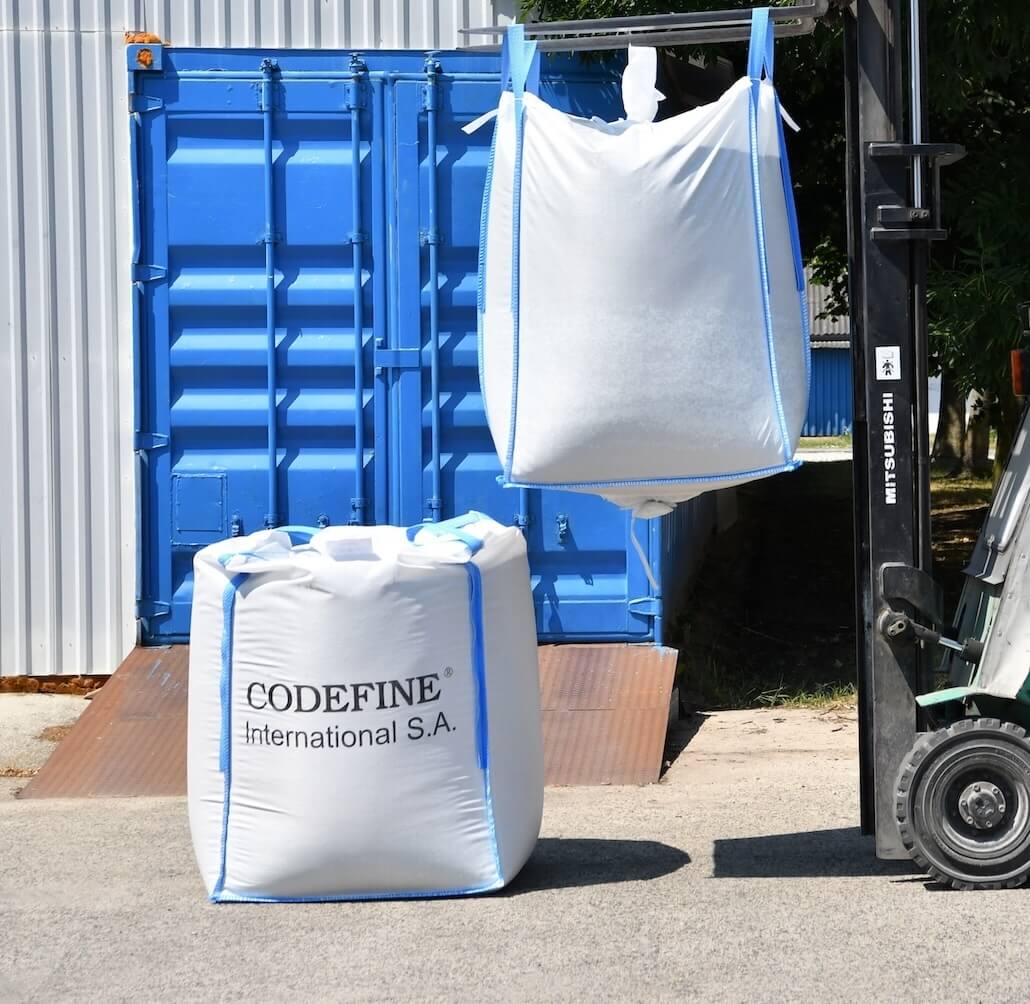
Automation amplifies both strengths and weaknesses in bulk packaging. High-quality FIBC bulk bags support smooth automated filling, consistent weight distribution, and reliable handling throughout the warehouse.
Bags designed for automated environments must maintain structural integrity under repeated stress and align precisely with filling and discharge equipment. Poor seam quality, inconsistent sizing, or weak materials can undermine the benefits of automation by causing misalignment, leaks, or system interruptions.
For warehouses investing in automation, selecting FIBC bulk bags that meet industrial standards is essential to achieving long-term efficiency gains.
Codefine supports manufacturers and warehouses implementing automated FIBC filling systems by providing high-quality FIBC bulk bags designed for demanding operational environments. With a focus on consistency, durability, and compatibility with automated processes, Codefine’s bulk packaging solutions help warehouses maintain efficiency at scale.
By aligning packaging quality with automation technology, Codefine enables manufacturers to reduce operational risk, improve throughput, and build more resilient bulk handling operations. For warehouses seeking to modernize and optimize bulk material handling, the combination of automated filling systems and reliable bulk packaging is a proven path to sustained efficiency.
See how our products can improve your operations and drive your success.
Get in touch to find out how Codefine can support your business with tailored solutions and expert guidance.