
Home » Posts Page » Blog » Products and Materials » Type C vs. Type D Static Protection: Which FIBC Do You Need?
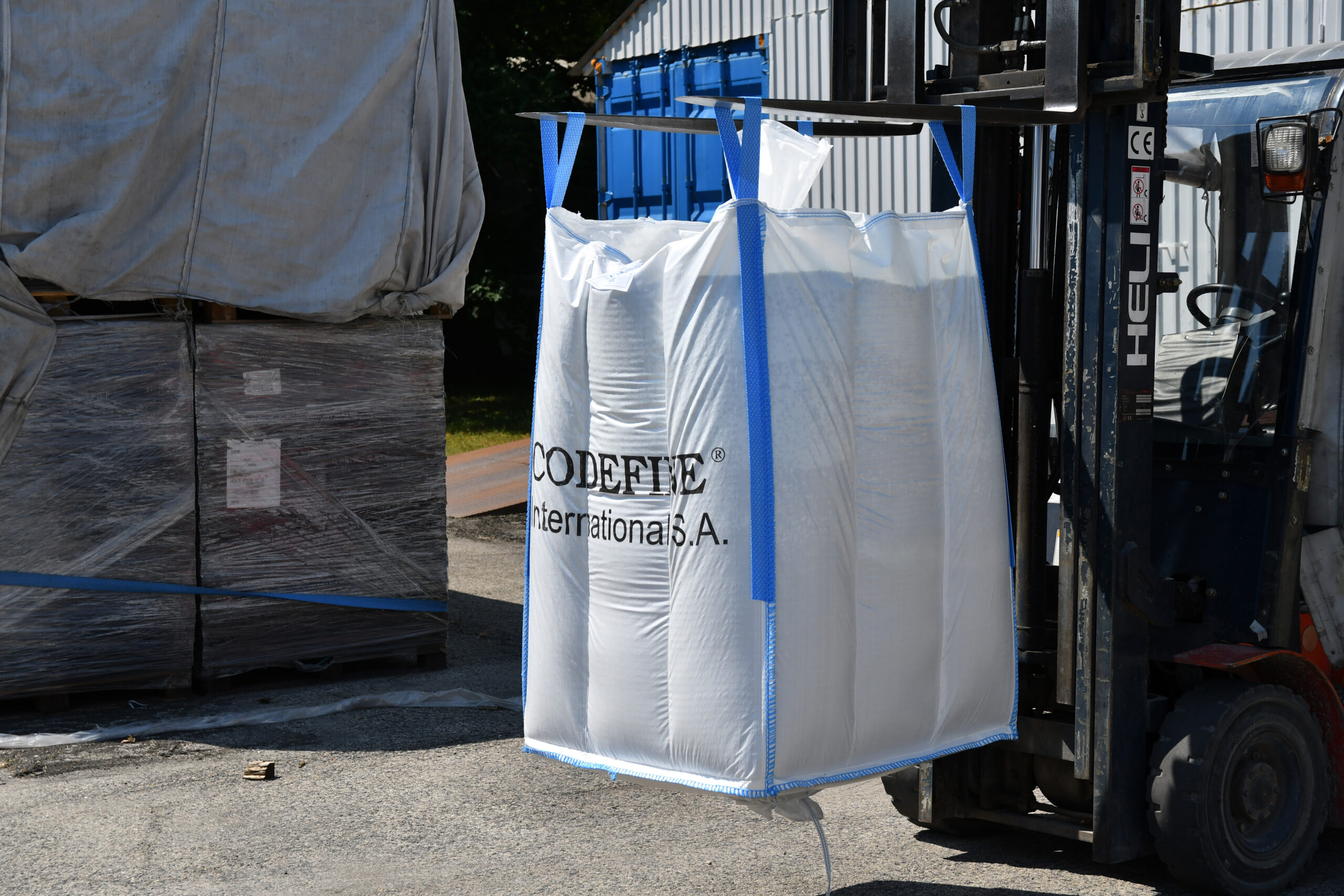
Static electricity is generated when materials move, rub, or separate, conditions that are common during FIBC filling, transportation, and discharge. As bulk materials flow into or out of a bag, electrostatic charges can build up on both the product and the packaging.
In environments where flammable dusts, vapors, or gases are present, a single static discharge can become an ignition source. The risk increases during dry conditions, high flow rates, or repeated handling cycles. Without proper static control, even routine operations can turn hazardous.
This is why antistatic FIBCs are used in industries such as chemicals, food processing, pharmaceuticals, and industrial manufacturing.
FIBCs are classified into different types based on how they manage electrostatic charges. While Types A and B offer limited or no static protection, Types C and D are specifically engineered for use in potentially explosive atmospheres.
Type C and Type D FIBCs are designed to prevent dangerous static discharge, but they rely on different mechanisms to do so. Choosing between them depends on operational conditions, grounding practices, and risk tolerance.
A Type C FIBC is constructed using conductive threads woven into the fabric. These threads create a network that safely channels static electricity away from the bag and into the ground.
For a Type C FIBC to function safely, it must be properly grounded during filling and discharge. When grounding is correctly applied, static charges are dissipated in a controlled manner, preventing sparks and dangerous discharge.
Type C FIBCs are widely used and effective when grounding procedures are strictly followed. However, their safety depends entirely on operational discipline. If grounding is forgotten, improperly connected, or damaged, the bag may pose a serious risk rather than prevent one.
Type D FIBCs use a different approach to static protection. Instead of relying on grounding, they are made from specialized static-dissipative fabrics that neutralize electrostatic charges as they form.
This technology allows static electricity to dissipate into the surrounding air without creating sparks or requiring an external grounding connection. As a result, Type D FIBCs do not need to be grounded during use.
Type D bags are especially valuable in environments where grounding is difficult to control, inconsistent, or impractical. They reduce dependence on human procedures, lowering the risk of errors during daily operations.
The most important difference between Type C and Type D FIBCs lies in how static electricity is controlled. Type C bags require grounding to safely discharge static, while Type D bags dissipate static without grounding.
Feature | Type C FIBC | Type D FIBC |
Static protection method | Conductive yarns dissipate static through grounding | Static-dissipative fabric neutralizes static without grounding |
Grounding required | Yes – must be properly grounded during filling and discharge | No grounding required |
Risk if procedures are not followed | High – improper or missing grounding can create ignition risk | Low protection does not rely on human action |
Suitable for explosive atmospheres | Yes, when grounded correctly | Yes, even where grounding is difficult |
Operational complexity | Higher due to grounding procedures | Lower, simpler day-to-day operation |
Dependence on operator training | High | Lower |
Typical use environments | Controlled facilities with strict safety protocols | Complex, mobile, or high-risk environments |
Cost considerations | Generally lower upfront cost | Higher upfront cost, reduced operational risk |
Common industries | Chemicals, food processing, industrial manufacturing | Chemicals, pharmaceuticals, high-risk bulk handling |
Operationally, this distinction is critical. Type C FIBCs can be highly effective in facilities with strict grounding protocols and trained personnel. However, if grounding is missed or compromised, the safety advantage is lost.
Type D FIBCs offer greater flexibility and reduced procedural risk, making them well-suited for complex operations, mobile filling stations, or environments with multiple operators and variable conditions. While they are typically more expensive, the added safety margin often justifies the investment.
Selecting between Type C and Type D FIBCs should be based on a thorough risk assessment rather than cost alone. Factors such as material flammability, presence of explosive atmospheres, environmental conditions, and operational discipline all play a role.
If your facility has reliable grounding systems, strong safety training, and consistent procedures, Type C FIBCs may be an appropriate and cost-effective choice. If grounding cannot be guaranteed at all times, or if human error presents a significant risk, Type D FIBCs provide an added layer of protection.
In many cases, insurance providers and safety auditors also influence the decision, as they may prefer solutions that minimize reliance on procedural compliance.
One of the most common mistakes is assuming that Type C and Type D FIBCs are interchangeable. While both are antistatic, they are not designed to be used under the same conditions.
Another frequent issue is improper grounding of Type C bags. Even a well-designed Type C FIBC becomes unsafe if grounding cables are damaged, disconnected, or overlooked. Using non-certified or incorrectly specified bags in hazardous environments is another risk that can have serious consequences.
Understanding the limits of each FIBC type is essential to maintaining a safe operation.
Codefine supports manufacturers working in static-sensitive environments by offering both Type C and Type D FIBC solutions that meet international safety standards. Beyond supplying bulk bags, Codefine helps customers evaluate their operational conditions and select the appropriate level of static protection.
By focusing on quality, consistency, and compliance, Codefine enables safer bulk handling across industries where static electricity presents real risks. Choosing the right FIBC is a critical safety decision, and having the right partner helps ensure that decision is made with confidence.
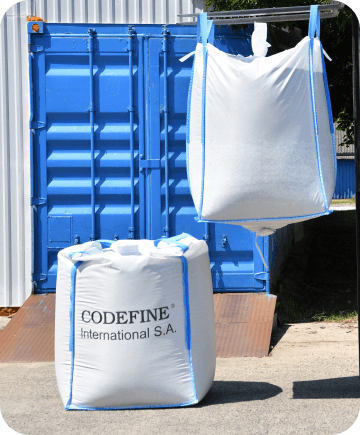
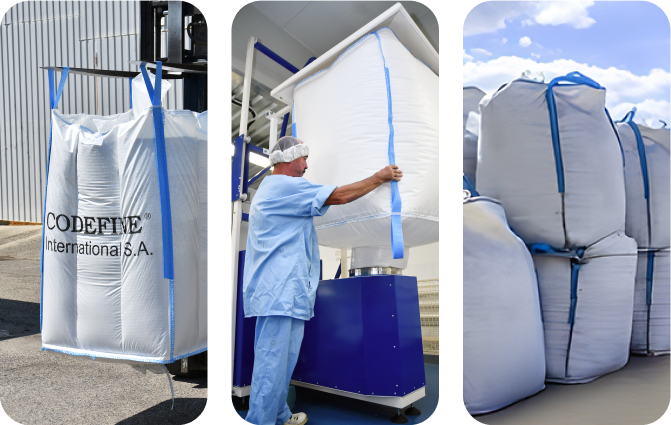
See how our products can improve your operations and drive your success.
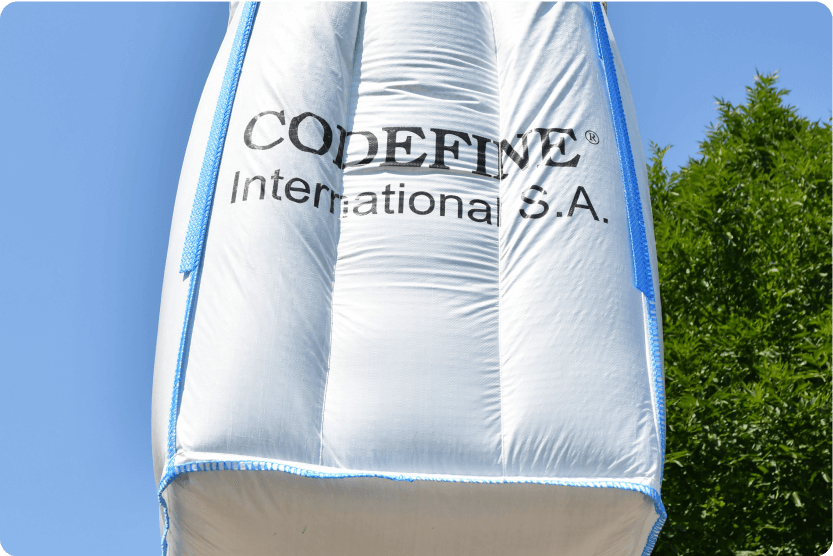
Get in touch to find out how Codefine can support your business with tailored solutions and expert guidance.