
Home » Posts Page » Blog » Gaylord Box vs. FIBC Bulk Bags: Which Is Better for Your Storage Needs?
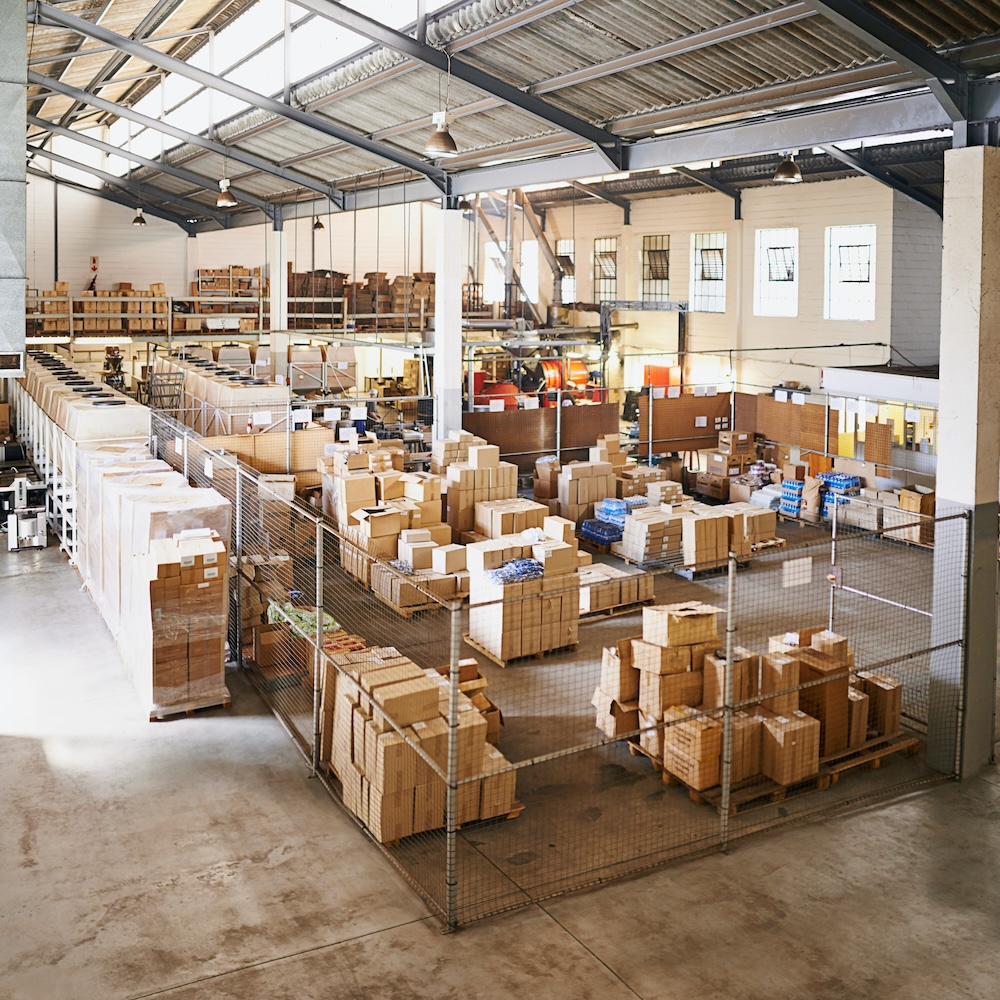
Gaylord boxes are essentially large corrugated cardboard containers, although some containers can be made of plastic and metal. These pallet-sized boxes are widely used throughout the shipping industry and are sometimes referred to as jumbo boxes, pallet boxes, and bulk cargo containers. What is the size of a Gaylord box? The most commonly used size for Gaylord boxes is 48 x 40 x 36 inches, although larger sizes are available. Named after the company that first developed them, they’re designed to fit on top of pallets, allowing the transportation or storage of a significant amount of products within a single container
There are three main types of Gaylord boxes you’ll encounter, including rectangle (REC), Octagon (OCT), and High-Performance Tote (HPT) varieties. Each offers varying levels of strength because of its shape. With eight sides and more corners than standard boxes, octagons tend to be the strongest. However, rectangles tend to maintain their shape for longer, while they’re much easier to fill and empty. HPTs are available in both four and six-sided varieties, with optional extras like corner posts designed to support stacking. This makes HPTs a particularly robust option that’s ideal for storing and transporting bulk goods.
Flexible intermediate bulk containers (FIBCs) are industrial containers constructed from hard-wearing, yet flexible fabric. They’re designed for storing and transporting a wide variety of bulk products, particularly dry and flowable ones.
Benefits of FIBC bulk bags: they are typically made from heavy-duty polyethylene or polypropylene and can accommodate loads of up to 4000 pounds (around 1800 kilos). There are several different types of FIBC bags readily available, including 4-panel and U-panel containers. Circular or tubular FIBCs are yet another option. All can be customized with different filling and discharging features to accommodate specific applications.
Alongside construction types, there are four different FIBC bag types to choose from. FIBC bags types include Type As, which are designed for use with non-hazardous materials and offer no electrostatic protection. While Type B FIBCs don’t offer true antistatic protection, they are made from material boasting a low breakdown voltage, broadening their applications. Type C bags are electrically conductive, with these groundable bags suitable for transporting flammable powders in hazardous conditions. Made from static protective material, Type D bags offer reliable antistatic protection, without the need for grounding.
Although gaylord boxes and FIBCs both offer a reliable way to store and transport goods, these containers differ when it comes to design and construction. For starters, there’s material to consider. Gaylord boxes are manufactured from corrugated cardboard, whereas FIBCs are made from high-grade plastic polymers, such as woven polypropylene. Gaylord boxes also tend to offer lower carrying capacities than FIBCs.
When it comes to storage, FIBCs prove to be the most convenient choice. Unlike Gaylord boxes, which require pallets in order to be stacked, FIBCs don’t. Because they’re made from woven material, FIBCs can also be collapsed down and stowed when not in use. This isn’t the case with Gaylord boxes.
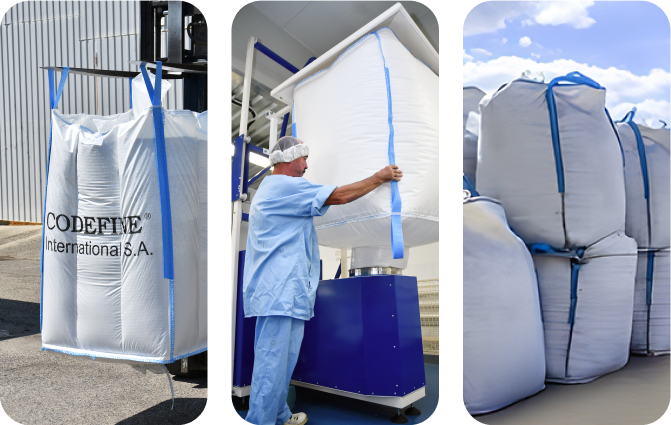
FIBCs can also be customized to meet very specific needs. By tailoring an FIBC with specific filling or discharge features, material handling is made simple. What’s more, as they’re designed to be handled by machinery like cranes and forklifts, FIBCs pose less risk to those working with them.
While FIBCs tend to be more expensive than Gaylord boxes, their durability ultimately makes them the most cost-effective option. Additionally, their lightweight design can help reduce shipping costs.
What is a Gaylord container good for? Gaylord boxes boast many benefits, with one of the most obvious ones being that they facilitate bulk handling. They’re designed with bulk transport and storage in mind, making them a good choice if you’re handling large volumes of material. While they do require pallets, Gaylord boxes are also stackable, with a sturdy construction that allows for safe stacking and optimized storage in warehouses.
FIBCs also offer high levels of product protection. Their woven construction gives them a high-tensile strength, while their thermoplastic material means that certain types of FIBC can be used to contain and transport hazardous materials. Their durability also makes them an eco-friendly choice, while many FIBCs can be recycled.
They’re also versatile and commonly used across many different industries. There are extensive options when it comes to customization, allowing FIBCs to be tailored toward very specific needs.
There are many reasons to consider making the switch to FIBCs for your storage and shipping needs. For one, they’re incredibly cost-effective, with no need for secondary packaging. They’re also lightweight, making them cheaper to ship than rigid containers.
FIBCs also offer high levels of product protection and efficient bulk packaging. Their woven construction gives them a high-tensile strength, while their thermoplastic material means that certain types of FIBC can be used to contain and transport hazardous materials. Their durability also makes them an eco-friendly choice, while many FIBCs can be recycled.
They’re also versatile and commonly used across many different industries. There are extensive options when it comes to customization, allowing FIBCs to be tailored toward very specific needs.
If you’re looking to streamline your storage operation, FIBCs are the obvious choice. Not only does their stackable nature save on space and avoid having to use pallets, but integrated lifting loops make it easier to move and transport FIBCs.
Gaylord boxes are used across many different industries, including manufacturing and distribution, agriculture, retail, and the automotive industry. They can also be used to store and transport construction materials, while they’re also commonly utilized by the textile and apparel sector. FIBC bags are even more widely used. Some of the key industries that use FIBC bulk bags include agriculture, the chemical industries, construction, and the food manufacturing sector.
Both types of containers are stackable and space-efficient. However, FIBCs don’t require pallets in order to be stacked, making them the more cost-effective and practical choice.
FIBCs and Gaylord boxes can both be used several times before reaching the end of their operational life. At this point, they can be recycled or disposed of. However, FIBCs tend to be more durable, granting them a longer lifespan.
Gaylord boxes cost less per unit, particularly reconditioned ones. FIBCs cost more upfront but remove the pallet, carry heavier loads per unit and survive more handling cycles, which lowers cost per tonne shipped. For repeat high volume movements the FIBC usually wins on total cost.
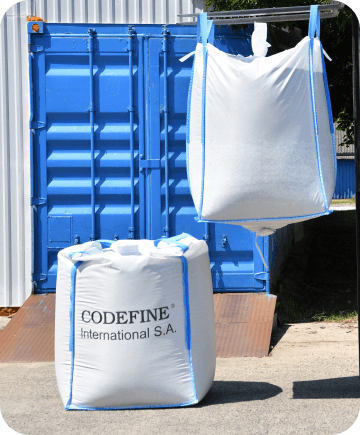
Because they’re made from recyclable materials, Gaylord boxes are generally considered an eco-friendly option. That being said, despite being made from polypropylene, FIBCs are also an environmentally conscious choice. Their durability means you won’t have to dispose of or recycle FIBCs as regularly as other types of containers. Furthermore, many FIBCs are made from recycled materials.
Looking to streamline your operation with more durable and cost-effective packaging solutions? At Codefine, we’ve been leading the way in sustainable packaging since the 1950s. Today, we work with companies in more than 50 countries across just about every industry sector. Looking for innovative, state-of-the-art packaging for your business? Explore the full Codefine range online today. Alternatively, get in touch to discuss your requirements in more detail.
1. How do Gaylord boxes and FIBCs compare for use on automated filling and conveyor lines?
FIBCs are generally better suited to automated filling systems due to their compatibility with filling spouts, pneumatic systems, and gravity-fed discharge setups. Gaylord boxes can work with some automation but typically require more manual intervention during filling and unloading, which can limit throughput in high-volume automated operations.
2. Which container type performs better in outdoor or exposed environments?
FIBCs with UV stabilizers and appropriate coatings are specifically designed to withstand outdoor exposure, and their polypropylene construction resists moisture and temperature variation better than corrugated cardboard. Gaylord boxes are generally unsuitable for outdoor storage as moisture significantly degrades their structural integrity.
3. Are there cold chain or frozen storage applications where one container type is clearly preferable?
For frozen or refrigerated bulk storage, polypropylene-based FIBCs generally outperform corrugated cardboard at low temperatures, where cardboard can become brittle and lose structural strength when exposed to condensation cycling. FIBCs maintain their flexibility and load-bearing properties across a wider temperature range.
4. How do Gaylord boxes and FIBCs compare for cross-border shipping and customs inspection processes?
Both container types can be used for international shipments, but FIBCs offer a practical advantage in customs scenarios where inspectors may need to access contents without fully unpacking the shipment. Discharge spout designs allow sampling without full unloading, whereas Gaylord boxes typically need to be opened from the top. FIBC documentation trails are also more developed for regulated goods categories.
5. Is there a scenario where using both Gaylord boxes and FIBCs in the same logistics chain makes sense?
Yes. Some operations use FIBCs for bulk upstream transport and storage, then transfer goods into Gaylord boxes at the distribution stage when pallet-based handling for retail or manufacturing customers is required. This hybrid approach takes advantage of the volume efficiency of FIBCs and the rigid, stackable format of Gaylord boxes for the final leg of delivery.
See how our products can improve your operations and drive your success.
Get in touch to find out how Codefine can support your business with tailored solutions and expert guidance.