
Home » Posts Page » Blog » Industry-Specific Solutions » Bulk Bags for Pharmaceutical Raw Materials: Risks & Requirements
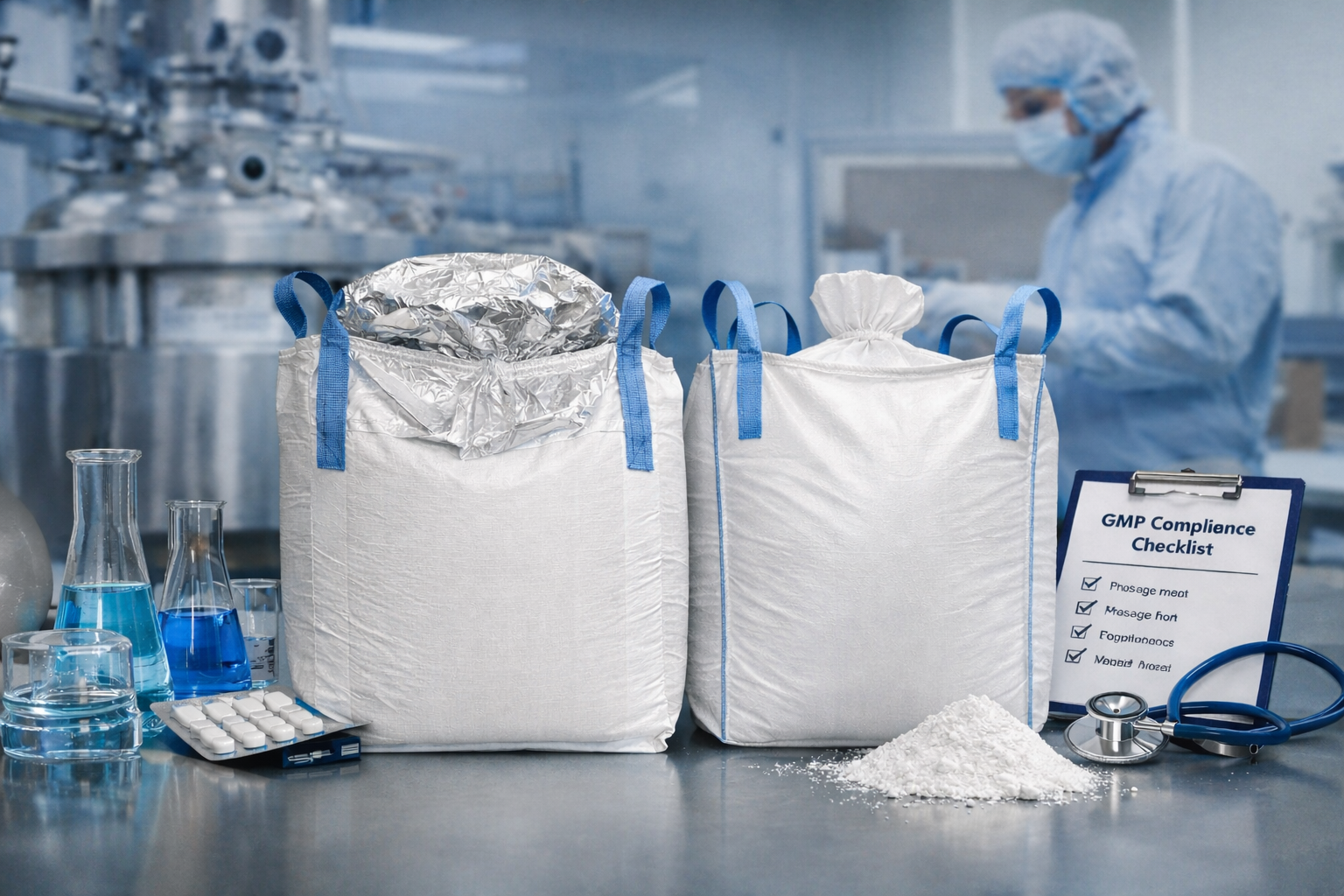
Unlike sectors such as mining or construction, pharmaceutical materials are highly sensitive. Even minimal contamination, static discharge, or moisture exposure can render an entire batch unusable.
Pharmaceutical facilities operate under Good Manufacturing Practice (GMP) standards, which extend beyond product formulation to include packaging materials that come into contact with raw ingredients. Bulk packaging must therefore meet elevated requirements in terms of material purity, documentation, and traceability.
Many pharmaceutical raw materials consist of fine, highly flowable powders that may be hygroscopic or electrostatically sensitive. These characteristics directly influence the choice of packaging. In such environments, Codefine’s high-quality FIBCs with pharmaceutical-grade liners or controlled polypropylene bags are engineered to minimize contamination risks while maintaining structural integrity.
Contamination remains the primary concern in pharmaceutical bulk packaging. Risks can arise from fabric shedding, foreign material introduction during handling, cross-contamination from reused packaging, or improper storage conditions.
To reduce these risks, pharmaceutical bulk bags must be produced using virgin polypropylene materials under controlled manufacturing conditions. Codefine’s FIBCs and woven PP bags designed for sensitive applications can incorporate multi-layer inner liners that create a clean barrier between the product and the outer woven structure. For additional protection, heat-sealed polyethylene liners may be integrated to minimize particulate migration.
In pharmaceutical settings where hygiene standards are paramount, packaging must be designed not only for strength but for cleanliness and containment.
Many pharmaceutical powders are hygroscopic, meaning they readily absorb moisture from the environment. Even slight humidity fluctuations can affect stability, flowability, and chemical performance.
Bulk packaging must therefore provide reliable moisture barriers. Codefine’s FIBCs can be fitted with specialized polyethylene or moisture-resistant liners to protect sensitive raw materials. For large-scale export shipments of pharmaceutical intermediates, container liners can provide controlled protection throughout long-distance sea freight, ensuring environmental stability from the production site to the destination.
Selecting the appropriate liner system is not optional in pharmaceutical logistics; it is central to maintaining batch integrity.
Static electricity is another critical consideration when handling fine pharmaceutical powders. During filling and discharge operations, electrostatic buildup can occur, creating potential ignition risks in controlled environments.
In such cases, Codefine offers static-protective FIBCs, including Type C and Type D designs, depending on grounding capabilities and environmental requirements. Choosing the correct static-dissipative configuration helps ensure safe handling without compromising compliance standards.
Electrostatic protection must be assessed based on the specific characteristics of the raw material and the production environment.
Pharmaceutical production environments often rely on automated or semi-automated handling systems. Weak seams, inconsistent dimensions, or improperly designed lifting loops can cause tearing, spillage, or production interruptions.
Bulk bags used in these facilities must demonstrate consistent safe working load (SWL) ratings, reinforced seam construction, and stable geometry under load. Codefine’s engineered FIBCs and reinforced polypropylene bags are designed to withstand repetitive lifting cycles while maintaining structural consistency. This is particularly important in high-throughput pharmaceutical plants where even minor packaging failures can trigger investigations, product quarantine, and costly downtime.
Compliance is foundational in pharmaceutical manufacturing. Packaging suppliers must provide full traceability and documentation to support audits and regulatory inspections.
This includes material certifications, batch records, testing reports, and confirmation of manufacturing standards. Codefine supports pharmaceutical clients with documented quality assurance processes, ensuring that every FIBC, polypropylene bag, or liner used in pharmaceutical applications meets traceability expectations.
Without proper documentation, even technically sound packaging can create regulatory exposure.
The appropriate packaging solution depends on volume, sensitivity, and logistics. FIBCs are commonly used for high-volume pharmaceutical intermediates and excipients due to their strength and compatibility with automated systems. Polypropylene and woven PP bags may be more suitable for mid-volume handling where flexibility and easier manual handling are required. For international bulk transport, container liners can provide efficient and protected shipment of pharmaceutical raw materials in full-container loads. Each packaging format must be evaluated not only for capacity but also for cleanliness, compatibility, and compliance.
As pharmaceutical production scales from pilot batches to commercial volumes, packaging systems must evolve accordingly. Standardizing specifications, validating performance under higher cycle counts, and ensuring supplier reliability are critical steps in reducing operational risk. Codefine works closely with pharmaceutical manufacturers to align bulk packaging design with production throughput, regulatory standards, and contamination control requirements. By integrating performance-driven FIBCs, polypropylene bags, woven PP bags, and specialized liners into controlled production environments, Codefine helps maintain compliance while supporting operational efficiency.
Codefine provides bulk packaging solutions tailored for pharmaceutical raw materials, combining material integrity, contamination control, and regulatory documentation. Through engineered FIBCs with protective liners, pharmaceutical-grade polypropylene bags, woven PP bags, and container liners for export applications, Codefine ensures packaging systems meet the strict demands of GMP-regulated environments.
By focusing on quality, traceability, and operational compatibility, Codefine helps pharmaceutical manufacturers reduce risk, protect product integrity, and maintain production continuity across the supply chain.
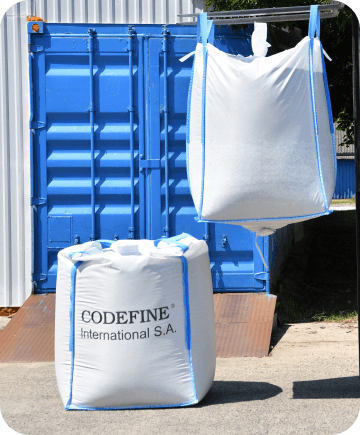
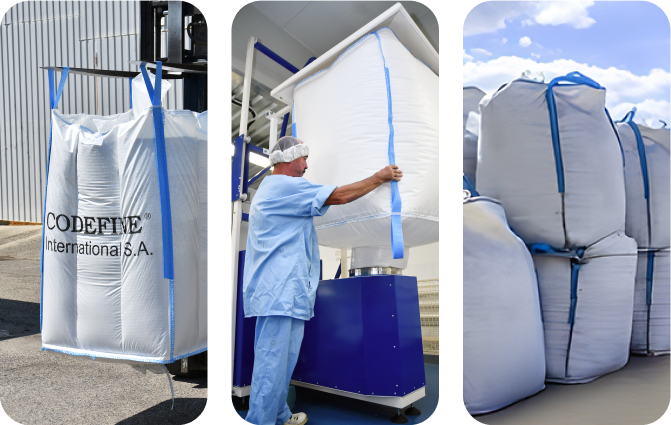
See how our products can improve your operations and drive your success.
Get in touch to find out how Codefine can support your business with tailored solutions and expert guidance.