
Home » Posts Page » Blog » Industry-Specific Solutions » Bulk Packaging for Export-Oriented Manufacturers: Key Considerations
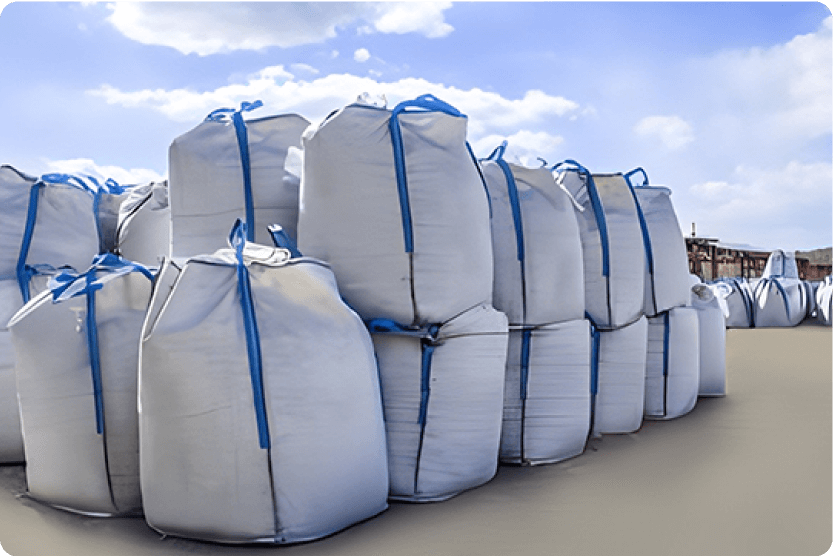
Bulk packaging for export-oriented manufacturers refers to high-capacity industrial packaging designed to transport large volumes of goods across international borders safely and efficiently. Unlike domestic packaging, export bulk packaging must perform consistently under extended transportation cycles that often include ocean freight, port handling, customs inspections, and inland distribution in destination markets.
These packaging solutions are widely used across industries such as agriculture, chemicals, construction, mining, and food production, where goods are shipped in bulk rather than as individual retail units. Export bulk packaging must be robust, standardized, and compatible with global logistics systems to ensure smooth cross-border movement.
Export-oriented manufacturers rely on several proven bulk packaging formats, each suited to specific product types and shipping conditions. FIBC bulk bags are commonly used for large-volume shipments of powders, granules, minerals, and agricultural products due to their high load capacity and efficient use of container space. Their structural strength and compatibility with mechanized handling systems make them a reliable option for long-distance transport.
Polypropylene bags and woven PP bags are often selected for lighter bulk goods and frequent export cycles. These bags provide a balance between durability and flexibility, making them suitable for agricultural produce, food ingredients, and industrial materials that require protection without excessive weight.
Bulk Packaging Type | Typical Export Use | Key Advantages | Export Considerations |
FIBC Bulk Bags | Powders, granules, minerals, agricultural commodities | High load capacity, space-efficient, compatible with mechanized handling | Requires quality material and seams for long-distance transport |
Polypropylene Bags | Agricultural produce, food ingredients, and industrial goods | Lightweight, flexible, and cost-effective for frequent shipments | Less suitable for very high-volume or heavy loads |
Woven PP Bags | Construction materials, chemicals, packaged bulk goods | Strong structure, tear resistance, good stacking performance | Must meet labeling and traceability requirements |
Container Liners | Dry bulk goods shipped in containers | Protects against moisture and contamination, maximizes container capacity | Requires proper installation and container compatibility |
Jute Bags | Fresh produce and agricultural exports | Breathable, natural material, suitable for certain crops | Limited moisture protection and reuse cycles |
Easy Box Solutions | Mixed or palletized export goods | Structured design, easy handling, reusable | Best for controlled supply chains and repeat routes |
Container liners are frequently used in containerized shipping to protect bulk goods from moisture, contamination, and residue. By lining standard shipping containers, manufacturers can maximize payload capacity while reducing the need for additional secondary packaging.
Material choice is a critical factor in export bulk packaging performance. Packaging materials must withstand humidity, temperature fluctuations, and mechanical stress throughout the journey. Inconsistent material quality can lead to product damage, spillage, or compromised safety during handling.
Export-oriented manufacturers also consider whether packaging should be reusable or single-use, depending on sustainability objectives, return logistics, and customer requirements. Durable materials that maintain their integrity over long distances help reduce product loss and improve overall supply chain reliability.
International transportation exposes bulk goods to a variety of risks, including vibration, compression, repeated handling, and environmental exposure. Effective bulk packaging design helps mitigate these risks by providing structural stability, load distribution, and protection against external conditions.
Well-designed bulk packaging supports safe stacking, efficient container loading, and easier handling at ports and warehouses. This reduces damage rates and ensures that goods arrive at their destination in the expected condition, even after extended transit periods.
Bulk packaging has a direct impact on export logistics costs. Optimized packaging solutions allow manufacturers to improve container utilization, reduce handling time, and lower freight costs per unit. Over time, these efficiencies translate into reduced operational expenses and more predictable shipping outcomes.
By minimizing damage, delays, and rework, well-designed bulk packaging also contributes to smoother logistics operations and improved customer satisfaction in international markets.
As manufacturers expand into new regions, consistency in bulk packaging becomes increasingly important. Standardized packaging solutions enable smoother coordination with logistics partners and simplify export operations across multiple markets.
A scalable bulk packaging strategy allows manufacturers to adapt to changing shipment volumes while maintaining quality and compliance. This flexibility supports long-term growth and strengthens supply chain resilience as export operations evolve.
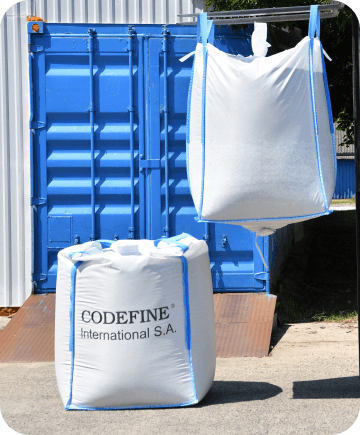
Codefine supports export-oriented manufacturers with a comprehensive range of bulk packaging solutions designed for the realities of global trade. From FIBC bulk bags and polypropylene bags to woven PP bags, container liners, jute bags for produce, and Easy Box solutions, Codefine addresses diverse export needs across industries.
By focusing on durability, compliance, and logistics efficiency, Codefine helps manufacturers protect their products, reduce operational risk, and optimize international shipments. With bulk packaging solutions built to perform under demanding export conditions, Codefine enables manufacturers to scale confidently and compete effectively in global markets.
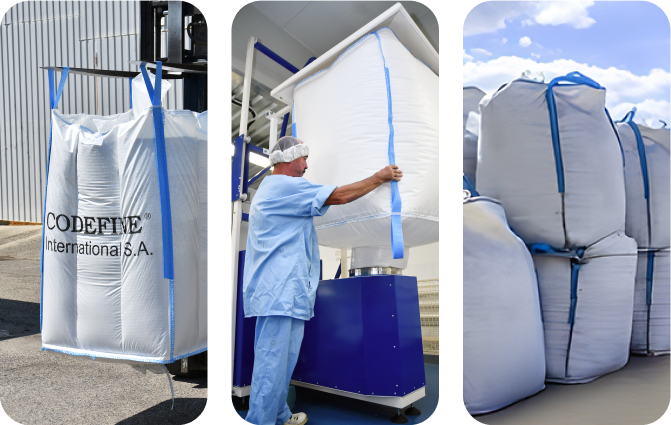
See how our products can improve your operations and drive your success.
Get in touch to find out how Codefine can support your business with tailored solutions and expert guidance.