
Home » Posts Page » Blog » Industry-Specific Solutions » FIBC Bulk Bags vs. Small Bags: A Total Cost Comparison
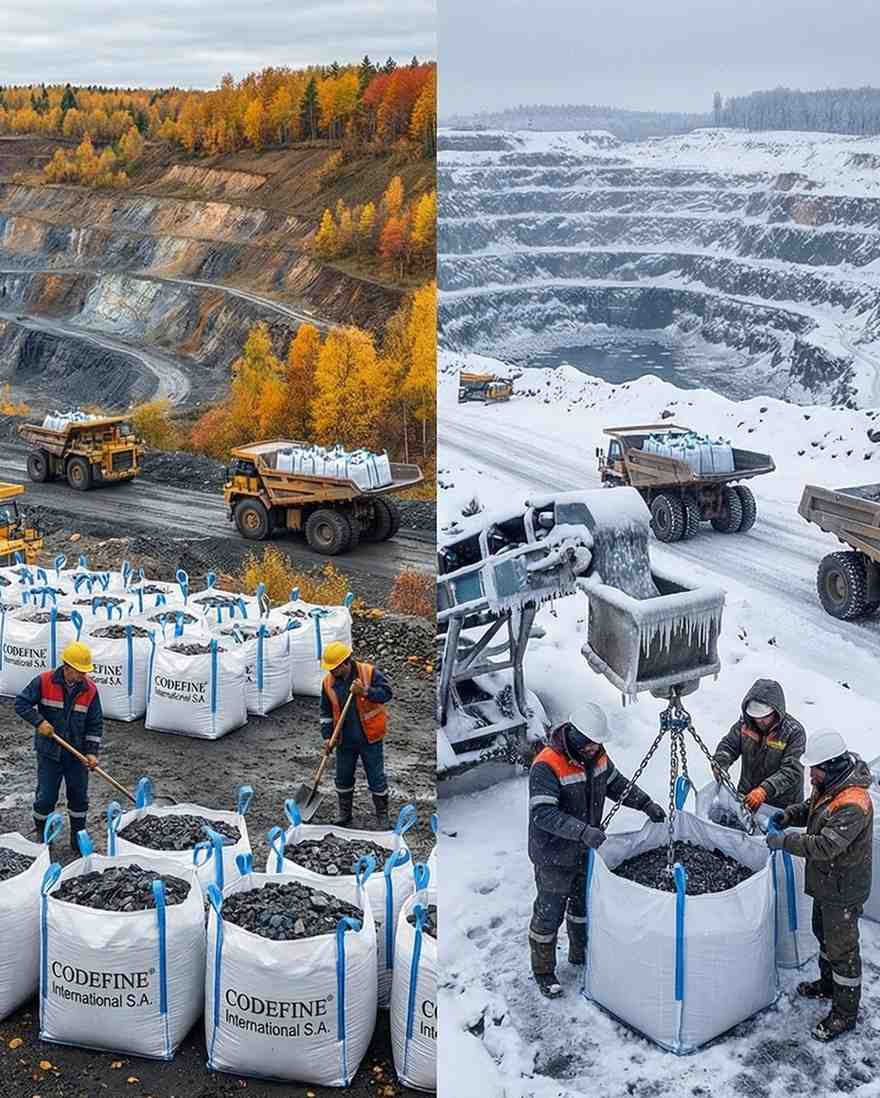
A standard 1,000 kg FIBC replaces roughly 40 individual 25 kg sacks to move the same quantity of product. That 40-to-1 ratio is where the cost comparison has to start, because every cost attached to a small bag, the bag itself, the labor to fill it, the pallet to stack it on, the stretch wrap to secure it, the forklift time to move it, multiplies by 40 before you can compare it fairly to one FIBC.
The material cost of 40 small sacks, plus one pallet, plus stretch wrap, often lands close to or above the material cost of a single FIBC. You are not actually saving money on packaging materials when you choose small bags at scale. You are just distributing the cost across more line items where it is harder to see.
This is why procurement teams that evaluate bulk vs. non-bulk packaging using per-unit price comparisons consistently underestimate what small bags actually cost their operation.
The visible costs, bag price, pallet, wrap, are only part of the picture. The costs that accumulate quietly are the ones that matter most at volume: labor to fill, seal, and label 40 individual units instead of one; time spent palletizing and stabilizing stacks of small bags that shift and slump; rehandling damaged or fallen bags at the warehouse or at the customer’s dock; cleaning up product that escapes through torn seams during manual handling.
None of these show up on a per-bag purchase order. All of them show up on your labor, freight, and waste lines if you look at the right level.
Filling 40 small bags requires 40 individual fill cycles: position the bag, fill, seal, label, move aside, repeat. Even on a semi-automated line, each cycle takes time and operator attention. Filling one FIBC to the same total weight takes one fill cycle. The labor differential across a shift, a week, or a year is substantial.
The gap is even wider at discharge. Emptying 40 small bags at a customer’s facility means cutting, opening, or emptying each one individually before the contents reach the next stage of production. Emptying one FIBC through a discharge spout takes minutes and requires one operator and a forklift. For customers receiving large volumes of your product, the ease of discharge is a direct operational benefit they will notice, and one that affects whether they prefer your packaging format over a competitor’s.
For a detailed look at how spout design and discharge technique affect emptying efficiency and product recovery, the FIBC discharge and product loss guide covers the full process.
A loaded FIBC moves via forklift using its lift loops. One operator, one move, one ton shifted in under a minute. Moving the same ton in small bags requires multiple people, multiple trips, and direct manual contact with each unit. Every manual touch is a labor cost, a potential injury exposure, and an opportunity for a bag to be dropped, torn, or stacked incorrectly.
At low volumes, say, a few hundred kilos per day, manual handling of small bags is manageable. At volumes of several tons per shift, the labor cost difference becomes one of the largest line items in your packaging economics. This is the category where operations that have switched from small bags to FIBCs consistently report the most immediate and measurable savings.
A truckload of product in small bags on pallets carries less product per truck than the same product in FIBCs. The reasons compound: pallets add dead weight and occupy floor space, small bags do not stack to full trailer height without racking, and the gap space between irregularly stacked sacks reduces the usable volume of each container or trailer.
FIBCs stack more predictably, travel without pallets in many configurations, and allow more product per container when loaded correctly. For international shipments in 20- or 40-foot containers, the difference in payload per container can mean one fewer container per shipment over a full season, a freight cost reduction that has nothing to do with the bag price itself.
For operations moving product internationally, this container utilization difference is often the single largest freight cost lever available through a packaging format change.
Pallets are not free. A wooden pallet costs between $10 and $25 depending on grade and region. For a shipment of 20 tons in small bags, you might need 20 to 25 pallets. That is $200 to $600 in pallet cost alone, before you account for the weight of the pallets in your freight calculation or the cost of disposing of or returning them at the destination.
FIBCs in many configurations travel without pallets, the lift loops carry the bag directly, and discharge stands at the receiving facility support the bag during emptying. Eliminating pallets from a high-volume operation removes a real and recurring cost that most small-bag users have simply accepted as a fixed expense.
The FIBC advantages overview covers this pallet elimination benefit alongside the broader logistics case for bulk bag adoption.
Small bags on pallets slump. The nature of woven sacks filled with granular or powder products is that the contents shift and the bag loses its shape under the weight of anything stacked above it. In practice, most operations stack small bags no more than four or five layers high before stability becomes a concern. Beyond that, racking is needed, which adds capital cost and floor footprint.
Baffle bags, FIBCs with internal baffles that maintain a square cross-section under load, hold their shape when filled and stack reliably to greater heights than standard small bags on pallets. The same floor area that holds four pallets of small bags can hold more product in baffle bags stacked higher, with no racking required. For operations where warehouse space is a real constraint, this storage density difference has direct cost implications.
Empty small bags take up space too. Forty empty woven sacks, even folded, occupy more shelf space than one flat-folded FIBC. At high bag volumes, the storage footprint of empty packaging before it reaches the filling line becomes a minor but real operational nuisance.
An empty FIBC folds flat to a small bundle. For operations managing tens of thousands of bag units per year, the difference in pre-fill storage footprint is worth factoring into the warehouse cost comparison, particularly if you are paying for third-party warehousing by the pallet or square meter.
A single torn small bag during filling, transit, or discharge is easy to dismiss. Across hundreds or thousands of bag movements per month, even a low failure rate accumulates into real product loss. Woven sacks are more vulnerable to puncture, seam failure, and tearing during manual handling than FIBCs engineered to specific safe working loads. Every kilogram of product that escapes a failed bag is revenue that does not reach your customer.
The transit damage article covers the main causes of bulk packaging failure during shipping, many of which apply more severely to small bags than to properly specified FIBCs.
FIBCs are manufactured to a defined safe working load with a safety factor, typically 5:1 or 6:1, meaning the bag is tested to hold five or six times its rated capacity before failure. The fabric weight, seam construction, and loop attachment are all specified to carry the load reliably across the bag’s rated service life.
A lined FIBC with a PE inner liner adds a second layer of containment for fine powders or moisture-sensitive products that would escape or degrade in standard woven sacks. For products where contamination or moisture ingress during transit represents a real quality risk, the liner is not an optional extra, it is the specification that makes the product arrive in usable condition.
Understanding what FIBC is and why FIBC safety factors matter in practice helps explain why FIBC failure rates at correct specification are substantially lower than small bag failure rates under the same handling conditions.
FIBCs are not the right format for every application, and presenting this comparison honestly requires saying so.
Small bags remain the better choice when product is sold directly to end consumers in retail quantities. A 25 kg bag of fertilizer sold at a garden center is a consumer-facing product, the packaging format is part of the customer experience, and switching to FIBCs would add a repackaging step that costs more than it saves.
Small bags also make sense when shipment volumes are genuinely low. If you are moving two or three tons per week to a single customer, the labor and freight benefits of FIBCs do not accumulate fast enough to offset the higher bag cost and the capital investment in forklift handling equipment. The minimum order quantities for custom FIBCs may also make them impractical for operations with highly variable or seasonal volumes.
For operations without overhead lifting equipment at the filling point or the receiving facility, FIBCs are operationally problematic regardless of cost. The format depends on the infrastructure at both ends of the supply chain.
The honest summary: small bags are better for retail distribution, low-volume operations, and supply chains without forklift infrastructure. FIBCs are better for everything else above a certain throughput threshold.
Most cost comparisons of FIBCs vs. small bags assume single-trip FIBCs, one fill cycle, then disposal. Multi-trip FIBCs change the economics further.
When choosing between single and multi-trip FIBCs, it helps to understand how each is built. A multi-trip FIBC is manufactured to a higher safety factor and designed to be inspected, cleaned, and reused across multiple fill-discharge cycles. The upfront bag cost is higher than a single-trip bag, but the cost per use drops with each cycle. An operation running a closed-loop supply chain, where bags go out filled, come back empty, and are refilled, can achieve a cost per ton that single-trip small bags cannot match even before accounting for labor and freight differences.
The economics of multi-trip FIBCs depend on the product (contamination risk determines whether cleaning and reuse is practical), the supply chain structure (closed-loop vs. open distribution), and the bag inspection and maintenance discipline at your facility. For operations where these conditions are met, multi-trip FIBCs represent the lowest-cost packaging option across the full TCO calculation.
The crossover point varies by operation, but a few consistent signals indicate when the switch becomes financially straightforward. If your operation fills more than five tons per shift, the labor savings at the fill station typically justify the bag cost differential within weeks. If you are shipping product internationally and container utilization is below 80%, the freight savings from switching to FIBCs often pay for the format change within a single shipping season.
If your product has a measurable damage or rejection rate in small bags, from torn seams, moisture ingress, or handling failures, the cost of that product loss frequently exceeds the FIBC bag cost differential on its own.
The clearest signal is when you add up fill labor, pallet cost, stretch wrap, freight, and damage claims for a quarter and compare that total to what the same volume would cost in FIBCs. Most operations that do this calculation switch formats. Most operations that do not do this calculation continue using small bags and absorbing costs that they could eliminate.
Selecting the right FIBC supplier is not only about sourcing a bag that meets a weight requirement. It is about finding a manufacturing partner that understands how packaging impacts filling efficiency, freight optimization, warehouse handling, discharge performance, and product protection across the entire supply chain.
Codefine manufactures custom FIBC bulk bags designed for dry flowable products across agricultural, chemical, food, pharmaceutical, and industrial sectors. The company produces a wide range of solutions, including standard bulk bags, baffle bags for improved stack stability, food-grade FIBCs, conductive and static-protective bags, and FIBCs with PE liners for moisture-sensitive or fine powder products.
What separates Codefine from commodity bulk bag suppliers is the focus on application-specific design. Bag dimensions, filling and discharge spouts, fabric type, liner configuration, coating options, and safe working load specifications are adapted to the operational requirements of each customer rather than treated as a one-size-fits-all product. For operations evaluating the switch from small bags to FIBCs, this level of customization plays a major role in reducing labor costs, improving transport efficiency, minimizing product loss, and simplifying handling at scale.
What industries use FIBC bulk bags most often?
FIBC bulk bags are widely used in agriculture, chemicals, food processing, construction materials, minerals, and industrial manufacturing because they simplify handling and transportation of dry bulk materials.
Are FIBCs suitable for food-grade products?
Yes. Food-grade FIBCs are manufactured under controlled hygienic conditions using approved materials designed for products such as flour, sugar, grains, starches, and other food ingredients.
Can FIBCs be customized for different filling and discharge systems?
Yes. FIBCs can be designed with various filling spouts, discharge spouts, liners, lifting loops, and dimensions to match specific production equipment and handling requirements.
How long can FIBCs be stored outdoors?
Standard woven polypropylene FIBCs are sensitive to long-term UV exposure. UV-stabilized bags can withstand limited outdoor storage, but most manufacturers recommend covered or indoor storage whenever possible.
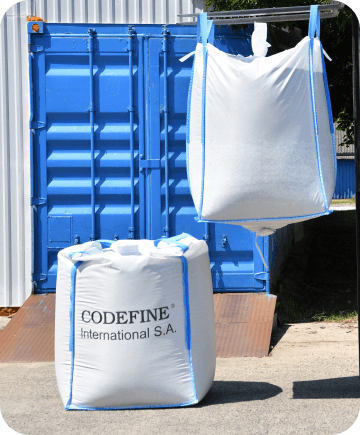
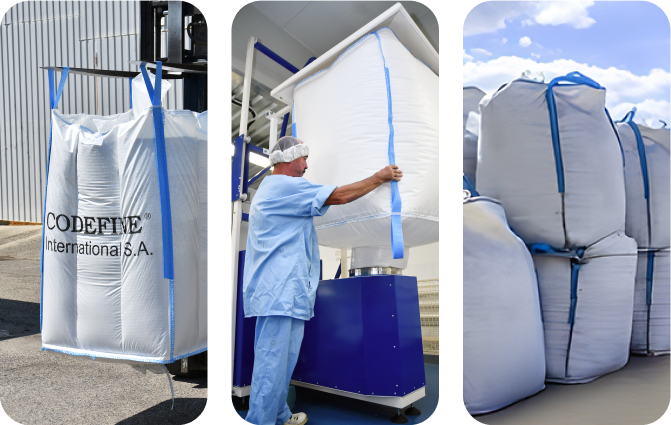
See how our products can improve your operations and drive your success.
Get in touch to find out how Codefine can support your business with tailored solutions and expert guidance.