
Home » Posts Page » Blog » Industry-Specific Solutions » How to Build a Bulk Packaging Specification That Travels Well
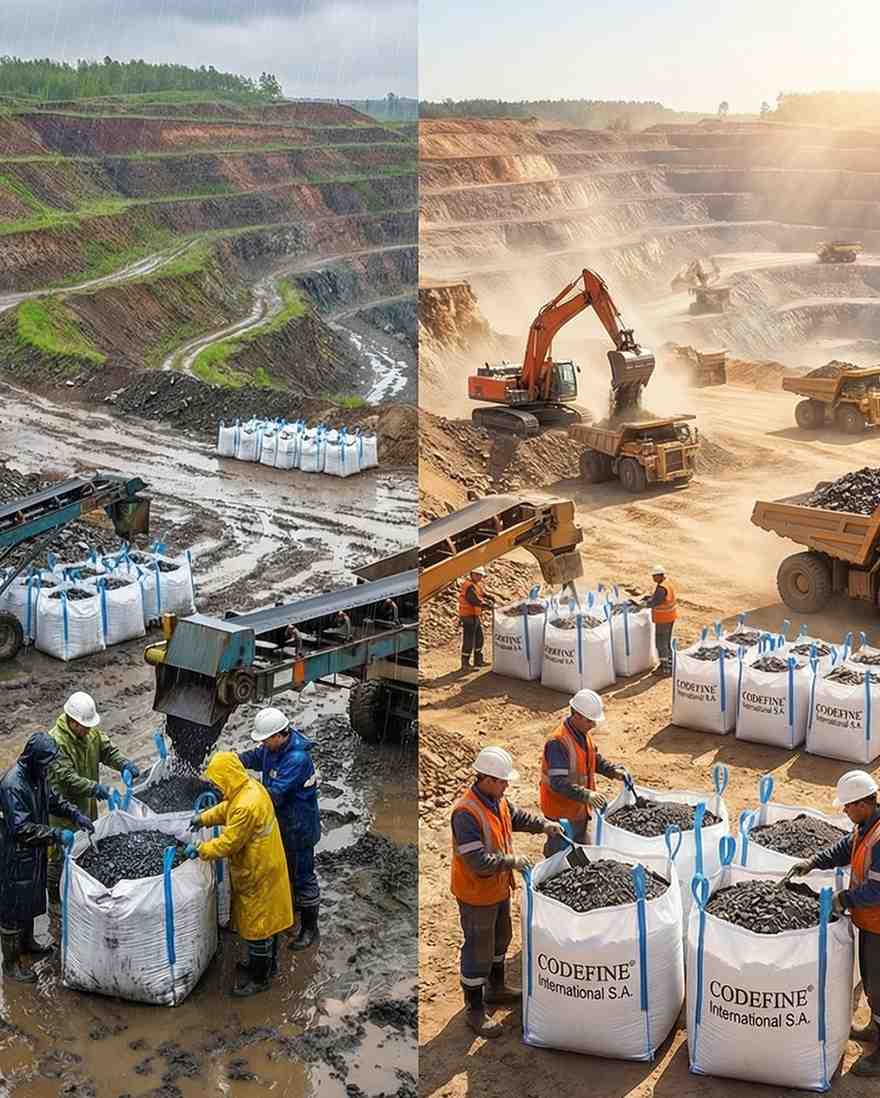
A bulk bag specification that “travels well” is not one that describes the bag accurately at the point of purchase – it is one that describes the bag accurately at every handoff: the filling line, the warehouse stack, the freight container, and the discharge station at the destination. A bag that performs correctly at step one but fails at step three was under-specified, even if the RFQ was technically complete.
The most common specification gap is not a missing field – it is an unmeasured field. Buyers often specify fill weight without measuring bulk density, which means the bag volume is not confirmed against the actual product. They specify a standard discharge spout without confirming the diameter against the customer’s receiving equipment. They specify a liner without confirming the liner spout extends through the outer bag spout at discharge. These are the points where FIBC failures most often originate – not from poor bag construction, but from a specification that did not capture what the field actually needs.
Bulk density is the weight of your product per unit of volume. Two products can have the same target fill weight and behave completely differently in the same bag – one fills the bag to 80% capacity, the other overfills and puts the seams under stress they were not rated for. Measure bulk density from your actual product, not from a datasheet. Settled density after vibration during transit is often higher than loose-poured density at the fill station, and the bag needs to handle both. The Codefine FIBC calculator provides a starting reference for confirming dimensions against fill weight and density.
Flow behavior matters equally. A product that flows freely at fill may bridge during discharge after vibration has settled it during transport. Document whether your product is free-flowing, cohesive, or prone to bridging – this affects spout type, liner choice, and whether flow aids are needed at the customer’s end. For hygroscopic materials that absorb ambient humidity and cake or clump, a PE liner is required, and how the liner spout is configured determines whether the product stays sealed during the full transit window. The moisture-resistant FIBC guide covers liner selection for these products in detail.
If your product is abrasive or a blend prone to segregation during transit, note both in the specification. Abrasiveness determines cycle limits for multi-trip programs. Segregation is a formulation issue, not a packaging one, but the customer needs to know what to expect at discharge.
Storage environment, humidity, and dwell time at both ends of the journey must be documented – not just conditions at your facility. UV radiation reduces tensile strength in polypropylene fabric and lift loops over time, so if bags will be stored outdoors at any point, specify UV stabilization. High-humidity environments allow moisture vapor to migrate through unlined woven fabric silently over days or weeks, surfacing only at discharge or at the customer’s facility. Document the expected humidity range across the full journey, including port dwell time and any tropical routing, and account for how long the filled bag sits at the destination before use – not just the transit window.
SWL and safety factor. The safe working load must be set against the actual filled weight under your operating conditions, not the target fill weight. A 5:1 safety factor covers single-trip use. A 6:1 is the minimum for multi-trip programs. Codefine provides SWL and safety factor documentation with every order – confirm this is part of your supplier’s standard delivery before placing the RFQ. The FIBC safety factors article explains what the ratings mean in practice.
Dimensions and spout type. Bag dimensions must be confirmed against fill weight and bulk density, pallet footprint, warehouse racking height, and filling station clearance. Spout diameter – both fill and discharge – must match your equipment and your customer’s. A spout that does not seat correctly at the customer’s discharge station creates a spillage risk that handling alone cannot fix. The FIBC discharge guide covers how spout choice affects product recovery.
Liner. Codefine FIBCs are manufactured with an inner PE liner and uncoated outer fabric. The liner handles product protection – moisture barrier and sifting prevention – while the outer fabric provides structural integrity. Liner specification requires three decisions: whether a liner is needed, whether it should be loose-fit or form-fit, and whether the liner spout must extend through the outer discharge spout. A liner specified without these three decisions made is an incomplete specification. The moisture barrier guide covers the options in detail.
Baffle vs. standard construction. A standard FIBC bulges outward when filled. A baffle bag holds a square cross-section under load, stacks more predictably, and uses pallet and container space more efficiently. If your freight configuration involves full containers or your customer stacks bags more than one high, baffle construction is worth specifying.
Filling method and equipment compatibility must be in the specification. The fill spout diameter must match your filling head – a mismatched connection loses fine material on every fill cycle. Discharge method must be confirmed against the customer’s station. If the product bridges, the spout design should account for it. The discharge methods guide covers the available configurations.
Maximum stack height must be confirmed at both ends of the supply chain – a bag specified for single-stack that ends up double-stacked is outside its design parameters. Forklift tine spacing must match the lift loop geometry at both origin and destination. For freight, confirm pallet dimensions, bags per pallet, and container format before ordering. Document the number of handling touches from fill to discharge – each move is a load cycle that stresses loops, seams, and fabric, and a long supply chain with multiple transshipment points requires a more conservative specification than a two-move domestic delivery.
Food-grade, UN certification, and static control type must be specified explicitly – none are assumed from the product description. For food ingredients, animal feed, or pharmaceutical raw materials, bags, liner materials, and printing inks must meet food-contact material standards. For hazardous products, UN-certified bags are required at the correct packing group level. For combustible dust environments, the FIBC type – A, B, C, or D – must match the electrostatic risk at your facility and your customer’s. The anti-static bag guide covers how to select the right type based on the specific ignition risk.
Labeling requirements – lot numbers, production dates, customer-specific formats, certification documents – must be confirmed before manufacture begins. Codefine handles custom printing as part of the bag order and reviews artwork during the specification stage, so print requirements do not become a production delay.
A complete specification covers six areas: product characteristics (bulk density, fill weight, flow behavior, moisture sensitivity), environmental conditions (storage, humidity, dwell time), bag construction (SWL, safety factor, dimensions, spout type, liner, baffle or standard), handling and operations (filling method, discharge configuration, stacking height, forklift requirements), freight and load configuration (pallet pattern, container format, handling touches), and compliance (food-grade, UN, static control type, labeling). Each section needs measured values, not assumptions, and the document should travel with the RFQ so the supplier confirms the bag against all six areas before manufacture begins.
When specs are wrong or incomplete, bags perform correctly in the conditions that were documented and fail in the conditions that were not. The cost of those failures – product loss, customer claims, replacement orders – is consistently higher than the cost of building a complete specification before the first order is placed. Most field problems trace back to a gap in the specification, not a defect in the bag.
The bag manufacturer cannot design for conditions they do not know about, protect against risks that were not documented, or confirm compatibility with equipment that was not described. The specification document is the one place where all of that information lives in a form that travels the full supply chain.
Codefine manufactures FIBCs with inner PE liners and uncoated outer fabric, built to specification for dry flowable products across food, chemical, agricultural, and industrial applications. If you are building a specification for a new product or reviewing an existing one, the Codefine team works through each of these variables with you before the order is placed – so the bags that arrive are the bags your operation actually needs. Get in touch to start the specification process.
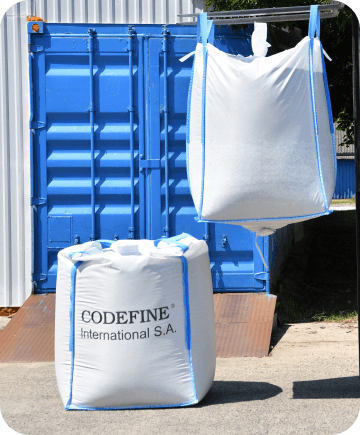
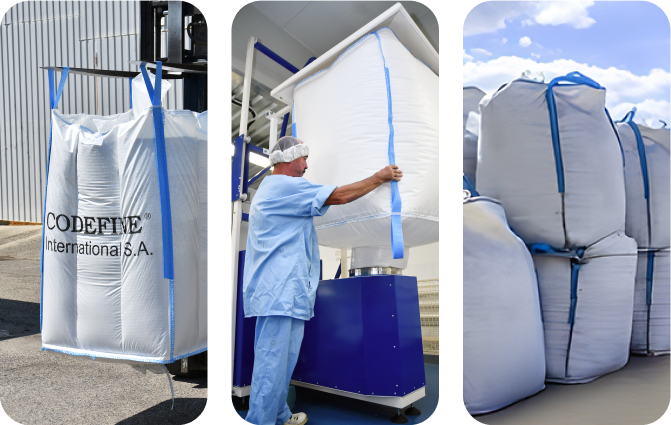
See how our products can improve your operations and drive your success.
Get in touch to find out how Codefine can support your business with tailored solutions and expert guidance.