

Anyone who has stood behind a 40-foot box full of resin pellets or malting knows the moment of truth comes when the doors swing open. Twenty tonnes of free-flowing product press against a sheet of woven plastic. The only thing between that load and the dock floor is the retention system the liner was built around. For decades, the answer has been steel bars, slotted across the rear of the container to hold the liner wall while the box is filled, shipped and tipped.
Bars do their job, but they bring a cost and risk. They have to be sourced, stored, carried to the loading site and fitted correctly. A barless design such as Codefine’s Bulksaver container liner brings a simple question: what if the liner itself could carry the load?
The challenge is that removing hardware means nothing if containment suffers. A liner that bulges, slips, or tears under tipping pressure costs far more than a set of bars. The comparison worth making comes down to which option keeps your cargo clean, contained, and flowing out of the container at a predictable rate.
The sections below walk through how loose insert liners and bar-style liners behave in real loading and discharge conditions, where each one tends to struggle, and how a barless approach changes the picture for your team, your product, and your total shipping cost.
A traditional loose insert liner turns a standard dry container into a bulk carrier. The bag is unfolded inside the box, hung from the container’s lashing rings with carabiners, spring buckles, bungee cords, or D rings, and then filled through a spout or filling sleeve. Film PE versions are cheap, quick to hang, and adequate for light, forgiving cargo that will be discharged gently, which is why they still turn up across agriculture and general commodity trades.
The weak point is the door end, where a loose insert has no real structure. Its rear wall relies on the fabric and a few attachment points, so as product settles in transit, the floor creases and the bag sags away from the walls. Tip the container for discharge, and the full load leans on a panel that was never built to carry it alone.
What does that mean in practice? You see slower and less even discharge, product hung up in folds of fabric, and a higher chance of tears where the liner rubs against corrugations or door hardware.
For low-value cargo moving short distances, those risks may be acceptable. For food ingredients, polymers, or anything with tight purity specs, a loose insert leaves too much to chance, and that gap is exactly what bar style liners were invented to close.
Bar style liners solved the door end problem with brute strength. A steel bar runs through a sleeve at the bottom front of the liner and locks into slots at the container’s front, while several horizontal bars, typically three to five, hang across the rear of the bag in sewn loops and sit in slots on the rear corner posts. Those rear bars keep the liner from bulging out as it fills, let the doors close cleanly, and act as a shield that holds the loaded bag in place when the container is tilted and the discharge hatch is opened.
The costs add up quietly. In many trades, the bars travel with the shipment and are thrown away once the container is empty, so every load needs a fresh set. That means buying steel, storing it, moving it to each loading point, and tracking whether enough bars are on hand before a vessel cutoff. Patent literature on barless designs describes this recurring spend as a substantial economic and environmental burden, and anyone who has watched bars pile up in a yard will recognize the point.
Installation is the other weak spot. Bars only protect the load if they are seated correctly, and fitting them takes training, time, and a certain amount of physical effort inside a cramped box. A bar that is misaligned or not fully engaged can shift under pressure, and steel moving under twenty tonnes of cargo is a safety concern nobody wants on the dock. The bars also limit design freedom, since the size and position of the discharge chute must work around the rear support system rather than around your product.
So bar style liners give you containment, but you pay for it in hardware, labor, and risk on every single shipment.
Taking the steel out of a liner only works if something else takes over the job it was doing, and that is where barless engineering comes in.
The idea behind a barless liner is to build retention into the liner. Instead of asking a few steel bars at the rear to resist the whole weight of a tipped load, barless designs spread that force along the length of the container, letting the walls, floor, and front of the bag share the work. Engineering descriptions of the approach talk about internal baffles that tie the rear panel back to the sidewalls and front, and about anchoring the liner at multiple points down the box. Together, these keep the rear wall from deflecting outward and help the floor stay flat for cleaner discharge.
Bulksaver™ is Codefine’s proprietary, patented take on that principle, built from woven HDPE or PP fabric with antistatic and conductive grades available for products that carry ignition risk. Codefine positions it as the safest and most user-friendly container liner it offers, and the reasons are rooted in how liners are handled on the dock day to day. With no metal bars and no complicated lashing system, your installation crew has far fewer steps to get wrong, and the company describes the setup as foolproof enough that special training is not required.
Simplicity shows up on a busy loading dock. Liner trouble starts with the person fitting it under time pressure, and every component removed from the process is one less thing that can be forgotten, misaligned, or left in the wrong yard. Fewer steps also mean fewer chances for a rushed fit to compromise the seal around your product. You still get the core benefits of a lined container, including protection from humidity and physical damage, food-safe resins that keep your cargo free from contamination, and a clean box at the end of the trip.
Bulksaver fits the filling equipment most shippers already run, whether that is a belt thrower, a pneumatic system, or plain gravity filling. That means switching from barred liners does not require you to rebuild your process or retrain your loading team around new equipment. Codefine’s woven liners come in standard 20, 30, and 40 foot sizes and can be customized to suit your container’s loading and discharge style, so the liner adapts to your operation rather than the other way around.
The clearest way to judge these three liner types is to follow a single shipment from empty box to empty box and notice where the effort and risk pile up.
Installation sets the tone. A loose insert goes in quickly but offers little protection once the load starts moving, while a bar style liner takes longer because every bar has to be carried in, threaded, and seated before filling can begin. Bulksaver sits closer to the loose insert on speed, since there is no steel to fit, yet it is engineered to hold its shape under load the way a barred liner does. For a site loading several containers a shift, shaving those bar fitting minutes off each box adds up to real capacity.
Discharge is where containment gets tested hardest. Folds and creases in the floor slow the flow and trap product, and patent filings on barless liner design describe poorly supported liners leaving thousands of pounds behind in a single container. A liner that keeps its floor flat and its rear wall in check empties more completely, which means less product written off and less time spent with someone climbing in to sweep out residue. Loose inserts are the most vulnerable here; bar-style liners perform well when installed correctly, and a well-engineered barless liner aims for the same result without relying on the installer to get every bar right.
Contamination risk follows the same logic. Every tear, gap, or sagging seam is a potential entry point for moisture, dust, or foreign material, so the more stable the liner, the safer your product. If purity is a priority, Codefine’s article on matching liner material to your product is a useful companion to the structural decision.
Then there is waste. Single-use steel bars represent cost, freight weight, and scrap on every trip, and removing them shrinks your packaging footprint in a way that supports the kind of sustainability commitments many buyers now expect from their supply chain.
Loose insert liner | Bar style liner | Bulksaver™ barless liner | |
How it stays in place | Hung from lashing rings with carabiners, buckles, or bungee cords | A steel bar at the front plus three to five horizontal bars across the rear | Retention built into the liner, with no metal bars or complicated lashing |
Installation | Quick to hang | Slower, since every bar is carried in, threaded, and seated | Quick, with no steel to fit |
Training needed | Minimal | Yes, because bars only work when seated correctly | No special training required |
Rear wall support when tipped | Fabric and a few attachment points | Rear bars act as a shield | Load spread along the length of the container |
Steel hardware per shipment | None | A fresh set in many trades, discarded after discharge | None |
Discharge | Prone to floor creases and trapped product | Reliable when bars are fitted properly | Built to hold its shape under load for cleaner emptying |
Best suited to | Light, low value cargo discharged gently | Heavy cargo handled by crews trained on bars | Dense or sensitive cargo, high volume sites and changing crews |
No single liner suits every cargo, so the right choice starts with an honest look at what you ship and how it leaves the container. A light agricultural product discharged slowly at a friendly receiving site may never need more than a loose insert, and paying for extra structure there makes little sense. Dense, fast-flowing cargo is a different story, because polymer pellets, minerals and fine powders put serious pressure on the rear wall during tipping and punish any weakness in retention.
If you are already running bar-style liners, ask yourself how much the bars cost you once purchasing, storage, transport, and disposal are counted together, and how often a shipment has been delayed because the right number of bars was not on site. Those hidden costs are usually the strongest argument for a barless switch. Your crews deserve a thought as well, since sites with high staff turnover or seasonal labor benefit most from an installation process that does not depend on specialist knowledge.
Product sensitivity should shape the material choice too. Food and pharmaceutical shippers will want food-safe resins and a liner that resists tearing, and dusty or combustible products call for antistatic or conductive fabric. Codefine’s teams working across food-grade packaging and chemical supply chains can help you weigh these factors against your discharge equipment and route.
Steel bars earned their place in bulk shipping because loose inserts could not be trusted with heavy, valuable cargo, and for years they were the best tool available. The trade-off was a constant stream of hardware to buy, move, fit, and discard, along with the safety and quality risks that come with any manual step done under pressure. Barless liners such as Bulksaver change that equation by building retention into the liner, so you keep the containment you rely on while cutting out the parts of the process that cost the most and fail most often.
Is every shipper ready to drop bars tomorrow? Probably not, and some low-risk cargoes will happily stay in simple inserts. If your loads are dense, sensitive or moving at volume, though, it is worth running the numbers on what bars cost you per container and how much smoother loading days could be without them.
Codefine has been making industrial packaging since 1957, and its specialists can match a liner to your product, container size, and discharge setup. To talk through a trial or request a quote, get in touch with the Codefine team or browse the full range of bulk packaging products to see how liners fit alongside your FIBC and bag programs.
A barless container liner is a bulk liner that holds its cargo in place without the steel bars normally slotted across the rear of the container. The retention is built into the liner itself, so the load is spread along the walls, floor and front of the bag instead of resting on a few bars at the door end.
A well engineered barless liner is designed to give you the same containment during filling, transit and tipping. Codefine describes Bulksaver as the safest and most user friendly liner in its range, largely because removing the bars also removes the risk of a bar being fitted badly and shifting under the weight of the load.
Yes. Codefine’s container liners are made with FDA approved, food safe resins, and Bulksaver is available in antistatic and conductive fabric grades for dusty or combustible products that carry an ignition risk.
Bulksaver works with belt throwers, pneumatic systems and gravity filling, which covers the setups most bulk shippers already use. You can keep your existing equipment and simply change the liner.
A loose insert can be a sensible choice for light, low value cargo that travels short distances and is discharged gently. Once your product is dense, sensitive or shipped in volume, the extra structure of a bar style or barless liner usually pays for itself.
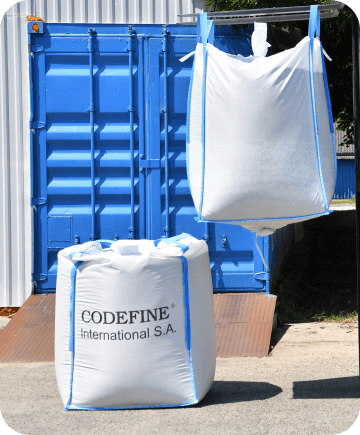
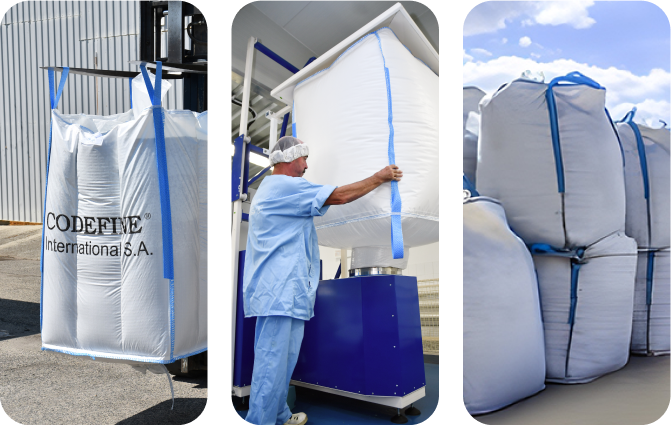
See how our products can improve your operations and drive your success.
Get in touch to find out how Codefine can support your business with tailored solutions and expert guidance.