
Home » Posts Page » Blog » Products and Materials » How to Evaluate FIBC Fabric Weight, Strength & Durability
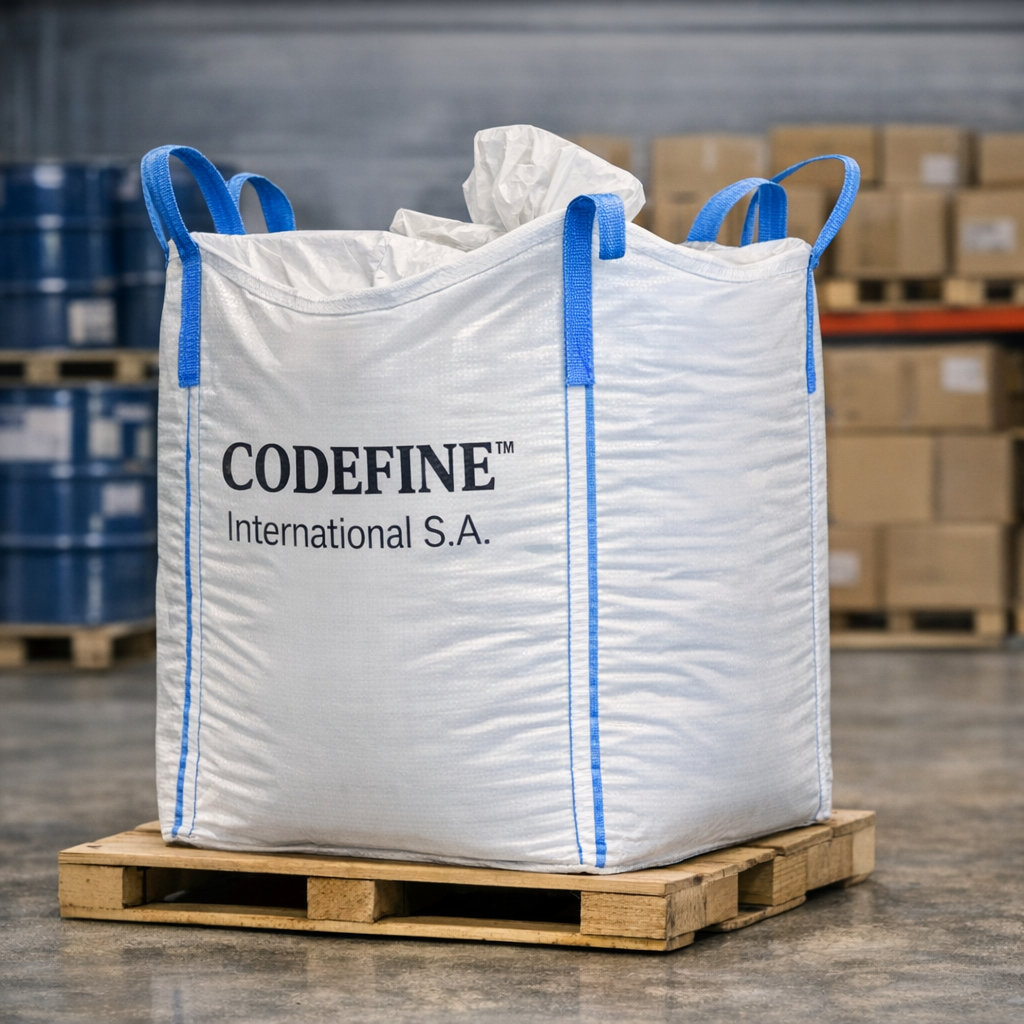
GSM, or grams per square meter, is the standard measurement for FIBC fabric weight and the most fundamental specification in bulk bag construction. This metric indicates how much one square meter of fabric weighs in grams, providing a consistent basis for comparing fabrics across manufacturers.
FIBC fabrics typically range from 130 GSM for lightweight applications to 200+ GSM for heavy-duty use, with each increment representing more material, greater durability, and higher cost. Fabric weight matters because it directly correlates with fabric thickness, strength, and resistance to wear. Heavier fabrics create a more robust construction that withstands abrasion, handling stress, and repeated use better than lighter fabrics.
Understanding standard fabric weight categories helps you select specifications matched to your operational needs and material characteristics.
GSM Range | Typical Applications | Material Examples | Expected Lifespan | Cost Level |
130-140 GSM | Light, non-abrasive materials, single-use | Plastic pellets, flour, sugar | 1-2 uses | Budget |
150-160 GSM | General industrial use, moderate handling | Grains, chemicals, food ingredients | 2-3 uses | Standard |
170-180 GSM | Abrasive materials, multiple handling | Minerals, fertilizers, animal feed | 3-5 uses | Mid-range |
190-200+ GSM | Heavy-duty, reusable applications | Sand, gravel, metal scrap | 5-10+ uses | Premium |
Lightweight fabrics (130-140 GSM) excel with non-abrasive materials like plastic pellets or food-grade flour, where gentle handling and single-use applications make them cost-effective. Medium-weight fabrics (150-170 GSM) represent the most versatile range, offering a practical balance between durability and cost for the majority of industrial materials. The 160 GSM specification has become an industry standard, providing reliable performance across diverse applications while maintaining reasonable pricing.
Heavy-weight fabrics (180- 200+ GSM) are engineered for demanding applications involving abrasive materials like sand, crushed stone, or metal scrap. These specifications suit reusable bag programs where bags circulate multiple times, as the additional material thickness extends service life substantially.
Fabric weight tells only part of the story; strength measurements reveal how fabrics perform under stress. Tensile strength measures the force required to pull fabric apart, typically measured in both warp (vertical) and weft (horizontal) directions. This metric indicates resistance to breaking under load and determines maximum weight capacity.
Tear strength evaluates how easily a tear propagates through fabric once initiated. A small puncture can become catastrophic if the tear strength is inadequate. This metric is particularly important for bags containing sharp-edged materials or those subject to rough handling.
Burst strength measures resistance to sudden impact or pressure from inside the bag, simulating the stresses bags experience when dropped or when materials shift during transport. Adequate burst strength ensures bags survive handling accidents without rupturing.
FIBC fabrics are woven from polypropylene tapes arranged in perpendicular directions. Warp threads run vertically while weft threads run horizontally. Understanding this structure is essential because strength characteristics differ significantly between directions.
Most FIBC fabrics exhibit higher strength in the warp direction than weft, typically with ratios ranging from 1.2:1 to 1.5:1. Manufacturers orient fabric to place the stronger warp direction where bags experience the greatest stress, typically vertically to support weight loads. When evaluating specifications, always review both warp and weft strength measurements, as fabric with excellent warp strength but weak weft strength may fail at seams or when twisted during handling.
Ultraviolet radiation from sunlight degrades polypropylene fibers, making UV resistance critical for bags stored or transported outdoors. Without UV protection, polypropylene becomes brittle and can lose 50% or more of its strength within 3-6 months of sun exposure.
UV stabilizers are chemical additives that absorb or reflect UV radiation, protecting polymer chains from degradation. Standard UV protection extends outdoor service life to 12-18 months, while enhanced packages can provide 24+ months of protection. For bags used exclusively indoors, UV stabilizers may be unnecessary, offering cost savings. However, even indoor bags may experience UV exposure during transportation, making some protection prudent.
Fabric treatments significantly alter performance characteristics. Uncoated woven fabrics allow air circulation and suit materials benefiting from breathability, but they permit fine particle sifting and offer limited moisture protection.
Coated fabrics feature polyethylene lamination that creates moisture barriers, prevents sifting of fine materials, and provides smoother surfaces, reducing handling friction. However, coating adds weight without substantially increasing tensile strength. Choose coated fabrics for moisture-sensitive materials or fine powders requiring containment, not for strength enhancement.
Safety factor represents the ratio between a bag’s breaking strength and its safe working load, typically 5:1 or 6:1 for FIBCs. A bag rated for 2,000 pounds with a 6:1 safety factor must withstand 12,000 pounds in testing. This margin ensures bags remain safe even when subjected to rough handling, partial degradation, or loading variations.
Fabric strength must be sufficient to achieve the required safety factor when combined with proper construction, stitching, and lifting loop attachment. Larger bags or those with unusual dimensions may require heavier fabrics to maintain adequate safety factors.
Practical quality verification enables effective fabric evaluation during incoming inspection. Visual inspection reveals many quality issues. Examine the fabric for consistent weave patterns, uniform thickness, and absence of thin spots or irregularities.
GSM verification uses a fabric scale to confirm the specified weight. Cut a precise 10cm x 10cm sample, weigh it in grams, and multiply by 100 to calculate GSM. This simple test reveals whether suppliers are delivering specified fabric weights.
For critical applications or when changing suppliers, request certified laboratory test reports documenting tensile strength, tear strength, and UV resistance according to ASTM or ISO standards.
Recognizing performance issues helps identify when fabric specifications are insufficient. Premature wear patterns, including fabric thinning, excessive fading, or fiber breakdown after minimal use, indicate inadequate fabric weight or quality for the application.
Seam failures often result from insufficient fabric strength relative to bag capacity. Fabric stretching or dimensional distortion under load suggests inadequate tensile strength. UV damage manifests as brittleness, color change to chalky white, and dramatic strength loss. If outdoor-stored bags develop these symptoms within 6-12 months, UV stabilizer levels are insufficient.
Optimal fabric selection balances performance requirements against cost constraints. For single-use applications with non-abrasive materials and gentle handling, lightweight fabrics provide adequate performance at minimum cost. Multi-use programs or abrasive materials justify heavier fabrics whose extended service life delivers lower per-use costs despite higher initial investment.
Codefine maintains rigorous fabric testing protocols that verify every production run meets specified GSM, strength, and durability standards. Our comprehensive quality assurance program includes incoming raw material inspection, in-process fabric weight verification, third-party laboratory testing for tensile and tear strength, and UV resistance validation for treated fabrics.
We provide detailed fabric specification documentation with every order, including certified GSM measurements, warp and weft tensile strength values, tear strength data, and UV stabilizer percentages. This transparency allows you to verify fabric quality and maintain consistent specifications across orders.
Our technical team offers consultation services to help you select optimal fabric weights matched to your specific materials and handling conditions. We analyze application requirements, review performance history, and recommend specifications that balance durability with cost-effectiveness. Custom fabric options accommodate unique requirements that standard specifications don’t address, ensuring you receive FIBCs with fabric characteristics optimized for your operations.
Contact Codefine to discuss your fabric specification requirements and experience the confidence that comes from working with a manufacturer committed to quality, transparency, and technical excellence in FIBC fabric engineering.
What GSM fabric weight should I choose for my FIBCs?
GSM selection depends on your material characteristics and handling conditions. For non-abrasive materials like plastic pellets or food ingredients with gentle handling, 140-150 GSM provides adequate performance. For abrasive materials like minerals, sand, or construction aggregates, choose 180-200 GSM. For general industrial applications with moderate handling, 160-170 GSM offers the best balance of durability and cost-effectiveness.
How can I verify the actual fabric weight of FIBCs I receive?
Use a GSM scale or fabric weight tester to measure a sample of the fabric. Cut a precise 10cm x 10cm square (100 square centimeters) and weigh it in grams. Multiply the weight by 100 to get GSM. For example, if your sample weighs 1.6 grams, the fabric is 160 GSM. Compare this measurement to the supplier’s specification to verify accuracy.
What’s the difference between tensile strength and tear strength?
Tensile strength measures the force required to pull fabric apart along its length or width, indicating resistance to stretching and breaking under load. Tear strength measures the force needed to continue a tear once started, showing how damage propagates through the fabric. Both are important; high tensile strength prevents initial failure, while high tear strength prevents small damages from becoming catastrophic failures.
Do heavier fabric FIBCs always last longer?
Generally, yes, but fabric weight alone doesn’t determine lifespan. A 200 GSM bag will typically outlast a 140 GSM bag in the same application. However, fabric quality, UV protection, handling practices, and material abrasiveness all significantly impact durability. A well-made 160 GSM bag with proper UV stabilizers may outlast a poorly constructed 180 GSM bag without UV protection in outdoor applications.
See how our products can improve your operations and drive your success.
Get in touch to find out how Codefine can support your business with tailored solutions and expert guidance.