
Home » Posts Page » Blog » Industry-Specific Solutions » Chemical Containment Requirements: Guidelines for Safe Storage and Handling
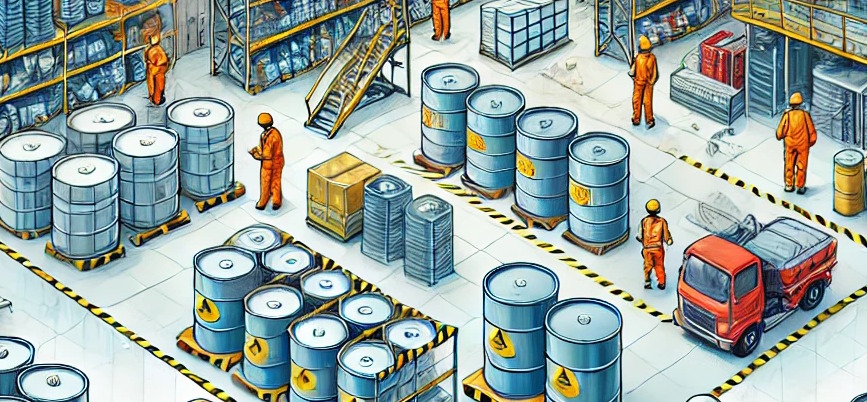
Chemical containment requirements outline how containers and packaging designed for housing chemicals should be used. Many chemicals are inherently dangerous and pose a hazard to human health, making proper handling and storage all the more vital. By following chemical containment requirements, the risk of leaks and spills is dramatically reduced.
Chemical containment requirements can include product data sheets, which specifically outline how chemicals should be handled and managed. However, local regulations about the storage and disposal of chemicals should also be followed, with rules varying between jurisdictions.
Primary containment is the vessel the chemical sits in: a drum, an IBC, a bottle, a tank, or a bulk bag. Secondary containment is the backup that catches a leak if that vessel fails, such as a spill pallet, a bund, a cabinet sump or a diked area. Tertiary containment protects the wider site and environment through drainage controls, interceptors and site grading, and keeps an escaped spill out of soil and waterways.
If you want to prevent chemical spills, chemical containment is crucial. In the event of a chemical spill, dangerous toxins can be released. This poses a significant risk to human health and, in a worst-case scenario, can even lead to fatalities. Even non-fatal accidents can lead to long-term health effects, while some chemical spills can lead to fires and explosions, resulting in serious injuries.
Buildings can also be rendered dangerous in the event of a chemical spill. Toxic chemical spills can render a premises unsuitable for occupation for long periods. This can cause significant disruption for businesses, with extended stretches of downtime. If flammable chemicals are released during a spill, there’s also the risk of fire which can cause significant structural damage.
Environmental impacts also need to be taken into account. Should chemical spills come into contact with water, the run-off can result in devastating consequences for plant and animal life. Should chemicals saturate soil, long-term ecological damage is also a possibility. The longer the spill and the more chemicals are released into the environment, the worse the long-term effects are.
If you want to store chemicals safely and avoid accidents, it’s important to follow best practice guidelines. Let’s take a closer look at the key guidelines you’ll need to bear in mind for the safe storage of chemicals.
Chemicals must be kept separate during storage. Certain chemicals can have dangerous interactions when they come into contact with one another. In severe cases, this can present a fire risk or result in an explosion.
Flammables | Acids | Bases | Oxidizers | Water- | Toxics | |
Flammables | ✓ | ✗ | ⚠ | ✗ | ✗ | ⚠ |
Acids | ✗ | ✓ | ✗ | ✗ | ✗ | ✗ |
Bases | ⚠ | ✗ | ✓ | ⚠ | ✗ | ⚠ |
Oxidizers | ✗ | ✗ | ⚠ | ✓ | ✗ | ⚠ |
Water-reactives | ✗ | ✗ | ✗ | ✗ | ✓ | ⚠ |
Toxics | ⚠ | ✗ | ⚠ | ⚠ | ⚠ | ✓ |
Key: ✓ Can usually share storage · ⚠ Check the SDS, separate if in doubt · ✗ Store separately
Chemicals need to be stored at the correct temperature for multiple reasons. For one, chemicals may become inert and unusable when stored at too high or too low a temperature. Additionally, particularly sensitive chemicals may become volatile when exposed to temperature extremes.
Ventilation is also critical when storing chemicals, preventing harmful gases and vapors from being released. These can be toxic and pose a risk to human health, while others are corrosive and flammable, increasing the odds of an accident. There are slightly different guidelines for the ventilation of corrosive, toxic, and flammable chemicals. However, best practice guidelines dictate that storage rooms and cabinets are fitted with air extraction fans to minimize the impact of vapors and gases.
When stored, chemicals should be clearly labeled, with supporting documents attached. Essential information includes the name of the substance itself, its concentration, and its hazard category. Additional documentation or data sheets should outline safe storage guidance, identify any chemicals a substance is compatible with, and disposal methods.
Different guidelines exist for the safe handling of chemicals. However, many central points are shared across all guidelines. For example, it’s advised that you familarize yourself with any chemical before working with it by referring to any safety data sheets attached.
It’s also important to wear personal protective equipment (PPE) when handling volatile chemicals. Gloves help minimize skin contact, safety goggles protect the eyes, and respirators prevent inhalation of dangerous vapors and fine particles.
Proper ventilation is also important in any space where chemicals are stored and handled. Workstations should be equipped with fume extractors, while spaces should also be fitted with fans to improve overall airflow.
Chemicals also need to be stored in a safe manner. It’s critical that chemicals remain in their original containers with all the appropriate labels and documentation attached. Flammable chemicals also need to be stored away from high temperatures.
In order to prevent health risks and protect the environment, chemicals need to be disposed of responsibly. Hazardous waste disposal varies between jurisdictions, so you’ll need to adhere to local regulations. Chemical waste containers should also be used when disposing of harmful substances.
Different regulatory bodies are responsible for outlining regulations and standards for chemical containment. These include the International Organization for Standardization (ISO) and the Health and Safety Executive (HSE). To ensure you’re adhering to the most current standards and regulations, you’ll need to refer to guidelines for the jurisdiction you’re operating in.
Storage rules stop at the loading dock. Once a hazardous chemical leaves your site, a separate set of transport regulations decides which packaging you can use, how it’s marked, and how it’s loaded. All of these rules trace back to the UN Recommendations on the Transport of Dangerous Goods, but each mode of transport applies its own version, including the US Department of Transportation’s Hazardous Materials Regulations on American roads and rail, ADR for road transport in Europe, the IMDG Code at sea, and IATA’s Dangerous Goods Regulations by air.
A shipment that crosses a border or switches from truck to ship has to satisfy every set of rules it touches. Our comparison of DOT, ADR, IMDG and IATA rules for FIBCs breaks down where they differ.
A container that works well in your store isn’t automatically approved for transport. Dangerous goods need UN-certified packaging. That certification covers a specific bag or container design that has passed a series of performance tests, including drop, lift, and stacking tests. The UN mark printed on the packaging tells you which packing groups it’s approved for. Match it to the hazard class and packing group on your safety data sheet before you fill a single unit.
For powders and granules, that usually means a UN-certified bulk bag of the right type. Our guide to hazardous goods classifications and which FIBC types apply walks through the options. Certification also has limits on reuse. Read up on UN FIBC recertification and reuse before you send a bag out a second time.
Every package needs the correct UN number, hazard labels, and shipping documents for the mode you’re using. Our labeling checklist for hazardous goods in FIBCs covers what has to appear on the bag and where.
The segregation rules you follow in storage apply inside a truck or container too. Keep incompatible goods apart, and block and brace every load so packages can’t shift, puncture, or topple in transit. A spill on the road is harder to contain than one in your warehouse, so packaging and loading carry more of the burden once goods are moving.
Various containment systems for the safe storage of chemicals. Below are some of the most common.
Typically used as an additional measure for preventing or outright controlling spills and leaks, secondary containment systems come in many forms. These include storage tanks and drum storage, off-gas treatment systems like scrubbers and flares, and interceptors and sumps like sewers and drainage systems. Even building ventilation can be counted as a type of secondary containment system.
Specialized storage cabinets are a reliable solution for the safe storage of hazardous chemicals. They can be used to store toxic, corrosive, and flammable substances, and are generally made from hard-wearing materials that can withstand exposure to the chemicals they’re used to house. To combat spillage, some cabinets are also equipped with bunding.
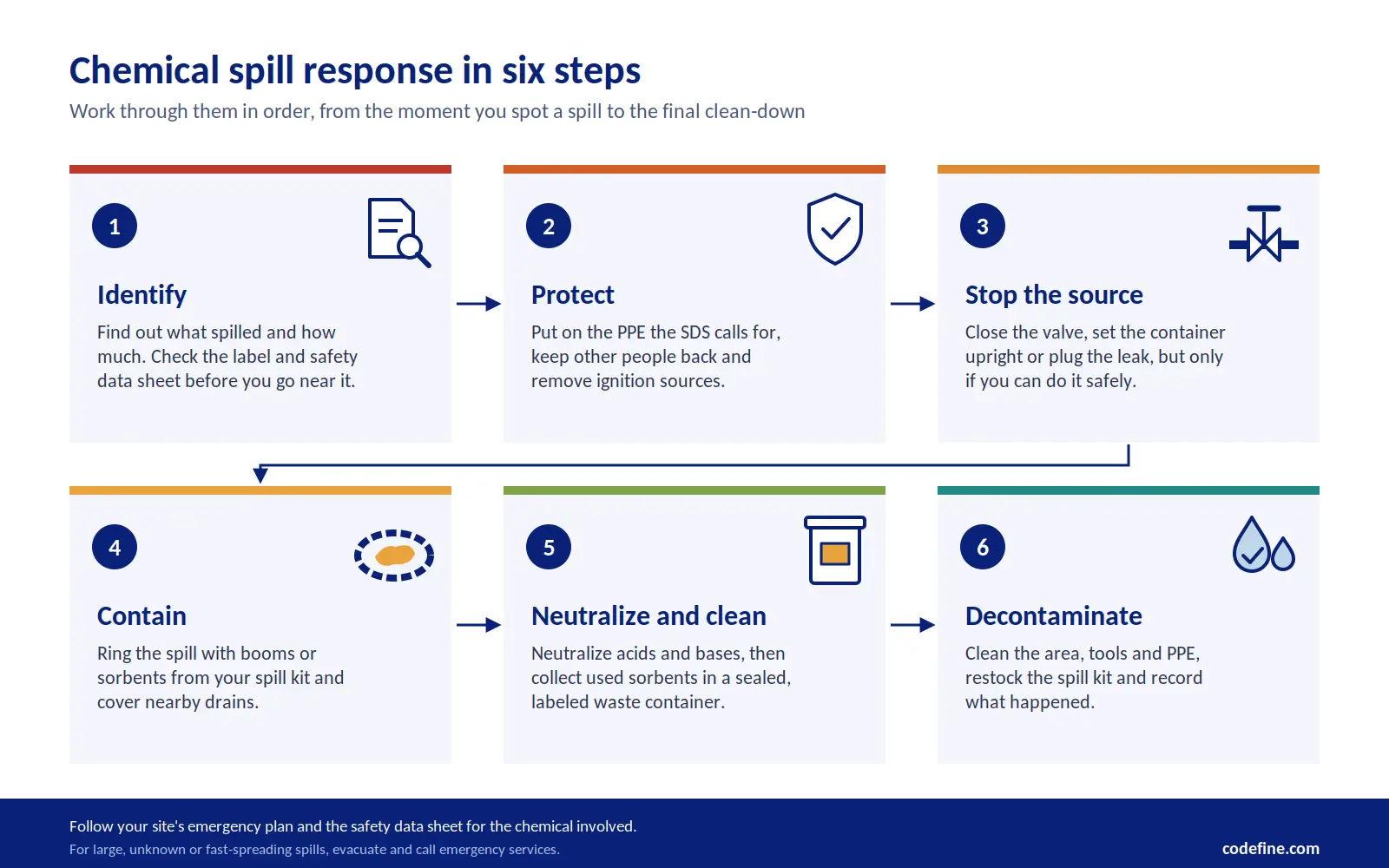
In the event of a chemical spill, it’s important to follow the right spill response protocols. First, the substance in question needs to be identified to help minimize risk. Next, sufficient PPE must be worn to protect individuals while handling the spill. The source of the spill then needs to be identified and stopped.
After this, the impact of a spill needs to be minimized by containment. Spill kits and sorbents are an effective choice here. Anything particularly hazardous, such as acids, will need to be neutralized. Next comes the clean-up, followed by decontamination.
If you’re regularly handling chemicals as part of your operation, there are many ways you can do business more sustainably. Using spill kits and disposing of used chemicals safely helps minimize environmental impact. You can make your chemical containment procedures even more eco-friendly by switching to spill kits and absorbents made from organic fibers and recycled material.
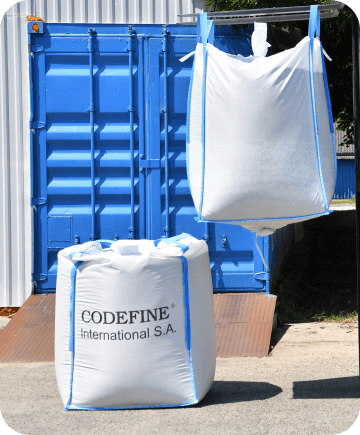
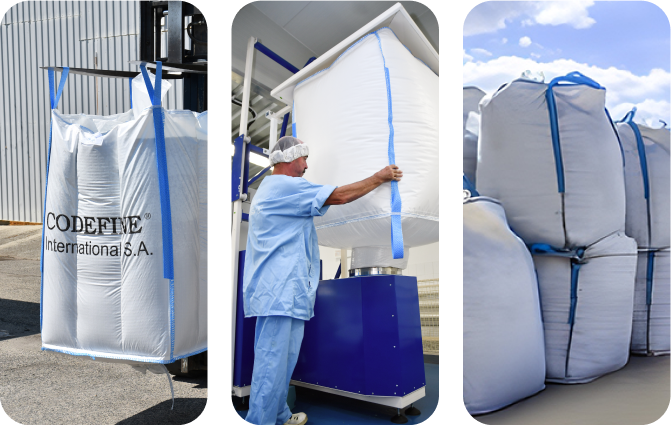
Chemical handling calls for specialist packaging solutions. At Codefine, you’ll find an extensive range of reliable chemical containment solutions for storing and shipping hazardous substances and chemical products. All of our bags are UN-certified and adhere to the latest ISO, FSSC, and BRC standards, guaranteeing performance and bringing you total peace of mind.
Feel free to explore our entire product range online today. Need to discuss your chemical containment requirements in more detail? Get in touch to talk to the team or to arrange a quote.
1. How should businesses assess whether their current packaging is chemically compatible with the substances they store?
Chemical compatibility should be evaluated against the specific substance, its concentration, and the storage temperature. Manufacturers of packaging solutions can provide compatibility guidance, but for complex or unusual chemicals, independent laboratory testing is advisable before deploying packaging at scale.
2. What liability exposure do businesses face if chemical containment requirements are not followed?
Non-compliance can result in regulatory penalties, operational shutdowns, and significant civil liability in the event of a spill or accident. Insurance coverage for chemical incidents is also typically conditional on demonstrating that appropriate containment measures were in place, making compliance both a safety and commercial obligation.
3. How often should chemical storage areas and containment systems be formally inspected?
Inspection frequency should reflect the hazard level of the chemicals stored and the applicable regulatory framework for your jurisdiction. High-hazard environments typically require more frequent checks, and any inspection findings should be documented and tracked to demonstrate ongoing compliance.
4. What training should staff handling hazardous chemicals receive in relation to packaging and containment?
At a minimum, staff should be trained on the properties of the chemicals they handle, the correct use and limitations of the packaging and containment systems in place, emergency spill response procedures, and the correct use of personal protective equipment. Training records should be maintained and refreshed regularly.
5. How can businesses make their chemical containment practices more sustainable without compromising safety?
Switching to packaging made from recyclable materials, using reusable secondary containment systems, and implementing closed-loop recovery for used chemical packaging are practical steps. Any sustainability change must be evaluated against safety and compatibility requirements first, as material substitutions can affect chemical resistance and containment performance.nt requirements in more detail? Get in touch to talk to the team or to arrange a quote.
See how our products can improve your operations and drive your success.

Get in touch to find out how Codefine can support your business with tailored solutions and expert guidance.