
Home » Posts Page » Blog » Industry-Specific Solutions » How Global Supply Chain Shifts Are Changing Bulk Packaging Decisions
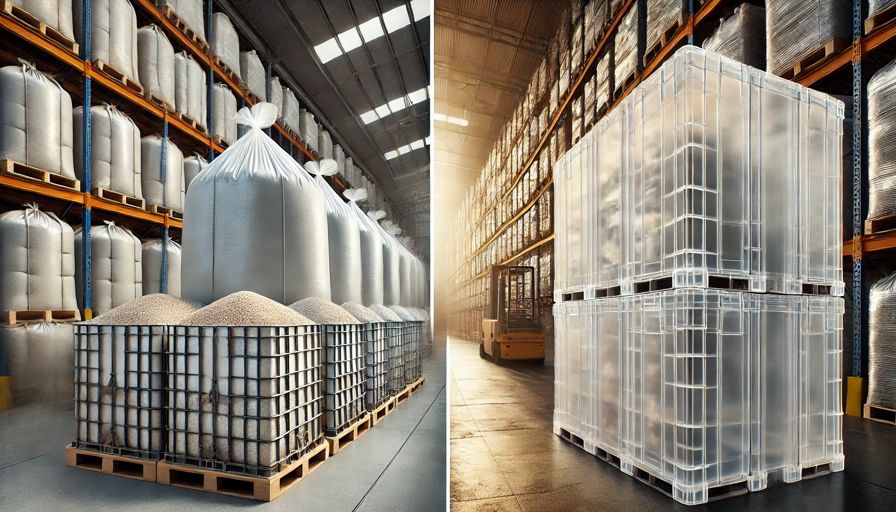
For most of the last two decades, bulk packaging procurement operated on a simple logic: find a reliable supplier, lock in a good price, and reorder before you run out. The bag itself was a cost to manage, not a risk to monitor.
What changed is not the bag, it is the environment around it. When tariffs shift rapidly, when shipping routes get disrupted, and when a supplier’s lead time doubles because port congestion or raw material availability changes, the bag becomes a constraint on your production schedule. A facility that runs out of FIBCs because an order was delayed does not ship product. A product that arrives in damaged bags because the moisture protection spec was not adequate for a longer transit route generates customer claims.
The bulk packaging damage in transit article covers how damage events compound when the packaging spec was set under different transit assumptions. That problem is now more common, because transit assumptions are less stable.
FIBCs are manufactured primarily from woven polypropylene fabric, with PE liners for moisture-sensitive applications. The raw material inputs, polypropylene resin and polyethylene, are petrochemical derivatives whose prices respond to energy markets, refinery capacity, and trade tariffs on imports. The woven fabric is manufactured predominantly in South and Southeast Asia. Most of the global FIBC supply chain runs through these regions.
This means that tariff changes affecting Asian imports, shipping disruptions on the major sea freight routes from Asia to Europe and North America, and resin price volatility all have direct transmission paths into the cost and availability of bulk bags. Buyers who treat bulk bag procurement as a domestic or regional commodity purchase are often surprised when global trade events change their costs and timelines with little warning.
Polypropylene resin prices fluctuate with oil prices and petrochemical supply dynamics, but tariffs add a policy layer on top of market dynamics. When tariffs are imposed on PP resin imports or on woven fabric from specific origin countries, the cost flows through to finished bag prices, sometimes quickly, sometimes with a lag depending on how much inventory the manufacturer holds and how their supply contracts are structured.
For buyers purchasing FIBCs from manufacturers who source PP fabric from affected regions, a tariff increase can raise bag costs without any change in the bag itself. The product is identical; the input cost is higher. Buyers who lock in longer-term supply agreements before tariff changes take effect can protect their costs for the duration of the contract. Buyers who purchase on short-cycle spot orders absorb the full change as it hits.
This dynamic rewards buyers who have an established supplier relationship and a standing specification, because a supplier who knows your product can prioritize your orders when they are managing constrained raw material availability.
The procurement response most commonly used in other packaging categories, early contracting and volume commitments, applies equally to FIBC sourcing. Committing to a volume for a twelve-month period with a price fixed at contract execution removes exposure to tariff changes that happen within that window. For high-volume operations, this is a straightforward hedge.
Where the FIBC market differs from, say, corrugated or metal packaging is that bag specifications often vary by product line and application. A facility running five different products in five different bag configurations cannot easily pool volume across configurations the way a corrugated buyer can pool board grades. The specification work that goes into a complete FIBC procurement document is what makes early contracting viable, without a locked specification, you cannot commit to a volume.
Before 2020, a twelve-week lead time from order to delivery was standard for custom FIBC orders from Asian manufacturers. That number became unreliable during the pandemic-era port congestion period, improved briefly, and has since been subject to renewed disruption from Red Sea routing changes and Panama Canal water level restrictions, both of which have added days or weeks to certain trade lanes in the 2024–2025 period.
The practical effect is that buyers who were running lean inventory, ordering at four to six weeks of remaining stock, have found themselves at risk of stockouts when a shipment arrives late. For a production facility that fills bulk bags on a tight schedule, a two-week delay in bag delivery is a production disruption.
The answer to how much safety stock an operation should carry depends on two variables: lead time variability (how much does the actual delivery window swing around the nominal lead time) and the cost of a stockout (what does running out of bags cost in production downtime, expediting, and customer impact).
For operations where a stockout is very expensive, continuous production lines, export commitments with fixed ship dates, agricultural seasons where the product window is short, the case for carrying six to eight weeks of buffer stock rather than four is often straightforward when the cost of the buffer is compared against the cost of one stockout event.
The counterargument is warehouse space and working capital tied up in packaging inventory. This is a real constraint, and the answer is not always to carry more stock, it is sometimes to shorten the replenishment lead time by sourcing from a supplier with regional stock or shorter manufacturing cycles. For single-trip bags used in high-volume operations, a supplier who holds finished goods inventory of your standard specification provides a different risk profile than one who manufactures to order.
The broader manufacturing sector has been moving production closer to end markets, a trend called nearshoring or regionalization, as a response to the fragility that long, concentrated supply chains revealed during 2020–2022. For bulk bag buyers in North America, this is showing up as increased interest in suppliers with manufacturing capacity in Mexico, Turkey, or regional distribution capability that reduces dependence on direct imports from Asia.
The driver is not primarily cost, nearshore FIBC manufacturing is generally more expensive on a per-bag basis than Asian production. The driver is lead time reliability and reduced tariff exposure. A manufacturer with production in Mexico or with bonded warehouse stock in a US port trades a higher bag price for a shorter and more predictable delivery window.
Whether that trade-off makes sense depends on the total cost calculation: higher bag price versus lower buffer stock requirement, lower expediting cost, and eliminated tariff exposure. For high-volume operations running continuous production, the math often favors the closer supplier even at a price premium.
A widely adopted approach in manufacturing procurement is to maintain at least one qualified supplier outside of any single dominant sourcing country, typically called a “China+1” strategy when the dominant source is China. Applied to FIBC procurement, this means qualifying a second supplier in a different geography who can manufacture to your specification, even if you source the majority of your volume from your primary supplier.
The qualification cost, reviewing the manufacturer’s testing certifications, auditing their quality processes, confirming the bag meets your specification, is real but one-time. The benefit is that when your primary supply chain is disrupted, you have a validated alternative rather than spending time qualifying a new supplier under pressure.
Qualification for a new FIBC supplier should confirm: manufacturing capability against your specification (fabric weight, construction type, SWL, liner configuration), testing and certification documentation (FIBC testing standards and safety factor ratings), food-grade or UN certification if required, lead time and minimum order quantity under normal conditions, and the supplier’s own raw material sourcing, a supplier who sources PP fabric from a single origin that is itself tariff-exposed does not fully diversify your risk.
When Red Sea security issues forced ships to reroute around the Cape of Good Hope in 2024, transit times on Asia-to-Europe routes increased by ten to fourteen days. When Panama Canal water restrictions reduced throughput, Asia-to-US-East-Coast shipments faced similar delays or modal shifts. These are not permanent changes, but they represent a pattern: shipping route disruptions now occur with enough regularity that buyers cannot assume their historical transit time when specifying moisture protection.
For operations using container liners for dry bulk products, transit duration is a direct input into the liner specification. A product that is adequately protected by a standard liner on a twenty-day transit may not be adequately protected on a thirty-four-day transit around the Cape. Moisture vapor transmission through the liner is a function of time and ambient humidity, both of which increase when the ship takes the longer route through tropical waters.
The container liner advantages and moisture barrier selection guides cover liner specification in more detail. The key point here is that a specification set under one transit assumption may need review if your shipping lanes have changed.
For FIBC operations, as distinct from container liner operations, the same logic applies. A filled bulk bag moving through a humid tropical routing for four weeks faces different moisture exposure than the same bag on a two-week regional shipment. If your product is hygroscopic and your bags have PE liners, confirm that the liner seal integrity and the liner spout closure are rated for the actual transit duration and ambient conditions, not the optimistic ones.
Individual risk factors compound. A bag specification error that would be a minor inconvenience with a two-week domestic supplier becomes an eight-to-twelve-week production disruption when the supplier is overseas and manufacturing to order. The specification gap gets discovered at delivery or first use. The correction requires a new order. The new order goes into the supplier’s queue. The production line waits.
This is not a theoretical scenario, it is one of the most common reasons operations teams contact suppliers urgently outside the normal ordering cycle. The specification was set under one set of assumptions (product, equipment, route, customer requirements) and one or more of those assumptions changed without the specification being updated.
A secondary benefit of investing in a complete FIBC specification document is that it makes supplier switching faster and lower-risk. A buyer who can hand a fully documented specification to a new or backup supplier, including SWL, safety factor, bag dimensions, liner configuration, spout type, compliance requirements, and test certification standards, can qualify that supplier in weeks rather than months.
A buyer whose specification exists only as an implicit understanding with their current supplier, or as a previous order number, has to rebuild the specification from scratch when they change suppliers. In a supply chain environment where switching suppliers quickly can be a competitive advantage, the specification document is a practical asset.
The bulk bag specification guide covers what a complete specification document should contain and why each element matters for field performance.
The most practical responses combine specification discipline with sourcing structure. Lock in your specification fully, all six dimensions of product, environment, construction, handling, freight, and compliance, before the supply chain is disrupted, not after. Establish at least one qualified backup supplier in a different geography with a copy of your specification on file. Review your buffer stock level against your actual lead time variability, not the nominal lead time your supplier quoted two years ago. And review your transit duration against the moisture protection assumptions in your liner or bag specification, if your shipping routes have changed, your specification may need to change with them.
Nearshore FIBC manufacturing is subject to the same quality standards as Asian production, the ISO testing standards, SWL ratings, and safety factor certifications that define a compliant bag apply regardless of where the bag is made. A bag made in Mexico or Turkey to a 5:1 safety factor with a PE liner and a verified SWL is the same bag as one made in Bangladesh to the same specification. The quality difference between suppliers is a function of their manufacturing process, quality controls, and testing documentation, not their geography.
Lead times from nearshore suppliers are generally shorter and more predictable than from Asian manufacturers, for the simple reason that the freight leg is shorter and subject to fewer routing risks. The trade-off is typically a higher bag unit cost and sometimes a higher minimum order quantity from smaller regional manufacturers. For operations where lead time reliability is the primary constraint, this trade-off is frequently worth making.
The fundamentals of what makes a bulk bag perform correctly have not changed because the supply chain environment has. The fabric weight, the seam construction, the SWL, the liner specification, the spout configuration, these are still determined by the product, the handling method, and the transit conditions, not by where the bag was manufactured or what tariff rate applied when it was ordered.
What has changed is the cost and complexity of getting the right bag reliably. Codefine manufactures FIBCs with inner PE liners and uncoated outer fabric, built to specification for food, chemical, agricultural, and industrial applications. If you are reviewing your current sourcing strategy, your specification, or your supplier options in light of the current supply chain environment, the Codefine team can work through those decisions with you. Get in touch to start the conversation.
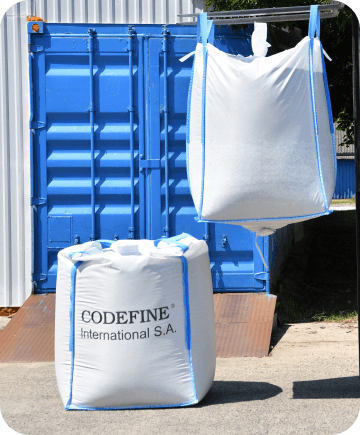
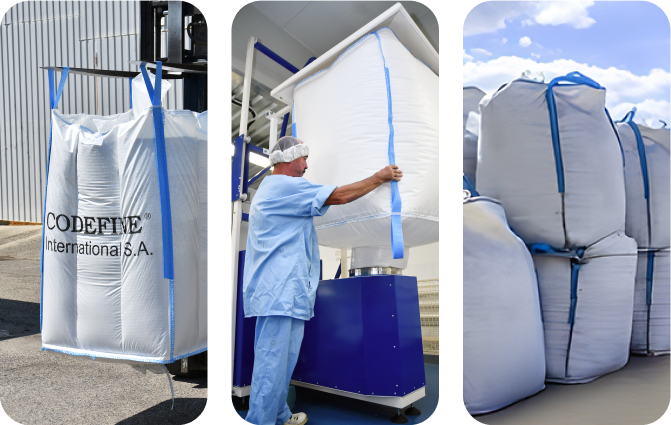
See how our products can improve your operations and drive your success.
Get in touch to find out how Codefine can support your business with tailored solutions and expert guidance.