
Home » Posts Page » Blog » Extended Producer Responsibility (EPR) and Bulk Packaging: What Manufacturers Need to Know
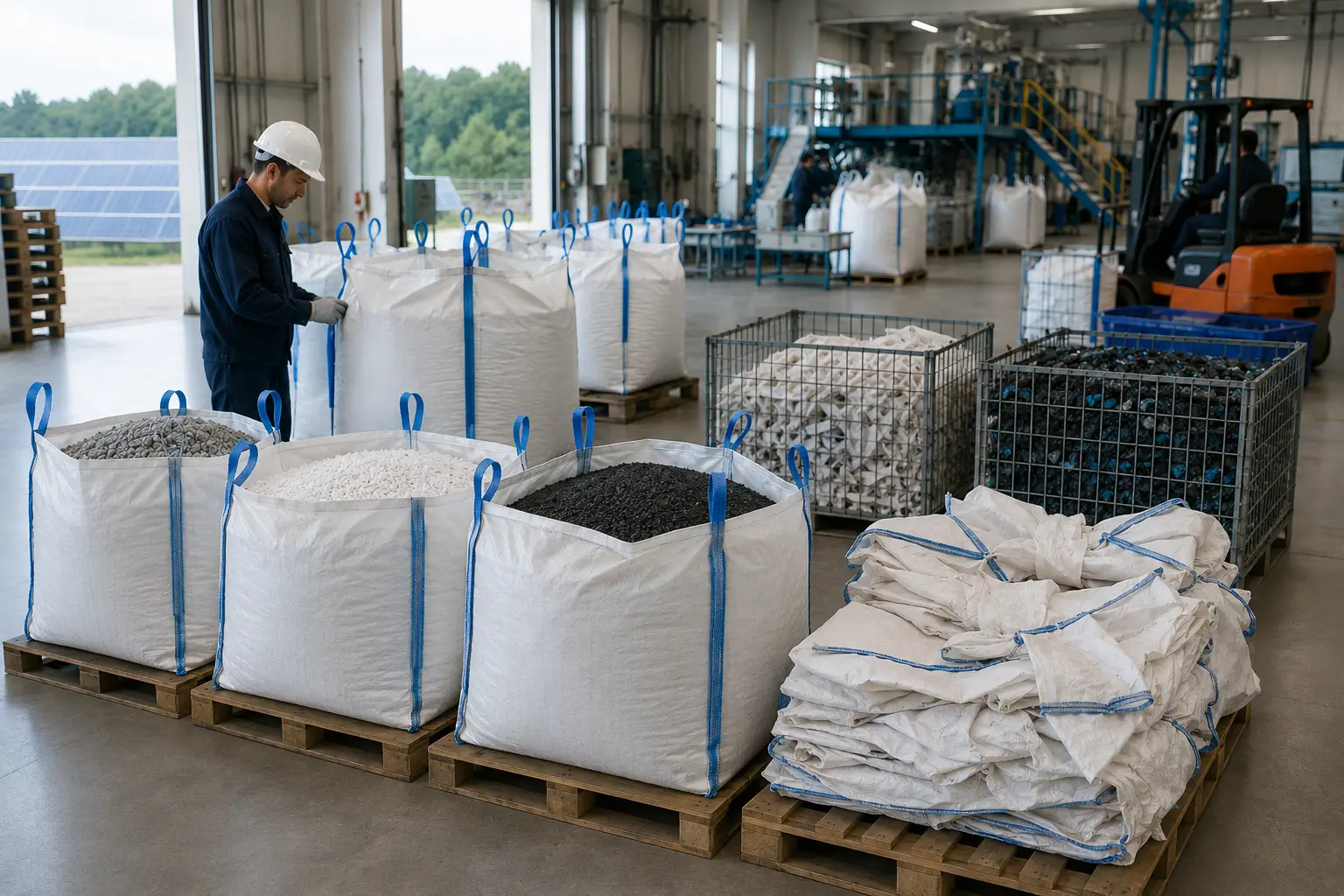
Extended Producer Responsibility is moving from a European regulatory concept to a North American reality, and it’s reaching the packaging decisions that FIBC buyers and procurement teams make every quarter. EPR laws make producers financially responsible for the end-of-life management of their packaging. You pay fees based on the weight and material type of the packaging you put into circulation, and those fees fund collection, sorting, and recycling infrastructure.
Most of the conversation around EPR focuses on consumer packaging: retail boxes, plastic bottles, food wrappers, e-commerce mailers. That’s where the first wave of US state legislation has landed. But industrial packaging isn’t invisible to these frameworks, and the trajectory is clear. The EU’s Packaging and Packaging Waste Regulation (PPWR) already covers industrial and transport packaging, including FIBCs. Several US state bills under development are expanding their definitions to include B2B packaging. If you buy or specify bulk bags, this topic will reach your desk sooner than most procurement teams expect.
This article covers where EPR stands today for industrial bulk packaging, what the regulations require, how FIBC material choices affect your compliance position, and what you can do now to prepare for requirements that are still taking shape. If your company ships into the EU or into US states with active EPR programs, some of this applies to you today. If you don’t, it gives you a head start on what’s coming.
Under an EPR framework, the “producer” is the entity that introduces packaged goods into a market. For most supply chains, that’s the brand owner or the company that fills the packaging and sells the product, not the packaging manufacturer. If you fill FIBCs with your product and sell them to a customer, you’re the producer in EPR terms. The FIBC supplier who made the bag typically is not, unless they’re also the importer of record for the packaged goods.
EPR obligations generally include registering with a Producer Responsibility Organization (PRO) or the relevant state authority, reporting the weight and material composition of packaging you put into the market, and paying fees that are calculated per ton of material. The fee structure varies by jurisdiction and by material type. Packaging that’s easy to recycle (mono-material PP, for instance) typically carries lower fees than packaging that’s difficult to recycle (multi-material laminates, mixed-polymer constructions). This fee differentiation is called eco-modulation, and it’s the mechanism through which EPR creates a financial incentive to design packaging for recyclability.
For FIBC buyers, the practical implication is that your bag specification now has a cost dimension beyond the purchase price. A bag that’s harder to recycle at end-of-life may cost less at the point of purchase but cost more in EPR fees over its lifecycle. That’s a new variable in the total cost of reducing packaging costs without sacrificing quality, and it’s one that will weigh more heavily as EPR programs mature and fee schedules tighten.
The honest answer for most US FIBC buyers in mid-2026 is: you’re probably not directly in scope yet, but the gap is narrowing.
California’s SB 54 (the Plastic Pollution Prevention and Packaging Producer Responsibility Act) is the most significant US EPR law on the books. It targets single-use packaging and food service ware, with registration beginning in 2026. The definition of “covered material” centers on packaging that becomes waste after consumer use, which excludes most industrial B2B packaging like FIBCs. Oregon, Colorado, Maine, and Minnesota have enacted similar EPR frameworks, and they share this consumer-facing focus. Industrial transport packaging and B2B bulk packaging have so far been carved out or excluded from most of these programs.
The EU tells a different story. The PPWR, which entered into force in 2025 and is being implemented through 2030, explicitly covers industrial and transport packaging alongside consumer packaging. FIBCs fall within scope. Producers placing packaged goods on the EU market will need to meet recyclability requirements, recycled content targets, and weight-reporting obligations that include their bulk packaging. If you export products into the EU in FIBCs, this regulation applies to your packaging choices now.
Canada’s Federal Plastics Registry, which began requiring packaging data reporting in 2025, is another signal. While it’s a reporting requirement rather than a full EPR fee structure, it’s collecting the data that an EPR program would use. Several Canadian provinces already have EPR frameworks that include industrial packaging.
The direction is consistent across jurisdictions: start with consumer packaging, expand to industrial. The companies that prepare their packaging systems early are the ones that won’t be scrambling when the scope widens.
Eco-modulation is the piece of EPR that connects directly to your bag spec. Under eco-modulated fee structures, packaging that’s designed for recyclability pays lower fees. Packaging that’s hard to recycle or contains problematic materials pays more. The recyclability of your FIBC depends on what it’s made of and how those materials can be separated at end-of-life.
A standard FIBC is built from woven polypropylene (PP) fabric, with polyester or PP webbing for lift loops, and often a polyethylene (PE) liner inside. That’s a two-polymer system (PP and PE) that can be separated at end-of-life if the liner is removable. Both PP and PE have established recycling streams in industrial waste processing. The FIBC bulk bag recycling infrastructure already handles this material profile, and recycling programs for used woven PP bags exist in multiple markets.
Coated bags add a layer of complexity. A polypropylene laminate fused to the woven fabric can’t be separated from the base material at recycling. The coated bag becomes a mixed-material product that many recyclers won’t accept, or that gets downcycled into lower-value applications. Under eco-modulated EPR fees, a coated bag is likely to carry a higher per-ton fee than an uncoated bag with a removable liner, because the liner can be stripped out and both materials recycled separately.
An uncoated FIBC with a separate polyethylene (PE) liner is the more recyclable configuration. You pull the liner out after discharge, send the PP bag into one recycling stream and the PE liner into another. That material separation at end-of-life is what eco-modulation rewards. Codefine’s approach of manufacturing with an inner PE liner and uncoated outer fabric aligns with this direction. For a broader view of how recyclable packaging materials factor into sustainability strategy, the material separation principle applies across packaging formats.
EPR fees apply to packaging placed on the market. If you reuse a bag across multiple trips instead of discarding it after one, you reduce the total weight of packaging you introduce into the system per unit of product shipped. A 6:1 multi-trip FIBC that completes four trips before retirement represents one bag’s worth of EPR-reportable material for four shipments, compared to four bags for a single-trip program.
The single-trip vs. multi-trip FIBC bags decision has always been driven by cost and operational fit. EPR adds a third variable. In jurisdictions where EPR fees scale with the weight of packaging placed on the market, multi-trip programs create a direct fee reduction. Closed-loop operations that already reuse bags get this benefit without changing their process. Operations currently running single-trip programs may find that the EPR fee math tilts the calculation toward multi-trip for products and handling environments where reuse is practical.
The life-cycle assessment (LCA) of FIBC bags already accounts for the environmental footprint difference between single and multi-trip programs. As EPR translates that environmental impact into a financial cost, the LCA data becomes more than a sustainability report metric. It becomes a line item in your procurement budget.
EPR programs require producers to report the weight and material composition of packaging they put into the market. For FIBC users, that means tracking how many bags you use, what they weigh, what they’re made of (PP fabric weight, PE liner weight, webbing weight), and in some jurisdictions, what percentage of the material is recycled content.
If you’re already running a structured bulk packaging process audit, the data you need for EPR reporting overlaps with what a good audit captures: bag specifications, consumption volumes, material breakdowns, and waste streams. If you aren’t tracking packaging at that level of detail, EPR reporting requirements will force you to start.
Suppliers play a role here. Your FIBC manufacturer or distributor should be able to provide material composition data (fabric weight per square meter, liner thickness and material, webbing type) that feeds your EPR reports. If they can’t, that’s a gap you’ll need to fill before reporting deadlines arrive. Ask your supplier for material composition documentation now, before you need it for a compliance filing. The FIBC buying checklist is a good place to add material composition and recyclability as standing procurement criteria.
You don’t need to overhaul your packaging program for EPR regulations that haven’t reached your jurisdiction yet. But you can make decisions now that put you in a better position when they do.
Favor recyclable configurations. An uncoated PP bag with a removable PE liner is more recyclable than a coated or laminated bag. If both options meet your product requirements, the recyclable one gives you a better EPR position at no functional sacrifice. Green packaging principles and EPR compliance point in the same direction here.
Evaluate multi-trip where operationally practical. Closed-loop systems with the same product cycling between controlled points are the easiest reuse cases. If you’re already running a closed loop on single-trip bags, the EPR math may justify the switch to 6:1 multi-trip construction. The upfront cost per bag is higher, but the per-shipment EPR fee exposure drops.
Start tracking packaging data now. Even if your jurisdiction doesn’t require EPR reporting yet, building the habit of recording bag consumption, material composition, and end-of-life disposition gives you a reporting-ready dataset when the requirement arrives. Retrofitting this tracking under a compliance deadline is more expensive and more error-prone than building it into your procurement process from the start.
Talk to your supplier. Ask about material composition documentation, recycled content availability, and mono-material or near-mono-material bag options. Suppliers who are thinking about EPR now will be better partners when the regulations reach your operations. Codefine’s FIBC market trends and buying strategies guide covers how sustainability and regulatory trends are shaping the FIBC procurement landscape.
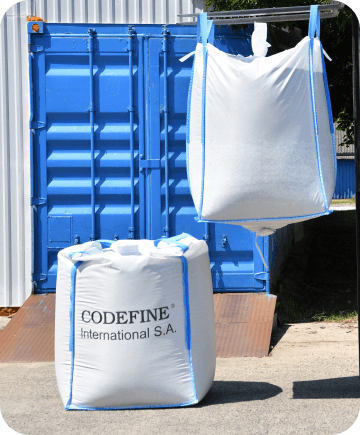
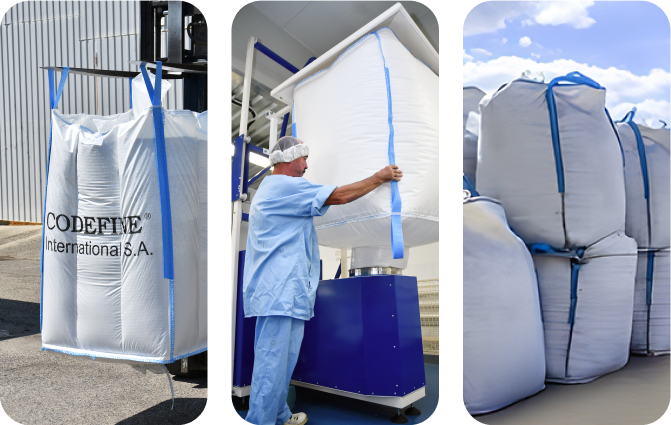
Codefine’s FIBC construction uses an uncoated woven polypropylene outer bag with a separate, removable PE liner. That’s a two-material system where both components can be separated at end-of-life and directed into their own recycling streams. Unlike coated or laminated bags where the barrier layer is fused to the fabric and can’t be economically separated, Codefine’s approach is designed for the kind of material-level recyclability that eco-modulated EPR fee structures reward. As EPR frameworks expand to cover industrial packaging in more jurisdictions, that design choice becomes a compliance advantage as well as an environmental one. Codefine can provide the material composition data your EPR reporting requires, including fabric weight, liner thickness, and webbing type. Explore the full product range or reach out to discuss how your packaging spec can align with both your product requirements and your sustainability obligations.
Most US EPR laws enacted through mid-2026 (California SB 54, Oregon, Colorado, Maine, Minnesota) focus on consumer-facing single-use packaging. Industrial B2B packaging like FIBCs is generally excluded from current programs. The EU’s PPWR does cover industrial and transport packaging, so if you export products into the EU in FIBCs, those bags fall within scope. Several US states have bills in development that may expand EPR scope to include industrial packaging.
Producers register with a PRO or state authority, report the weight and material type of packaging they place on the market, and pay fees per ton of material. Fee rates are eco-modulated: packaging that’s easy to recycle (mono-material PP, removable liners) pays lower rates than packaging that’s difficult to recycle (multi-material laminates, mixed-polymer constructions). The fees fund collection, sorting, and recycling infrastructure.
Yes. The PE liner can be removed from the PP bag at end-of-life, allowing each material to enter its own recycling stream. A coated bag fuses the laminate to the woven fabric, making separation impractical at most recycling facilities. Under eco-modulated EPR fee structures, the uncoated-plus-liner configuration is likely to carry lower fees because it’s designed for material separation.
In jurisdictions where EPR fees scale with the weight of packaging placed on the market, yes. A multi-trip bag that completes four cycles represents one bag’s worth of reportable material for four shipments, compared to four bags in a single-trip program. The total packaging weight you report drops proportionally, which reduces your fee obligation.
Ask for material composition documentation (fabric weight, liner material and thickness, webbing type) that can feed EPR reports. Ask about recycled content availability in their bag and liner products. Ask whether they offer mono-material or near-mono-material configurations that simplify end-of-life recycling. And ask about their own understanding of EPR trends, because a supplier who isn’t tracking these developments may not be able to support your compliance needs as regulations expand.
See how our products can improve your operations and drive your success.
Get in touch to find out how Codefine can support your business with tailored solutions and expert guidance.