
Home » Posts Page » Blog » How to Inspect a UN-Certified FIBC Upon Delivery: What to Check Before Use
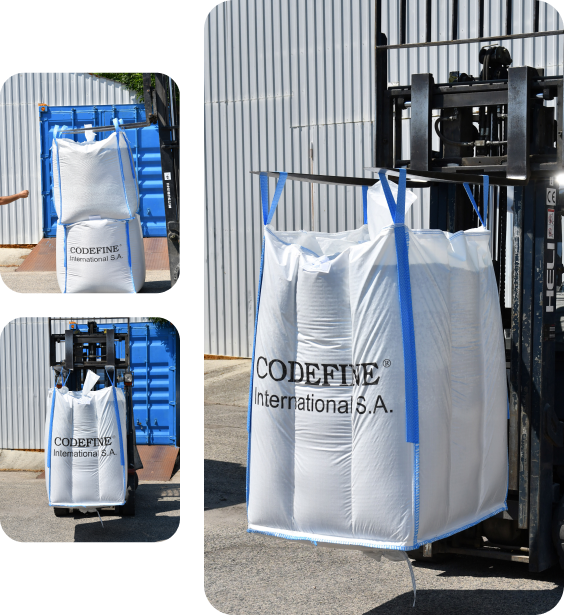
Most operations have a receiving inspection process for incoming materials, but the depth of that inspection varies considerably for packaging. A roll of stretch wrap gets a visual check and a count. A UN-certified bulk bag intended for hazardous goods needs more than that. The cost of skipping the inspection and discovering the problem at fill, transit, or destination is measured in held shipments, regulatory citations, and in serious cases, product release incidents.
This article walks through what a complete receiving inspection of UN-certified FIBCs covers: the printed marking, the supporting certificate documentation, visible construction condition, and the records you need to keep for traceability.
Once a hazardous material has been loaded into a bag, the bag is committed. If a defect or marking issue surfaces at that point, your options are to discharge the product back into bulk storage (if that is feasible) or to repackage the bag inside an overpack – both of which add cost, time, and additional handling exposure for workers. Discover the defect in transit or at the destination, and the cost multiplies. A non-conforming bag flagged by customs holds the entire shipment. A bag that fails during transit can release product, generate carrier claims, and trigger regulatory reporting requirements under hazardous goods incident rules.
Operations subject to hazardous goods regulations – US DOT 49 CFR rules, the European ADR/RID/IMDG framework, or other regional dangerous goods authorities – need to demonstrate that their packaging selection and handling meet the applicable standards. Receiving inspection records is part of that demonstration. An auditor reviewing your hazardous goods compliance program will ask how you verify that the bags you use match the specifications you ordered and the certification you claim. Your receiving inspection process and its supporting records are the answer.
The UN marking on a hazardous-goods FIBC contains seven distinct pieces of information, separated by slashes and read in sequence. The first element is the UN packaging symbol. The second is the bag type code: one of 13H1, 13H2, 13H3, or 13H4. The third is the packing group rating – Y for Groups II and III, or Z for Group III only. The fourth is the maximum gross mass or stacking load in kilograms. The fifth is S, indicating the bag is certified for solids. The sixth is the year of manufacture. The seventh is the country code and the manufacturer’s identification mark.
Reading the marking 13H3/Y/250/S/19/USA/ABC123 from left to right: this is a 13H3 construction, Y-rated, with a 250 kg stacking load, certified for solids, manufactured in 2019, certified in the USA, by manufacturer ABC123. Every field matters. A missing or incorrect field invalidates the certification claim. For a full breakdown of what each element means and how the coding system works, the UN markings for FIBC bulk bags guide covers the complete decoding process.
The marking on the delivered bag has to match your purchase order specification. If you ordered a 13H3 Y-rated bag and the delivered bag shows 13H1 Z-rated, the supplier has shipped the wrong product, regardless of how the bag looks otherwise. The marking also has to match your product’s safety data sheet. Your SDS gives you the hazard class and packing group for the material you plan to ship; the bag marking tells you what the bag is certified to carry. If the SDS says Packing Group II and the bag is marked Z (Group III only), the bag is not appropriate for the product, even if it is otherwise well-constructed. Understanding how packing group ratings limit bag use is essential context for anyone performing this check.
UN markings must remain legible for the service life of the bag. A marking that is faded, smudged, or partially obscured at delivery is a finding: either the marking was poorly applied, the bag has been stored or shipped under conditions that degraded the print, or the bag is not what the supplier claims. A bag with no visible UN marking at all is not a UN-certified bag from the standpoint of any inspector or regulator, regardless of what the paperwork says. Quarantine any bags with illegible or missing markings and resolve the issue with the supplier before they enter stock.
Each delivery of UN-certified FIBCs should arrive with supporting certificate documentation from the manufacturer. The certificate identifies the bag design type, references the testing protocol used (top lift, drop, stack, topple, righting, tear, vibration), gives the testing dates and results, names the testing laboratory, and ties the design type to the specific manufacturing batch through a batch number or production date range. A complete certificate lets you trace any specific bag back to the test that proved its design compliance. For a detailed look at what each of those physical tests actually verifies, the FIBC testing methods article covers the full test battery with pass criteria.
UN performance testing has to be carried out by a laboratory accredited by a competent authority. In the US, this means a lab recognized by the DOT or working under an approved third-party inspection program. In Europe, accreditation under ISO/IEC 17025 by a national accreditation body is the standard reference. A certificate from an unnamed laboratory, or from a laboratory whose accreditation cannot be verified, is a finding. Reputable manufacturers use accredited third-party labs for UN testing because the results need to withstand regulatory scrutiny.
The final documentation check is matching the certificate to the batch in front of you. The batch number on the bag should appear on, or reference, the certificate. If the batch number on the bag does not appear on the certificate, you have documentation – just not for these specific bags. Codefine provides full certification documentation matched to the manufactured batches we ship, with third-party test reports from accredited laboratories, structured so that receiving inspection can verify the bag, the marking, and the certificate all trace to the same production run.
Once the marking and documentation checks are complete, inspect the bag. The woven polypropylene fabric should be uniform, with no tears, holes, or thinning. Seam construction should be clean and continuous, with no loose threads, gaps, or stitch jumps along the load-bearing seams – pay particular attention to the corner seams, where stress concentrates most under load. The lift loops should be securely attached at the corners, with the stitching that connects the loop to the bag body intact and showing no signs of partial separation or fraying. The FIBC fabric evaluation guide gives a useful reference for what adequate fabric weight and construction look like at this stage.
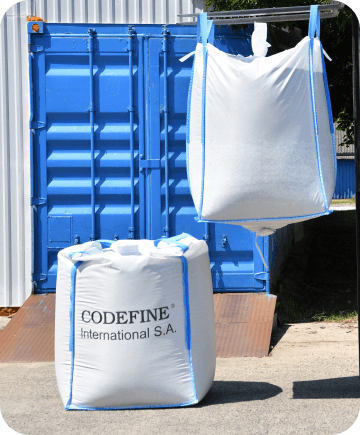
Fill spouts and discharge spouts need to be intact, with no torn or compromised material at the closure points. The fill spout closure mechanism should be present and functional. The discharge spout closure should be similarly present and secure. For hazardous goods bags, the spout closures are part of the containment system; a compromised spout is a containment problem before the bag is even filled. Check that the spout dimensions match the equipment they will interface with at fill and discharge.
For 13H3 and 13H4 bags, the inner PE liner is a critical part of the containment system, and its presence and integrity need to be confirmed at receiving. The liner should be visible inside the bag through the fill spout, fitted properly to the bag dimensions, and showing no visible holes, tears, or seal failures. The liner spout should align with the bag spout and have its own closure mechanism. On a sample of bags, opening the fill spout closure and inspecting the upper portion of the liner gives you direct evidence of liner condition before any product contacts it.
Visual inspection of every bag in a large delivery is operationally impractical, but inspection of a representative sample catches systemic issues. A reasonable approach is to fully inspect a fixed percentage of the delivery (commonly 1 to 3 percent depending on lot size), plus any bags showing visible damage from the outside of the bundle, and to perform full marking and documentation checks on every distinct lot or batch in the delivery. Set the sampling rate based on the criticality of the application and the supplier’s track record. New suppliers and first batches of a new specification warrant the higher end of that range.
Bags that fail visual inspection should be physically segregated from acceptable stock, tagged with the reason for rejection, and reported to the supplier promptly. Reputable suppliers will replace defective bags or credit the order, but they need documentation: the bag count, the batch number, and photographs of the defect. That same documentation helps identify whether the defect points to a broader batch issue. Failed bags should not enter service for any application – hazardous or otherwise.
UN certification testing validates bag performance at the time of manufacture. Bags stored for extended periods under unfavorable conditions – direct sunlight, high humidity, contact with chemicals – may have degraded since the test was performed. Polypropylene degrades under UV exposure, losing tensile strength over time; a bag that has spent months in direct sunlight before shipping is not the same bag as one delivered shortly after manufacture. The manufacturer’s date code on the marking gives you the actual age, and comparing that against the apparent condition of the bag tells you whether storage has been appropriate.
Once bags pass receiving inspection, store them in conditions that preserve their certification. Indoor storage, away from direct sunlight, in a dry environment, protected from contact with chemicals or sharp objects, is the baseline. Stacking should follow the bag’s stacking certification. Marking each pallet with its receiving date supports first-in-first-out inventory rotation, which prevents bags from aging out of certification while sitting in storage.
The records generated during the receiving inspection are the documentary evidence that your hazardous goods packaging meets applicable regulations. For each delivery, your records should include the supplier name, delivery date, purchase order reference, bag quantity and batch numbers, UN marking transcription, certificate references, inspection results (acceptance or rejection with reasons), and the name of the person who performed the inspection. Retain these records for at least the duration required by the applicable regulations in your jurisdiction.
The more robust layer of documentation links each bag lot to the shipment it was used in. If a customer reports a problem with a delivered shipment, you should be able to trace from the shipment back to the bag lot used, and from the bag lot back to the receiving inspection record. This traceability supports root cause analysis if a problem surfaces, and it supports targeted recalls if a manufacturer-side defect is identified after deployment. The guide to safely handling FIBC bulk bags covers lot tracking as part of a broader hazardous goods handling program.
Segregate the failing bags physically from acceptable stock and tag them clearly with the reason for rejection. Document the failure with photographs, the bag batch number, the marking transcription, and the specific defect observed. Contact the supplier within the timeframe specified in your purchase agreement and report the failure with the supporting documentation.
Do not field-repair the bag, modify the marking, or attempt to compensate for the defect through additional packaging procedures. A bag that has failed UN-certification inspection at receiving is no longer a UN-certified bag from a regulatory standpoint. Using it for hazardous goods creates a compliance violation independent of the original defect. Replacement from the supplier, return for credit, or disposal under your applicable waste protocols are the appropriate paths.
Every delivery of UN-certified FIBCs should receive at least the documentation and marking checks. The depth of visual inspection beyond that can scale with the supplier’s track record and the criticality of the product the bags will carry. A new supplier, a first batch of a new specification, or a delivery showing any visible irregularity warrants full inspection of a meaningful sample. Routine reorders from a long-qualified supplier with a clean delivery history can use a reduced sampling rate – but the documentation checks stay at full scope on every delivery.
Receiving inspection is where the certification claim printed on a UN-certified FIBC gets verified against the bag delivered. The seven-field marking, the supporting certificate, the visible construction, and the storage condition all combine to determine whether the bag in front of you is what the documentation says it is. A receiving process that checks all four catch issues before bags are filled, before product is committed, before a defect becomes a customs hold or a product release incident.
Codefine ships UN-certified FIBCs with complete documentation, batch traceability, and accredited third-party test reports. If you are setting up a receiving inspection process for hazardous goods FIBCs, reviewing your current process, or working through a specific compliance question, get in touch to start the conversation.
See how our products can improve your operations and drive your success.
Get in touch to find out how Codefine can support your business with tailored solutions and expert guidance.