
Home » Posts Page » Blog » Products and Materials » Liner Failure Modes: Why Liners Tear, Leak, or Collapse During Filling and Transit
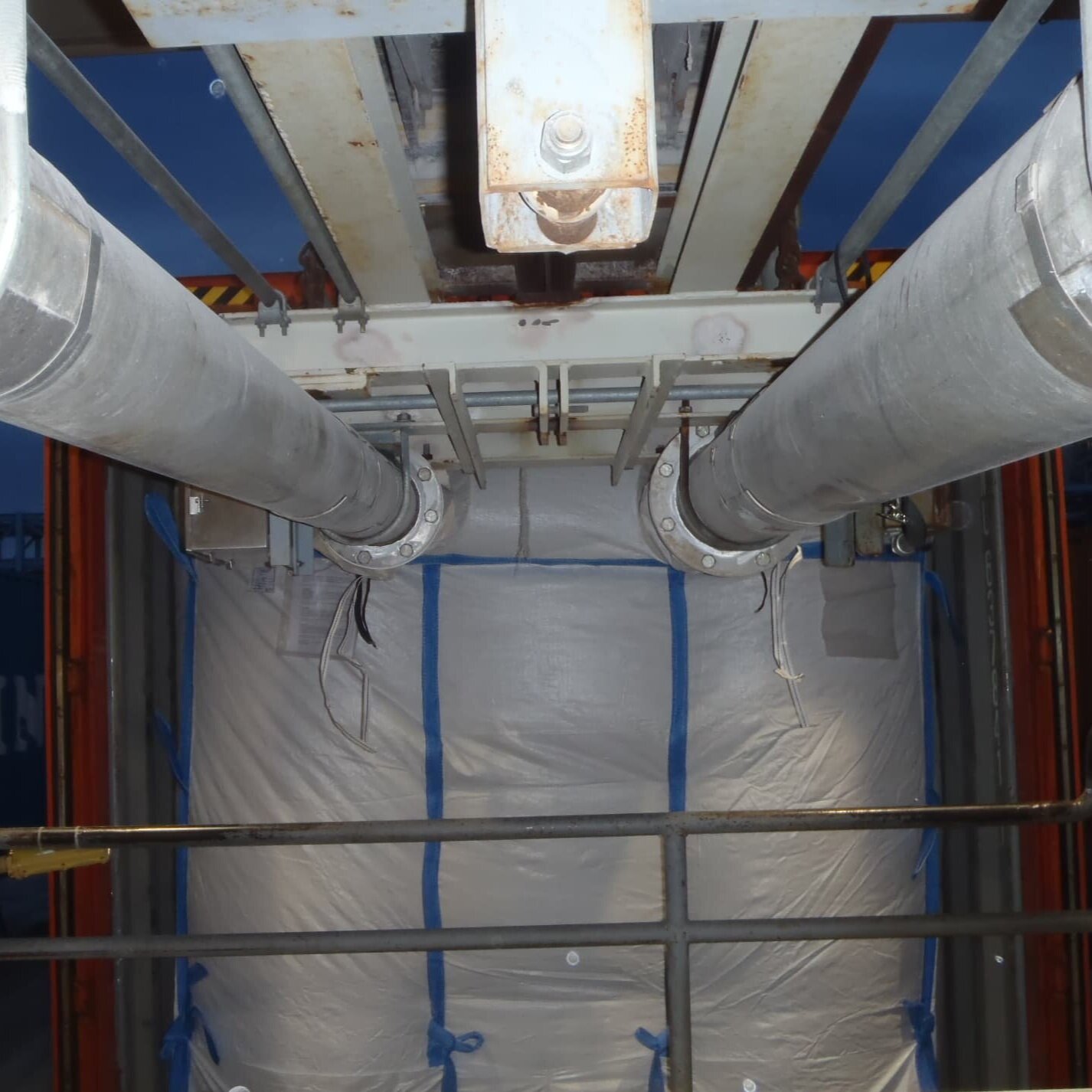
Liner failures follow patterns, and once you spot them, you can prevent most of the damage. Tears come from stress points or the wrong film. Leaks start small at a seal or spout and get worse in transit. A collapsed liner usually means a filling or fit problem. This guide covers each one, plus the transit forces that break down a weak liner.
A liner failure may look like a faint dust, small damp patch, or distinctive smell. Operators on the filling line may spot that a liner won’t stay seated on the spout, a bag that leans as it fills, a loop of film that keeps snagging on the frame.
A tear in one of your container liners or FIBC inner liners is mechanical, meaning something sharp or heavy puts more stress on the film than it could carry. A leak tells you the barrier was damaged at a seal or a fold. Collapse is structural. The liner loses its shape and drags the load with it, sometimes without a single hole in the film.
Liners tear and fail because of improper storage, folding, or using them with loads that can damage the film. Choosing the wrong type of liner for your load is one of the most common reasons why tearing happens. Four causes account for the bulk of the tears you’ll run into.
Crushed stone, metal shavings, and recycled glass damage the polyethylene easily. If you drop sharp gravel from six feet up, each piece hits the liner floor like a small blade. Abrasive powders cause damage more slowly. Silica, cement and some fertilizers wear the film down during transit until a scuffed spot turns into a hole.
You can lower the drop height so the product slides in instead of falling or choose a thicker or co-extruded film with a tougher outer layer. Codefine’s guide on choosing the right liner material shows which resins stand up to which products. Hot fills belong in this group too, since a product near the film’s softening point weakens the liner right where the load lands.
Filling puts more stress on a liner than any other step, and it happens in seconds. When you clamp the spout over the collar, the whole load hangs from that one ring of film. A rough clamp edge or a spout that’s too short can tear the liner right there
Container liners stress at the hanging points, too. Each loop, sleeve or bar pocket carries the liner’s weight plus the load. Hang it from too few points and the load piles onto them; the film stretches, thins and splits along the top edge. Use every attachment point and check that the support bars sit level before the load goes in. The container liner installation guide shows how to seat each one.
Gauge gets plenty of attention, but thickness on its own won’t save you. ASTM’s dart impact test standard for plastic film notes that impact resistance has no simple link to thickness, so a heavy film made from a poor resin blend can fail before a thinner, well-formulated one.
Resin choice shapes how the liner behaves under stress. LLDPE gives you stretch and puncture resistance. LDPE gives you strong seals but lets a tear run once a nick starts, and multi-layer barrier films can trade away some flexibility for their protection. Ask your supplier for dart impact and tear strength figures, alongside the gauge. Codefine’s breakdown of polyethylene liners is a good place to compare grades before you lock in a spec.
Polyethylene copes with cold better than many plastics, yet it still stiffens as temperatures drop. A liner that opens easily in summer can crack along its folds in a cold winter loading bay, especially if it spent the night on a pallet near an open dock door. Those folds become weak spots as soon as you bend them during installation.
Keep liners indoors and let cold ones warm up before you unfold them. For freezing winter routes, ask for a cold-resistant grade, because a liner can still crack from vibration in a frozen rail yard.
A leak often begins through a pinhole or a soft spot along a heat seal. Fine powders find those gaps fast. Liquids and moisture-sensitive goods attract dampness, which condemns an entire load. Leaks cluster in three places, and each calls for its own fix.
Heat seals hold a liner together, so check them first after a leak. Seals fail when the sealing bar is too cool, moves too fast, or presses on dusty or damp film. The seam looks closed but pulls apart under load. A cold seal looks cloudy and uneven. A burnt seal looks thin and glassy, which means the heat weakened the film next to it.
Corners and shaped bottoms have more seams, so check them closely. Test a sample from each batch by pulling a seal apart by hand. If the film tears next to the seam, the seal is strong. If the seam peels apart cleanly, the seal is the weak spot.
Pinholes have two origins. Some leave the factory as gel spots or contamination in the film, while others form on the road as the liner flexes over and tiny cracks open along the fold lines. The flex cracking slips past a visual check at the warehouse and only appears once the load arrives.
Fine powders expose pinholes fast, often as a faint haze on the outer bag. Flour, pigments, and pharmaceutical ingredients can escape through holes you’d struggle to see, so Codefine’s notes on dust control for fine powders are worth reading if you ship anything that fine. A film with more LLDPE in the blend resists flex cracking, and a liner that fits properly flexes less to begin with.
Leaks often start at the spouts, where the liner opens to the outside. If you tie a spout too loosely, powder escapes with every bump on the road. If you pull a thin cable tie too tight, it can cut the film and leave a slit nobody notices until the bag starts draining.
Use soft ties or wide closures on liner spouts and tuck the tied end inside the outer bag’s spout so it can’t catch on a pallet edge or forklift tine. On container liners, the discharge sleeve by the doors takes a beating during loading. Fold it neatly and secure it above the door bar so the doors can’t pinch it shut. For moisture-sensitive cargo, a small gap here lets humidity in as readily as it lets product out, and that’s behind a lot of moisture damage claims.
A collapsed liner usually has no hole in it. Instead, the liner loses its shape and the load settles unevenly. You might see a bulk bag leaning to one side, or a container liner pulling away from the bulkhead and sagging in the middle. Three causes explain most cases.
Fill speed affects the liner as much as the outer bag does. If you fill too fast from one spot, the product forms a cone that pushes the liner out on one side and leaves the other side loose. The loose film folds over, traps product, and leaves a weak crease once the load settles.
Bulk bag liners work best when you fill them in stages. First blow in some air so the liner opens fully against the outer bag. Then fill partway, let the load settle, and top it off. For container liners, start slowly so the first part of the load spreads across the floor before your blower or conveyor runs at full speed. Codefine’s FIBC filling and bagging essentials explain the spout setups and fill rates that keep a liner in place.
Light powders drag air into the liner with them. Fill a bag with fumed silica or fine flour and it looks full, yet it can lose some volume as that air bleeds out. The top goes slack, the load drops, and loose film folds down into the product.
That shift throws the bag off balance and loads extra stress onto the liner, no matter the film material. A vibrating table under the bag or a vented liner that releases air through a filter brings the product down to its final volume before you close it. A bag that leaves your filling station dense and settled holds its shape far better on the truck.
A liner that’s too big bunches into folds. One that’s too small stretches tight across the corners until a seam breaks. Both problems start on the spec sheet. Maybe the liner was sized for a 20-foot container and ended up in a 40-foot high cube, or a bulk bag liner cut for a U-panel bag got installed in a baffle design. Either way, the film can’t sit where it needs to.
Form-fit liners shaped to the outer bag reduce loose film and keep the load square. For containers, confirm internal dimensions, door type and bulkhead design before you order, and Codefine’s guide to container liner compatibility walks through the measurements that matter. Fit affects stacking as well, since a crooked stack presses unevenly on every bag beneath it.
A liner that survives filling can still fail in transit. Road vibration flexes the film constantly, rail shunts throw the load against the bulkhead, and at sea a container rolls for days.
That movement finds any weakness left over from filling. Stiff creases crack, slack film rubs against itself, and seals can peel after days of flexing. Temperature swings add condensation. A container moving from a humid port into cooler waters can drip onto its own cargo, and any pinhole lets that moisture spoil the product.
Solid bulkheads, even loading and dunnage that keeps bags off corrugated walls limit the damage, and desiccants help on long sea routes. Codefine’s guide to bulk packaging damage in transit covers more root causes.
You can stop most liner failures by choosing the right liner, filling with care, and tracking what goes wrong.
Start with a written spec that covers your product’s particle shape, fill temperature, bulk density, and destination climate. Ask your supplier for film data to support their recommendation, including dart impact and seal strength, not just thickness.
Before filling, have operators check each liner for gel spots, weak seals and sharp cold creases. Seat spouts on smooth collars, fill in stages, and deaerate fine powders before closing the bag.
Log every failure with photos, the batch number and where the damage started. Within a few months, patterns will show whether the problem is the film, the filling line or the container loading.
Every failed liner leaves evidence behind. A clean slit near the spout points to a clamp or tie problem. A haze of dust along the fold lines suggests flex cracking or pinholes, while a load that sank and leaned tells you air stayed trapped or the liner never fit the container in the first place. Once you can match the damage to its cause, you can fix the exact step that went wrong instead of swapping suppliers and hoping.
Small changes tend to pay off fast. A softer tie, a slower first minute of filling or a liner cut to the right dimensions can shrink your claims and spare your team from scraping product off a container floor. Keep that failure log running, share it with your supplier, and use what it shows you to shape your next liner spec.
Filling causes more failures than anything else. A rushed fill, a rough spout collar or a liner that never opened fully against the outer bag sets up the tear, leak or slump that shows up later on the road. Transit gets the blame because that’s where the damage surfaces, but in most cases the weak point starts at your filling station.
The right gauge depends on your product, your fill method, and the route. Coarse or abrasive material needs a heavier or co-extruded film, while a fine food powder on a short domestic run can ship safely in something lighter. Thickness alone won’t tell you how a film performs, so ask your supplier for dart impact and tear strength data on the exact grade before you sign off on a spec.
Look at where the product escaped. A seal leak leaves a line of dust or moisture following the seam, often near a gusset or the bottom corners. Pinholes show up as scattered haze or small spots in the middle of a panel or along fold lines, which points to film defects or flex cracking during transit.
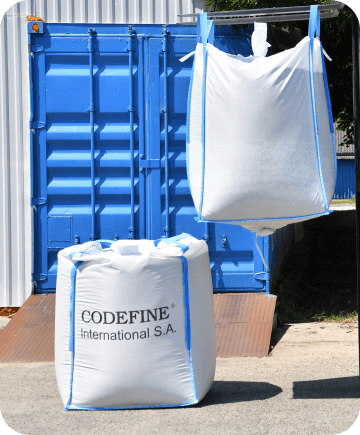
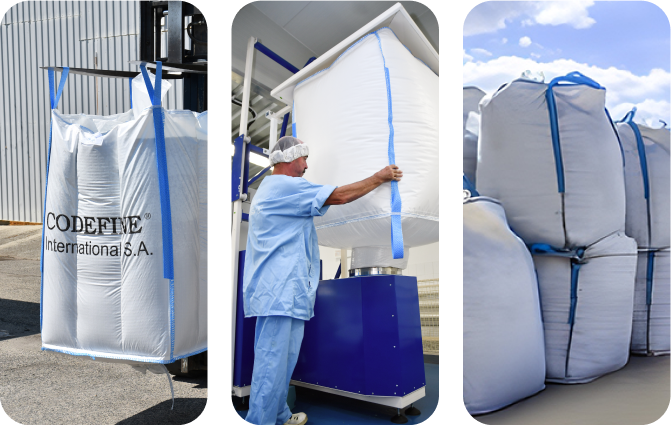
See how our products can improve your operations and drive your success.
Get in touch to find out how Codefine can support your business with tailored solutions and expert guidance.